A Slow-Living Neighborhood with Local Crafts and Creativity
TEXT | JENNA LYNN CODY
PHOTOS | VISION
Note: This article was published in the 2026 Summer Edition of TAIPEI magazine, a publication by the Taipei City Government.
Overlooked for years in favor of more touristy areas, including nearby Yongkang and Lishui streets, Chaozhou Street and its surrounding neighborhood are coming into their own as a haven for artisanal masters with a focus on quality and the “slow life.” On its face, Chaozhou Street may look like just another city street, but walking from its more concrete-dominated western end to the leafy east brings visitors past indie brands, restaurants, coffee beaneries, and more.
Uni Jun
Starting from the western end, visitors will pass Uni Jun, which sells aged horse oil and silk soaps and offers beginner and advanced soap-making classes. Uni Jun is the brainchild of Yang Jun-xiong and Xiao Jia-hong, a master soap-maker who studied the technique in Central Asia. Their philosophy is subtractive: eliminating unnecessary preservatives, fragrances, and foaming agents.
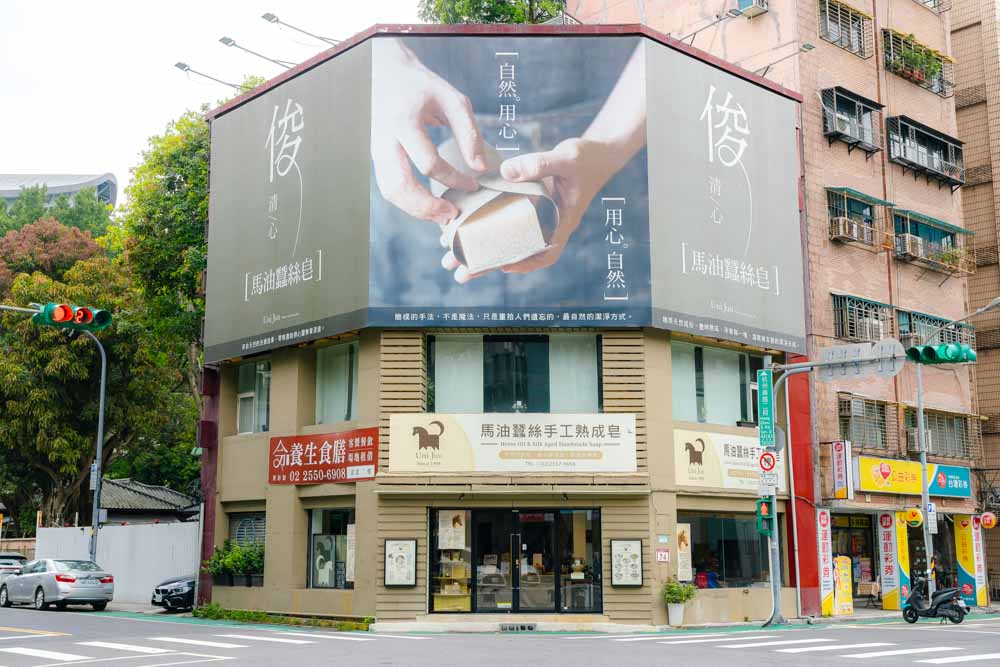
What sets Uni Jun apart is its singular focus on aged horse-oil and tussah silk soap – a combination developed over years of research. Horse oil’s rich unsaturated fatty acids nourish and repair the skin barrier, while the addition of silk yields a notably smooth, non-drying lather that suits humid climates particularly well.


Uni Jun 手工皂坊
74, Sec. 2, Hangzhou S. Rd., Zhongzheng Dist.
(02) 2557-9656
facebook.com/unijunsoap
Mon-Sat 10:00am-6:30pm
Maison Temps-Rêves
Next on our Chaozhou Street itinerary is Maison Temps-Rêves, a quirky bookshop with an artsy, multilingual offering that’s heavy on coffee table books – mostly picture and photography books – as well as storybooks that can be appreciated by children and adults alike. The shop also acts as a gallery space and hosts lectures and book chats.
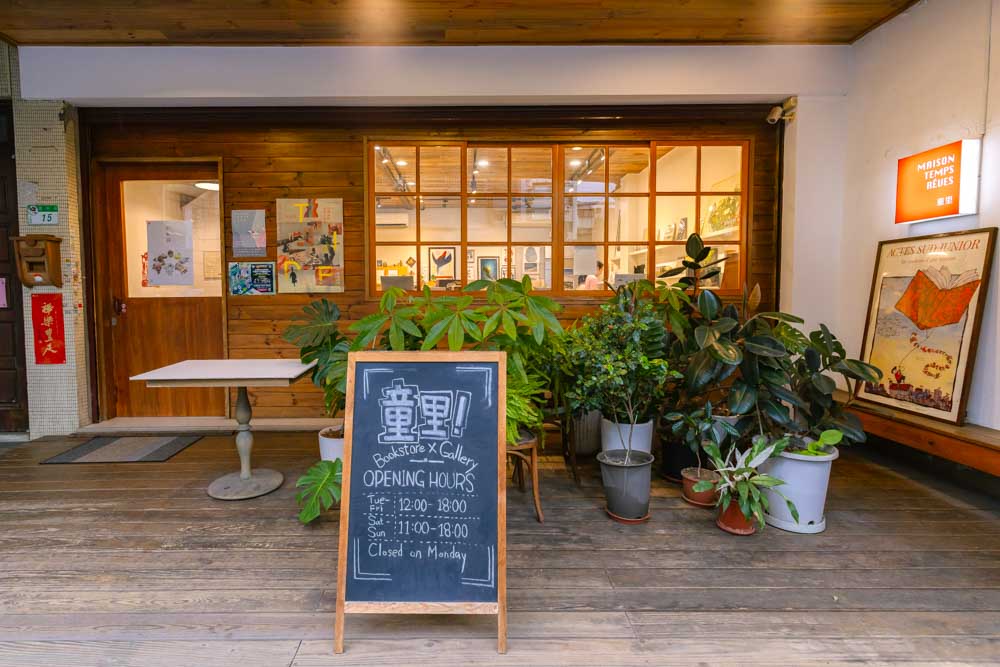
In English, the French “Maison Temps-Rêves” means “Dreamtime House.” French is not the only language represented, however: there are also books in Mandarin, Korean, Japanese, and more. With a focus on picture books, this isn’t a problem for the monolingual reader: one can still enjoy, for example, a book of pixelated Lego-like scenes depicting images and landscapes from Tokyo without being able to read Japanese. At Maison Temps-Rêves, perusing a picture book might feel like appreciating a small exhibition, watching a movie, or experiencing a journey.

Maison Temps-Rêves 童里繪本洋行
15, Chaozhou St., Zhongzheng Dist.
(02) 2391-8676
www.maisontempsreves.com
Tue-Fri 12:00pm-6:00pm
Sat-Sun 11:00am-6:00pm
LivinGreen
Walking further east from Maison Temps-Rêves, you’ll see an older-style Taiwanese building decked out with holographic second-story windows and phthalo-green – specifically Pantone 5463, a color named “Chaozhou Green” by the designers – paint and zellige-like tiles. This is LivinGreen, a restaurant and café housed in a historic building constructed in 1963 that once served as a police station and dormitory. In 2018, design and branding duo 2 by Wu&Chen renovated the space, a project that won the firm a 2019 Taipei Architecture Renovation Award and 2020 iF and Golden Pin Design awards, among other accolades.


Don’t miss the noodle bar, with mouthwatering offerings such as Dry Mesona Noodles with Spicy Cumin Chicken and Dry Beetroot Noodles with Prawns & Goose Oil currently on the menu. Or stop in for a coffee and try a slice of the unique salted egg and chocolate ganache tart.
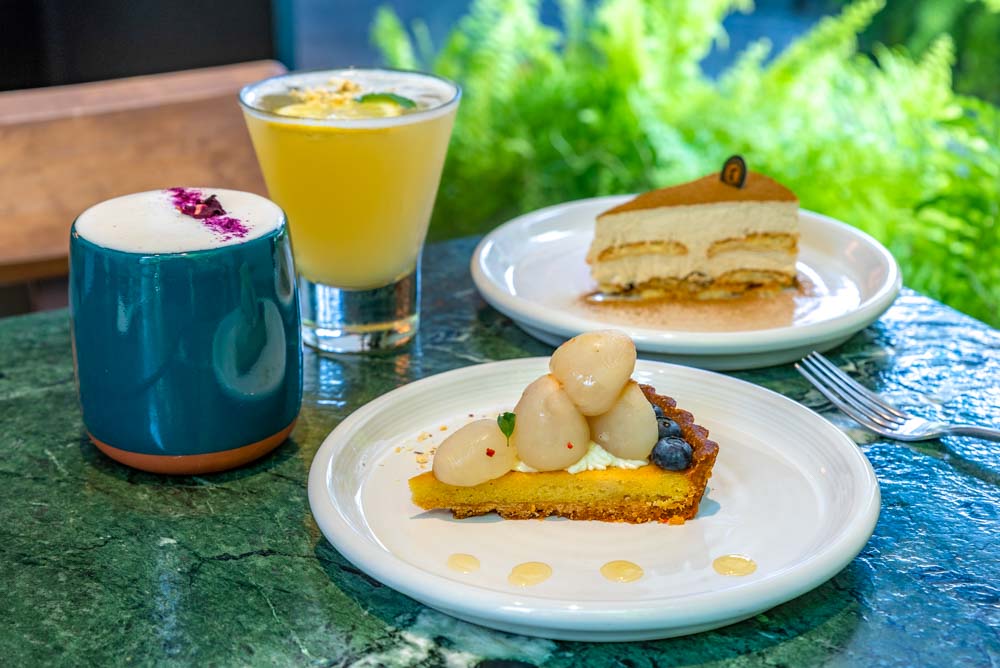
LivinGreen 貳房苑
76, Chaozhou St., Daan Dist.
(02) 2391-2866
www.2twgreenlife.com
Wed-Sun 11:30am-7:30pm
As you continue east, Chaozhou Street narrows considerably and becomes leafier and more residential after crossing Jinshan S. Road. This is the beginning of the more attractive, but also more touristy, Yongkang Street neighborhood.
Jinan Market – Showa-cho Antique Market
At the intersection of Chaozhou and Yongkang streets sits Jinan Market – Showa-cho Antique Market. Housed in a former wet market space on the first floor of an old apartment building, the market offers a mix of twenty or so eclectic stalls selling a range of Taiwanese and Japanese antiques, with a heavy focus on ceramics. This is a beloved spot for browsing old Japanese-era collectibles, retro ceramics, vintage posters, and curious trinkets that reflect Taiwan’s layered cultural history. It’s a great place to soak up the nostalgic atmosphere and hunt for rare finds.


Jinan Market – Showa-cho Antique Market 錦安市場.昭和町文物市集
60, Yongkang St., Daan Dist.
facebook.com/jiinaan60
2:00pm-9:30pm
Tzang Tian Coffee Bean
Across the street from the antique market, and technically on Yongkang Street rather than Chaozhou Street, Tzang Tian Coffee Bean is a coffee purist’s destination. Coming from Chaozhou Street, you’ll know it by the scent of roasting coffee beans that wafts into the intersection: this small shop has a big presence.

Founder and operator Lin Shi-bo started his coffee beanery on the premise that he simply loves coffee and hopes to run a business that is familiar and integrated into the neighborhood. Tzang Tian sells hand-roasted coffee beans from around the world, but the shop is most famous for its unparalleled selection of Taiwanese beans. Lin personally travels to the small, sometimes hard-to-reach coffee plantations to select locally-sourced beans from Taitung, Tainan, Nantou, and other island areas.

Tzang Tian Coffee Bean 藏田咖啡豆專賣
91, Yongkang St., Daan Dist.
(02) 2392-7770
instagram.com/tzangtiancoffeebean
Tue-Sun 2:00pm-8:00pm
Archive & Secondary Research
Beside Tzang Tian, a narrow staircase leads to Archive & Secondary Research on the second floor of the same building. A curated vintage shop, the focus here is squarely on “archival” fashion, that is, garments that are significant for their contribution to design history or clothing construction technique. Founded by a team of design scholars and curators, the shop rejects the “fast fashion” cycle.

This is the place to find rare, influential pieces from both well-known and avant-garde designers, from household names such as Maison Margiela to revolutionary Japanese designers such as Rei Kawakubo. By treating clothing as wearable history rather than disposable goods, the space serves as a vital bridge between fashion’s radical past and its sustainable future.

Archive & Secondary Research
91-1, Yongkang St., Daan Dist.
instagram.com/archive_and_secondary_research
Fri-Mon 1:00pm-7:00pm
Yearscake
Near the eastern end of Chaozhou Street sits Yearscake, a traditional-style Taiwanese pastry shop founded 70-plus years ago. Originally focused on baked goods for weddings and other celebrations as well as offerings for ancestral rites, Yearscake now offers smaller baked goods for a wider market. Especially popular treats include the milk powder and salted egg yolk cake, pineapple cake, and small meat pastries.

Now led by the third generation, the shop has undergone a thoughtful rebranding and renovation that honors its roots while embracing a fresh identity. Its new Chinese name, pronounced yi-de-he-zhi, blends characters drawn from the names of all three generations of owners – a quiet tribute to the family legacy behind every pastry. The rebranding also introduced a reimagined store space, where the heritage of a traditional Taiwanese pastry shop is woven with a contemporary aesthetic, creating an experience that feels both nostalgic and new.
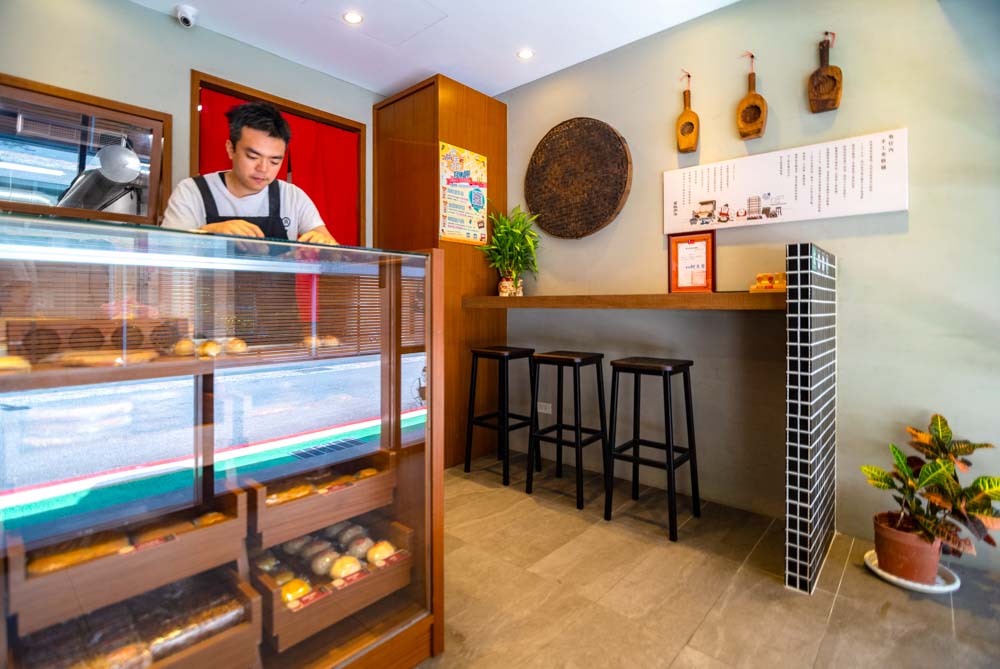

Yearscake 宜德和志
149, Chaozhou St., Daan Dist.
(02) 2394-9889
www.0223218374.com
10:00am-9:00pm
Thètion
A visit to Chaozhou Street might naturally end at nearby Thètion, a high-concept tea shop with a minimalist aesthetic that caters both to modern tea-lovers and design-conscious consumers.

Thètion’s English name is a portmanteau of “thè,” the French word for tea, and “nation” – literally “tea nation.” The Chinese name, however, evokes the “planting of rain,” that is, the vital mountain mists that nourish high-altitude tea harvests. Specializing in expertly curated oolongs and rare pu-erhs, Thètion functions as both a boutique and a sanctuary. The shop’s minimalist tasting space emphasizes the “mountain-to-cup” journey, focusing on the distinct terroir of Taiwan’s mountain areas.


Like its neighbors on Chaozhou Street, from Uni Jun to Yearscake to Tzang Tian, Thètion champions a “slow living” philosophy, offering a refined, meditative escape from the city’s bustle.
Thètion 蒔雨雲山
25, Ln. 2, Qingtian St., Daan Dist.
0905-811-931
www.thetiontea.com
12:00pm-7:00pm
About the author
Jenna Lynn Cody
Jenna is an American woman living and working in Taipei, Taiwan.