Trails and Tea in Maokong
TEXT | AMI BARNES
PHOTOS | RAY CHANG, VISION
Note: This article was published in the 2026 Autumn Edition of TAIPEI magazine, a publication by the Taipei City Government.
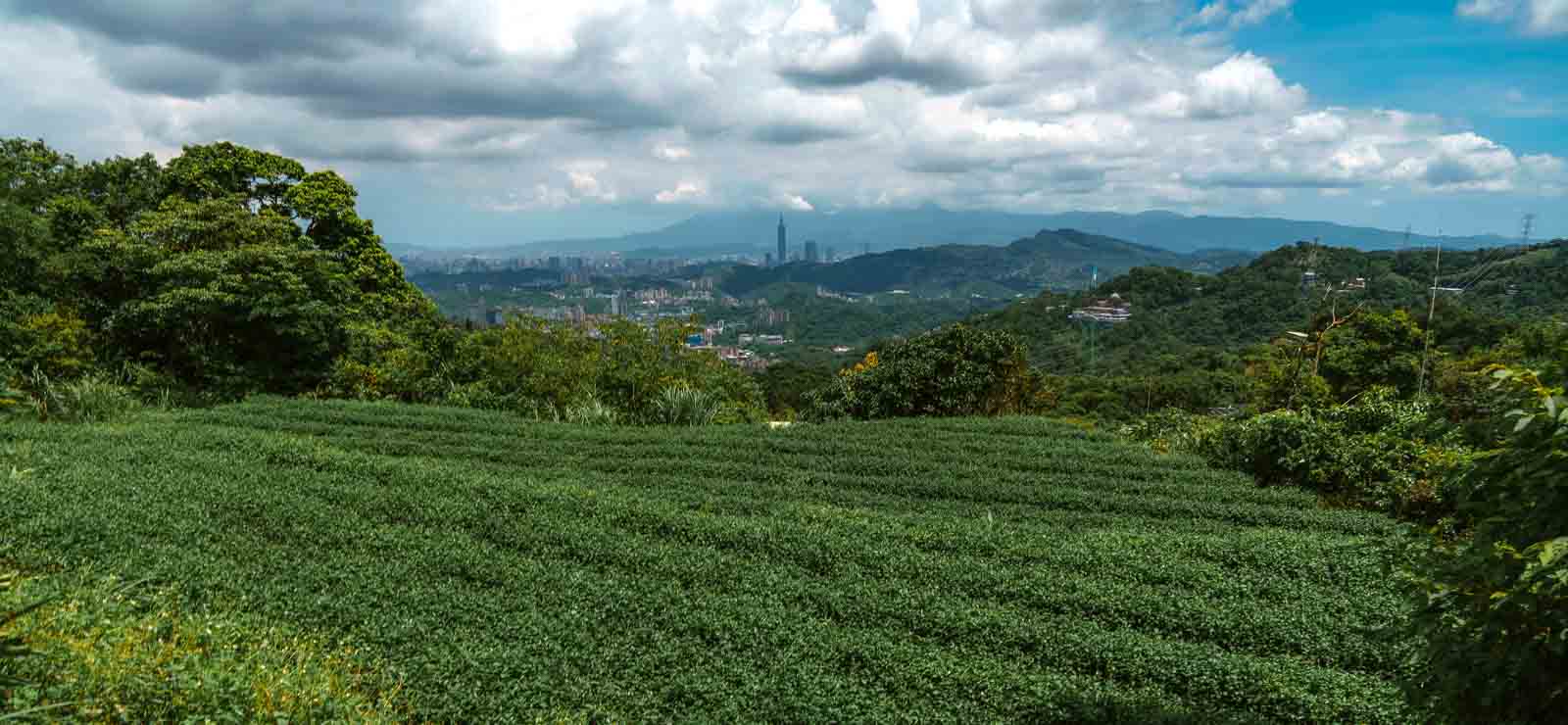
Raindrops on tea fields and gondolas rising, moss-dampened footsteps and trails multiplying, comfort in cup form that steeping tea brings – these are a few of the wonderful things … to enjoy in Maokong. No matter how many times you return, this Taipei City hilly tea-growing area never fails to delight with its perfect mix of easy hikes and serious tea.
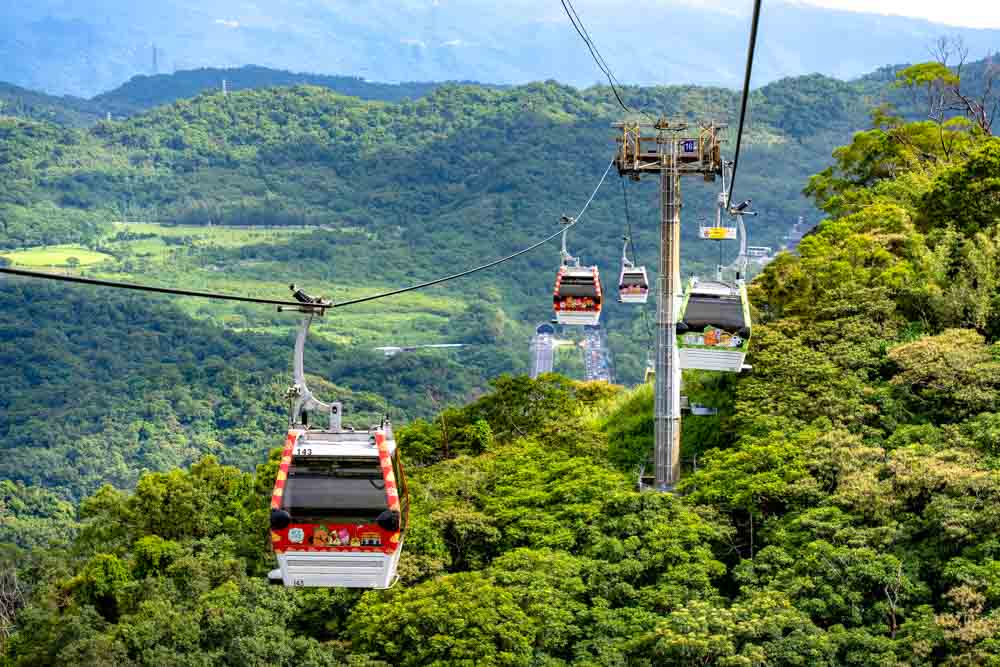
There are multiple ways one can approach Maokong, the swiftest of which involves no more effort than waiting in line for a ride on the Maokong Gondola and enjoying the views as it does all the hard work. This is undoubtedly a fine choice, but you might be judged for taking the easy option. For those who wish to earn their lunch, a perfect route up from the Wenshan District flatlands is the Feilong Trail.
National Chengchi University
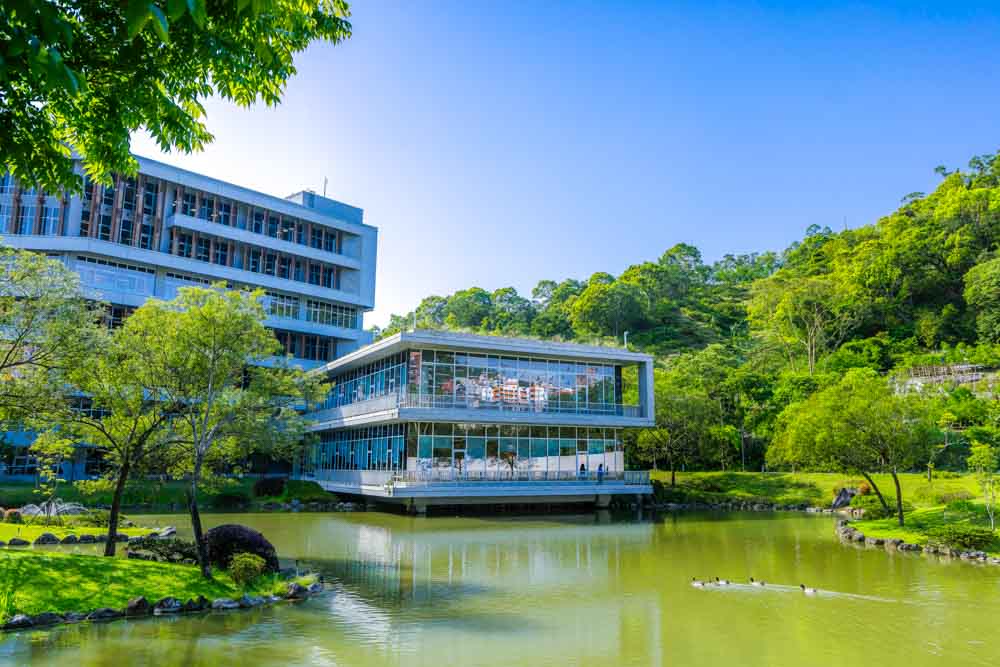
The route starts from the lower campus of National Chengchi University (NCCU). If you’re itching to get hiking, then by all means, crack on, but if you’ve got a minute to spare, take a stroll through the campus’s treelined boulevards. The university’s most arresting building is Dah Hsian Seetoo Library, located northeast of the main campus. Conjured into concrete and glass, its spare exterior – from one angle a hulking mass, from another, airy enough to float on water – seems to embody the ideal academic duality of discipline and vision, while the interior is a paean to light, literature, and the god of studiously cramming in aesthetically pleasing surrounds.
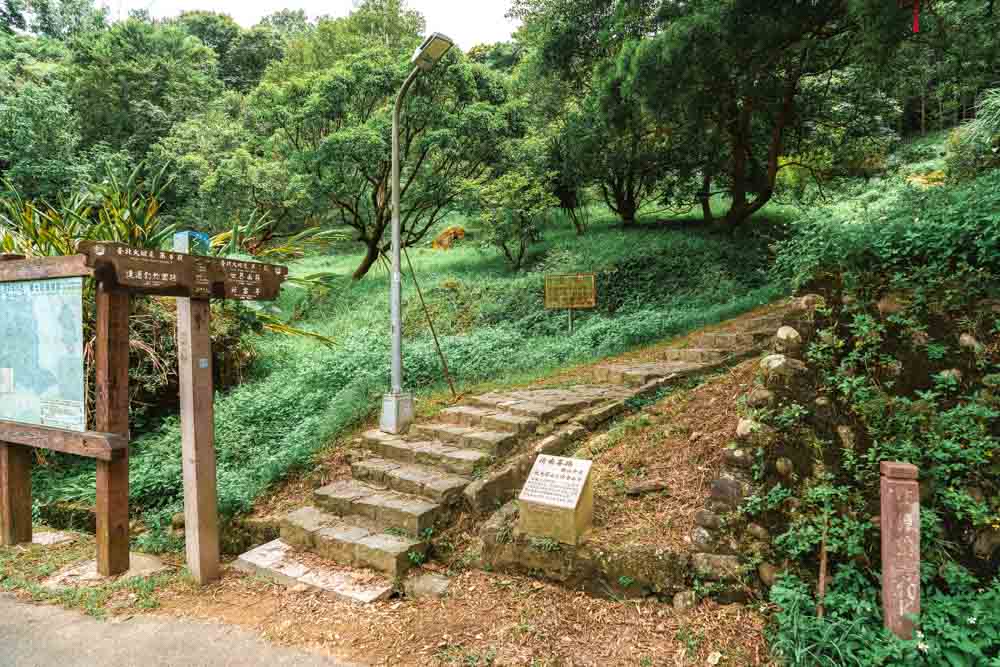
Once you’re suitably warmed up, take the NCCU’s east-side entrance on Sec. 2, Zhinan Road. Cross the bridge over Zhinan Stream and take the stairs down to the riverside path. Find the trailhead of the Chengda Rear Mountain Trail, then climb the moss-covered concrete steps to the Dawn Pavilion. After crossing a quiet road, the trail connects with the Feilong Trail, where shaded stone steps lead all the way up to Zhangshan Temple.
Zhangshan Temple
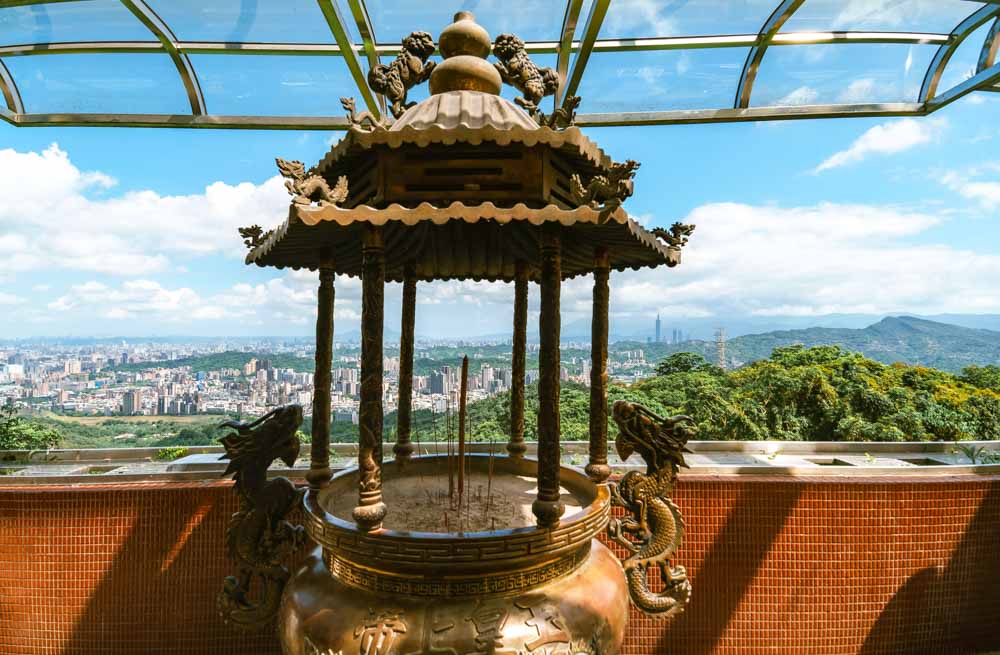
Zhangshan Temple is a popular hiker hangout, and not just because of the handsome views it commands over the Taipei Basin. It is famed for the free-flowing, locally grown Tieguanyin tea dispensed from a giant urn, perfect for quenching step-induced thirst. (Don’t worry if you have forgotten your bottle; you can grab one of the communal mugs – just make sure to leave it washed for the next user.)
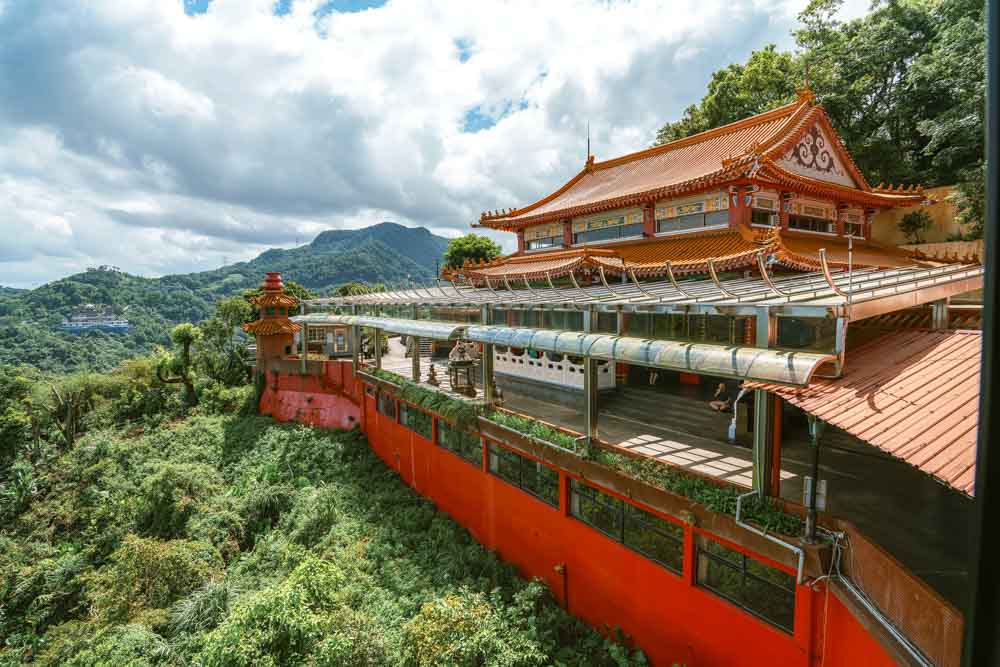
The temple sits at the northeastern confluence of two linked trails: the Zhangshu Trail and Zhanghu Trail. If you’ve noticed a theme with the nomenclature, well done; all three derive from the camphor trees (the zhang in the names, meaning “camphor”) that once covered the area in abundance. For visitors arriving by gondola, the two trails pair nicely into a little loop, but if coming from the Feilong Trail, you’d be better off picking just one of them.
Zhanghu Trail
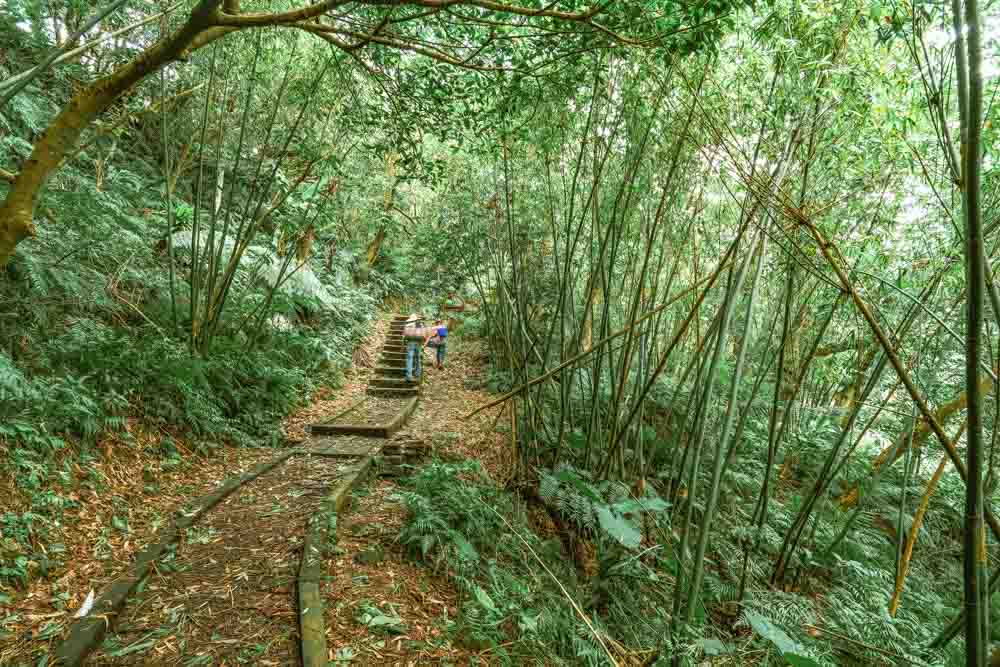
Heading onwards past the temple, follow the lane uphill until it joins a second road on a dogleg. Bear right, and you’ll find the entrance to the Zhanghu Trail roughly 50 meters on – you’ll know you’ve arrived when you see the steps. This opening section is similar to the Feilong Trail, but with extra farming scenery. Ferns and exuberant grasses jostle for space at ankle level, while bamboo and acacia offer dappled shade. Every now and then, some enterprising farmer has managed to wrest a small patch of land to grow squash or some combination of the scores of leafy greens seen in Taiwanese markets, but by and large, it feels like the plots are just one season away from being overrun by weeds.
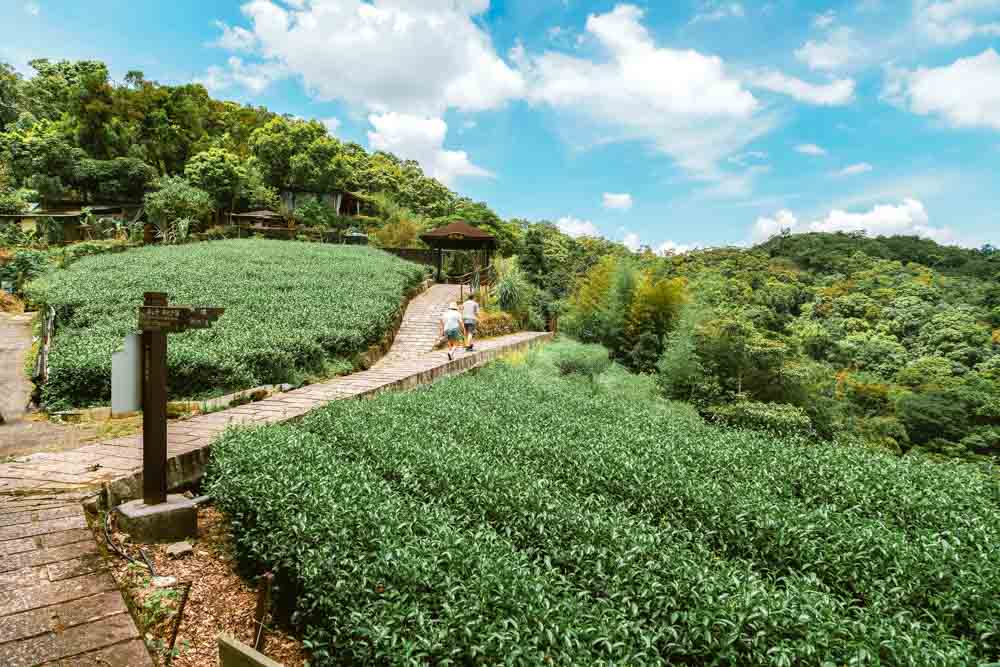
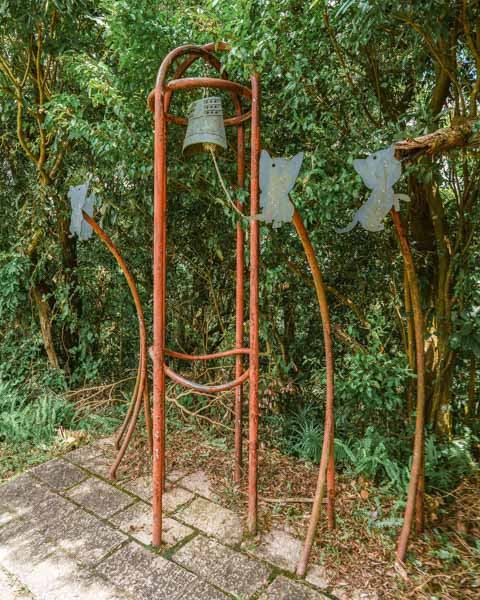
Passing through a hamlet with a teahouse and a tea tree oil farm, the trail continues its ascent, with occasional views of tea terraces adding variety to the terrain. The climb eases upon reaching the next junction, where the trail heads left, briefly straddling the Taipei/New Taipei City border. Here, a playful element has been added in the form of large-scale musical instruments designed to interact with nature – oversized windchimes and giant metal leaves sing with the wind and the rain. Why? Well, aside from “because whimsy” being a perfectly valid answer, the Mountain Theatre, the outdoor performing space of the renowned U-Theatre, a long-established arts troupe that melds Tai Chi, nature-oriented meditation, and drumming, is close by.
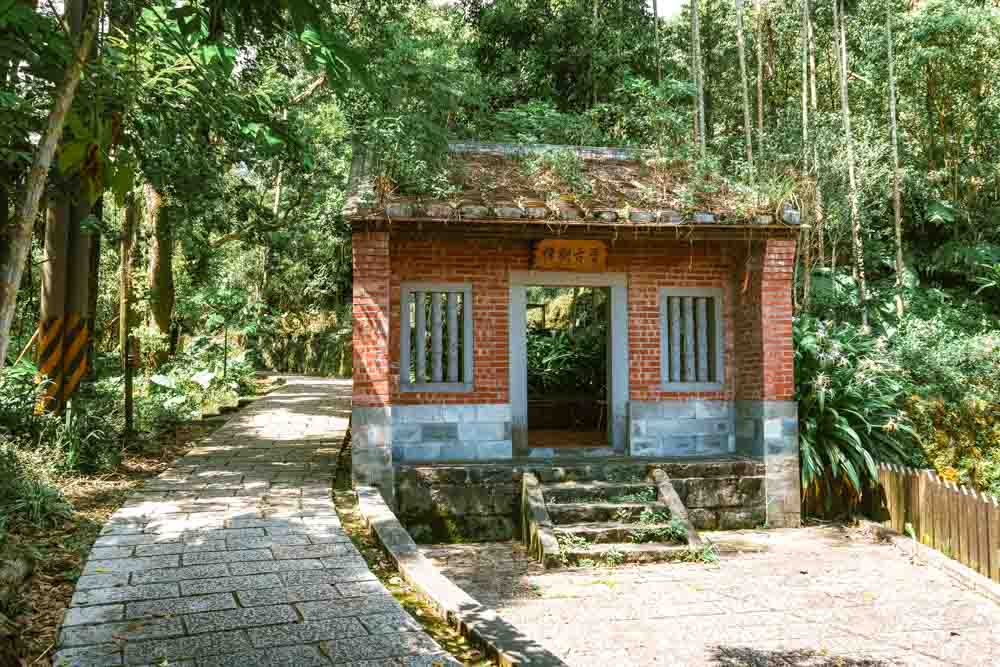
Still climbing, the trail passes first a forlorn-looking shrine dedicated to the souls of unwed dead women, and then comes to a crossroads: left to take a shortcut down to the Zhangshu Trail, passing the trailhead before finally descending to the gondola, or right towards Yinhe Cave.
Zhangshu Trail
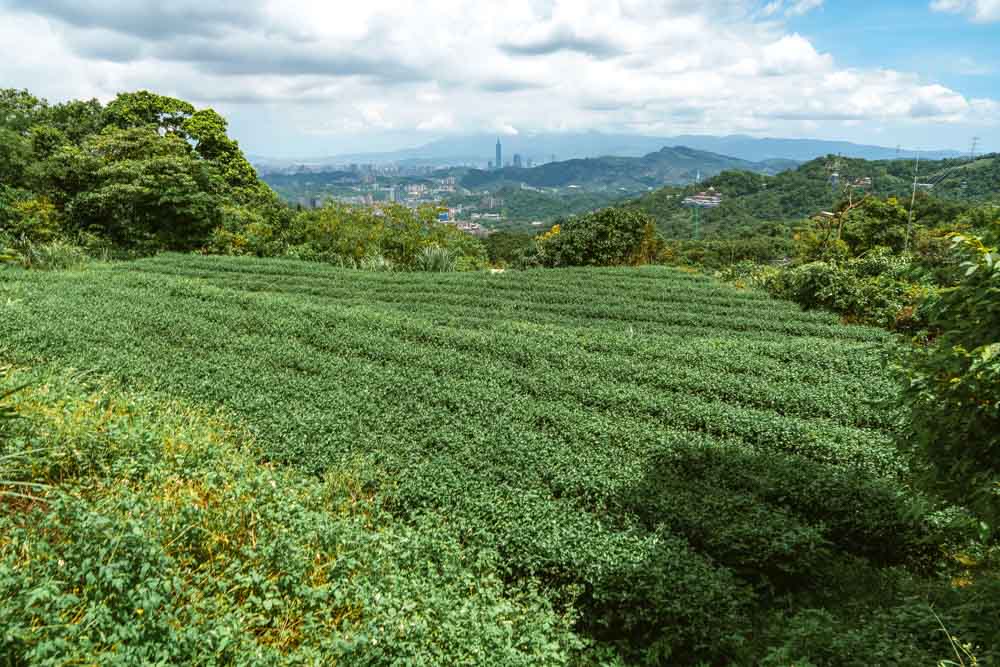
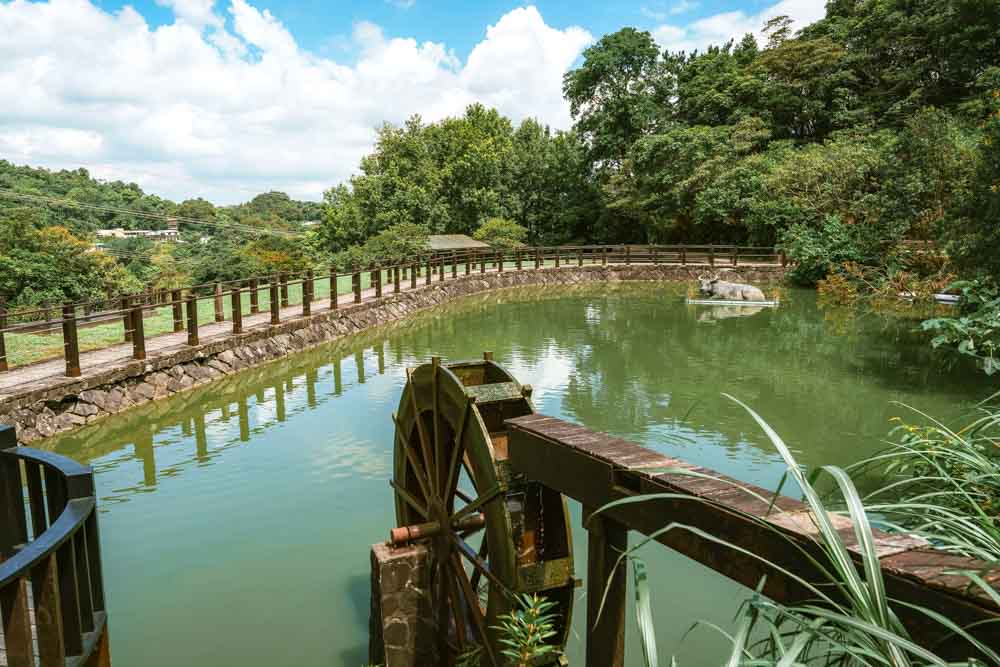
Now, if you read that Zhanghu Trail description thinking, “I did enough climbing just making it up to Zhangshan Temple,” here’s an alternative proposition. At that “dogleg” junction just beyond Zhangshan Temple, walking 50 meters to the left will bring you to the start of the Zhangshu Trail – a path that (if you want an honest appraisal) offers a much better exertion-to-reward ratio. This gentle paved route (part of the Taipei Grand Trail) meanders along the hillside through terraced farms and a rotating calendar of floral landscapes (in autumn, zinnias take center stage). One of the trail’s highlights is a photogenic pond featuring a waterwheel and a water buffalo statue that appears to float on the water.
Tea and Coffee
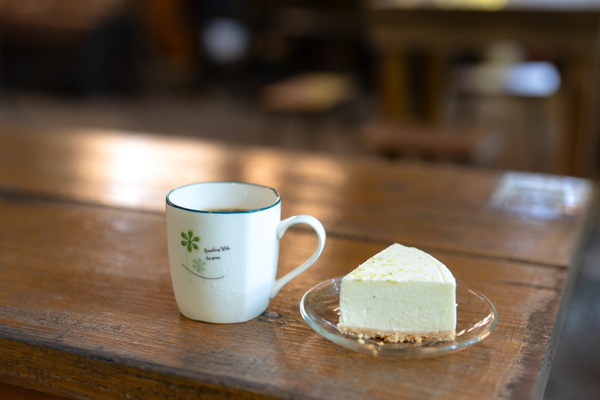
The Zhanghu and Zhangshu trails converge at Lane 38, Section 3, Zhinan Rd, not far from the gondola’s Maokong Station and right in the middle of Maokong’s greatest concentration of eateries. For snacks, my favorite is Shan Shang Tofu Pudding (located just across the road from an old charcoal kiln), while for coffee, you can’t beat the shrub-sheltered seclusion and calm of Lazy Day Cafe a bit further east along the main road.
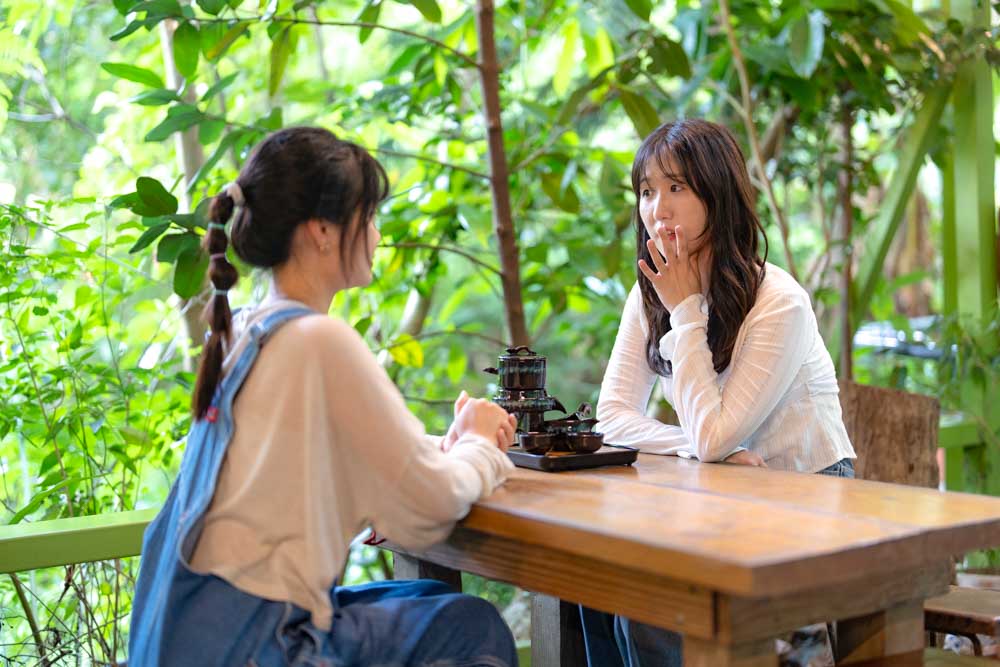
But it’s tea, not snacks and coffee, that Maokong is best known for, and the best teahouses are mostly located a little further west on the road that runs past the gondola terminus. One of the first that you’ll come to is Found Your Tea. Sitting on the left and a little way back from the road, this is a newer establishment with a mix of indoor and outdoor seating. As well as the essential tea-taster sets, the (fully English) menu includes the kinds of traditional snacks taken with tea (roasted nuts, meat jerky, candied fruits), and a wide range of to-share dishes – think tea-oil noodles, spicy eggplant, three-cup chicken, bamboo shoots – with many vegetarian options among them. A 20-minute walk along the road is another good choice: Yaoyue Teahouse. It holds the title of the second-ever teahouse opened in Maokong. The dishes and drinks on offer are not much different from other teahouses in Maokong, but what sets Yaoyue apart is the fact that it is open 24/7 – there’s something intangibly special about sitting out on the deck at dusk and watching the steam rise from your cup as the pools of lantern light battle to keep the forest shadows at bay.
Legs stretched and appetites sated, it’s time to head back down. Close to the gondola station, look out for the entrance to the Sanxuan Temple Trail on the right. Well-signposted steps lead down as far as Zhinan Elementary School before taking a sharp left turn, climbing again to rejoin the Feilong Trail. (Or you could just take the gondola. You won’t be judged this time.)
The Three “Maos”
The Taiwanese take great delight in both wordplay and numbered groupings of scenic attractions – a fact the Taipei City Government has neatly exploited with its current Sanmao Project ( 三貓計畫), which translates to “three maos (cats).” Taking its name from the Maokong Gondola, Taipei Zoo’s beloved giant pandas (maoxiong in Mandarin), and Maokong’s tea culture, the Sanmao experience offers visitors an integrated adventure linking wildlife, scenery, and local flavor. Online ticket bundles include zoo entrance, a gondola day pass, and either a tea or temple experience. From October to November this year, there will also be a new art installation at the Maokong Gondola Station featuring Bravo!Bear, Taipei City’s beloved mascot. Made of eco-friendly materials to echo the Sanmao spirit, this is a great new check-in spot for tourists visiting this charming area.
About the author