Where to Wander in the Seaside Districts of Tamsui, Sanzhi, and Shimen
TEXT | AMI BARNES
PHOTOS | VISION
Cutting a sweeping arc from the Tamsui River estuary through four New Taipei City districts before arriving at the harbor city of Keelung, Taiwan’s North Coast encompasses sandy beaches linked by seafront bikeways, wildflower-filled headlands, and history as layered as its geology – in other words, rich pickings for travelers of all stripes.
Taiwan’s parabolic North Coast occupies something of a Goldilocks zone. For maximizers and itinerary hawks, it’s just close enough to Taipei City. Swift Taipei Metro (MRT) access from the city’s downtown area means Tamsui District’s heritage architecture, seaside scenery, and riverside bikeways are guaranteed their spots on tightly packed schedules. Meanwhile, a short bus ride east along the coast, the slower-paced rural districts of Sanzhi and Shimen appeal to a different kind of traveler, the kind drawn to the just-far-away-enough. Here you’ll find the loungers, loafers, drifters, and soakers, the people who like to steep in the scenery and think the best way to spend a day involves beaches and coffee shops and windswept headland walks.
| Barrier-free North Coast Low-floor buses (routes 862, 863, and 716) connect the port town of Tamsui with places of interest along the North Coast, where thoughtfully engineered facilities ensure barrier-free travel for all. The Qianshuiwan and Linshanbi boardwalks, both sections of the Shuangwan Bikeway, offer kilometers of relaxing step- and traffic-free (st)rolling along, while ocean-faring beach wheelchairs are available for rent at both Baishawan and Keelung’s Heping Island. For more info, visit www.northguan-nsa.gov.tw. |
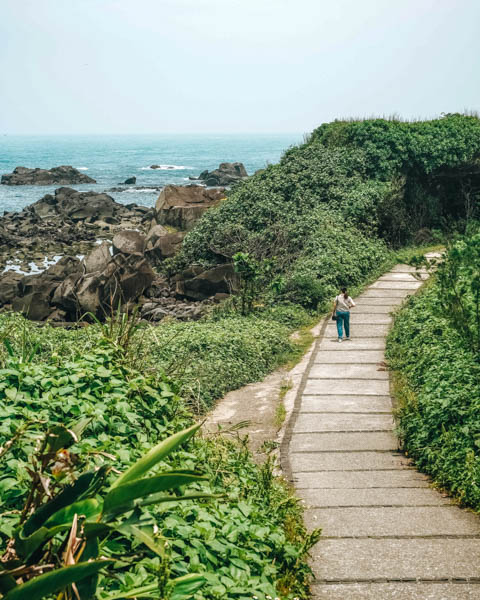
Tamsui
Situated at the northernmost terminus of the MRT Tamsui-Xinyi Line, the town of Tamsui occupies a well-thumbed page of the Taiwan day tripper’s handbook – a position it’s earned by dint of its river-to-seaside scenery, convenient transport links, and varied abundance of historic sites.
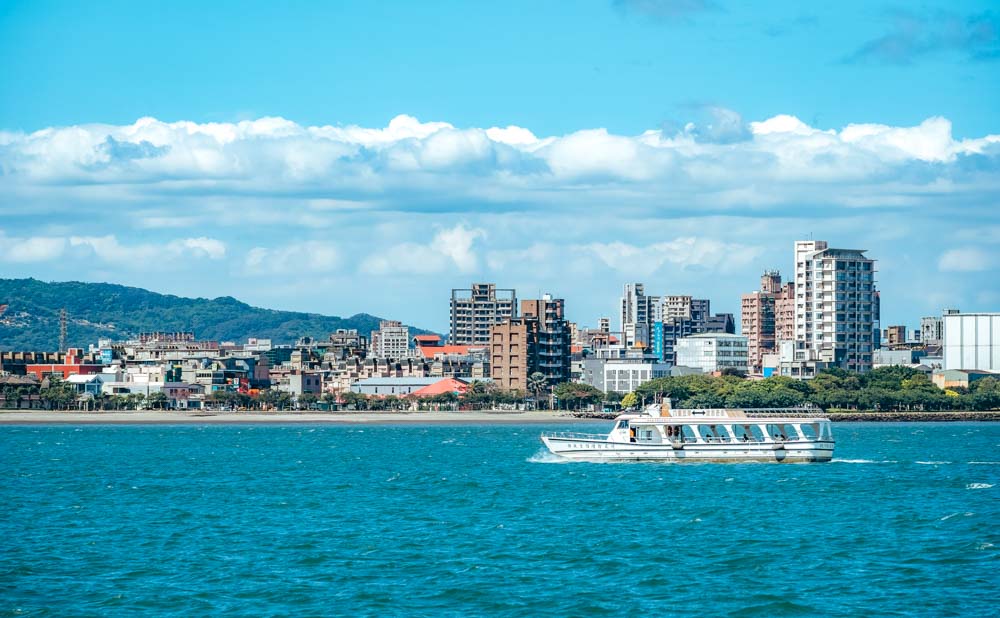
Tamsui Old Street, which – despite the name and the above just-given promise of history – does not feel particularly old, is the first port of call for most arrivals. A mere hop, skip, and jump away from the MRT Tamsui Station, it’s a good place to grab a wander-fueling snack, but don’t weigh yourself down with souvenirs yet – there’s a lot more to see first.
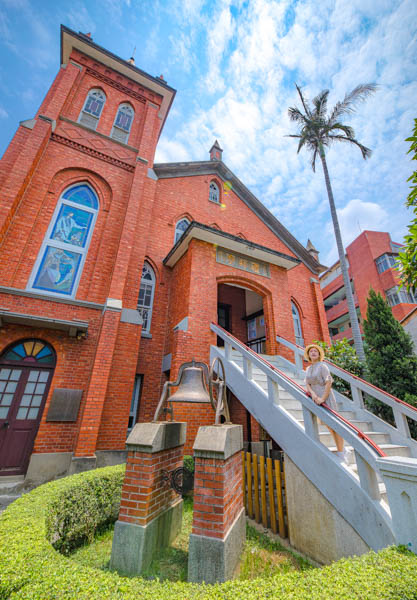
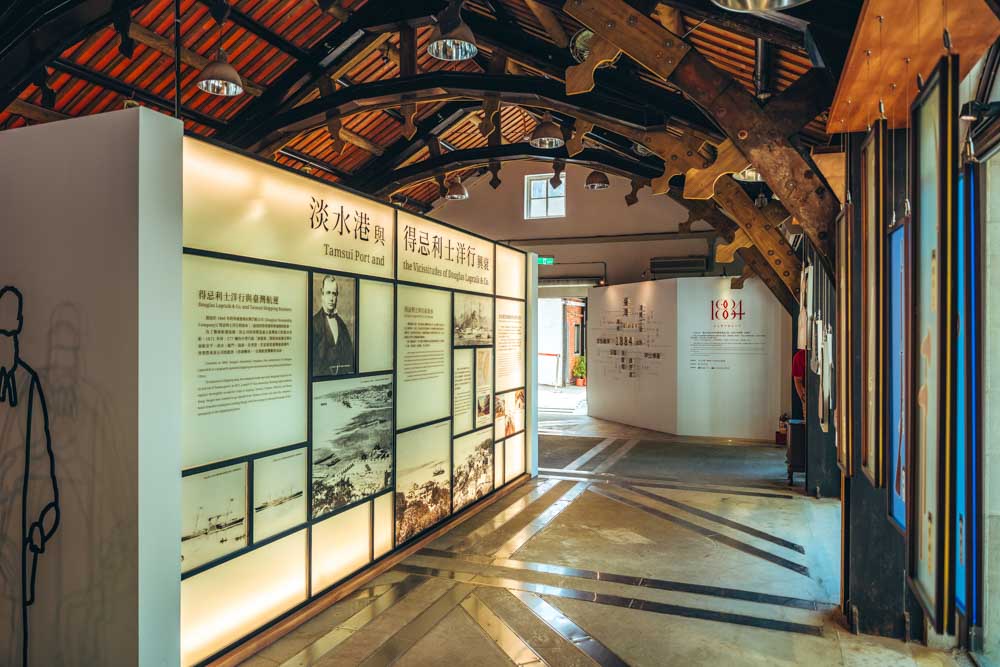
At the far (north) end of the Old Street, you have a choice. To the left lies the scenic option, the flaneur’s favorite – an estuary-adjacent promenade where tables spill from restaurants and everyone and his dog (literally) heads to enjoy an afternoon stroll. Alternatively, sticking with Zhongzheng Road takes you past a series of culturally and/or historically significant spots. In Fuyou Temple – Tamsui’s oldest religious establishment – residents leave oblations for Mazu, the sea goddess, while nearby, a bust of Dr. George Leslie Mackay – beloved Taiwanese son-in-law, bringer of Jesus and improved oral hygiene – presides over the three-way junction beside the still-standing clinic he established in the 1880s and a beautiful red-brick Gothic-style Japanese-era remodeling of his Tamsui Presbyterian Church. Just a few doors down are cultural hubs in the form of the Chi Po-lin Museum, which honors the legacy of late aerial photographer Chi Po-lin, director of the acclaimed documentary Beyond Beauty: Taiwan from Above, and the old warehouse of an imperial-era British trading company, Douglas Lapraik & Co., now a museum dedicated to outlining the ebb and flow of Tamsui’s economic fortunes.

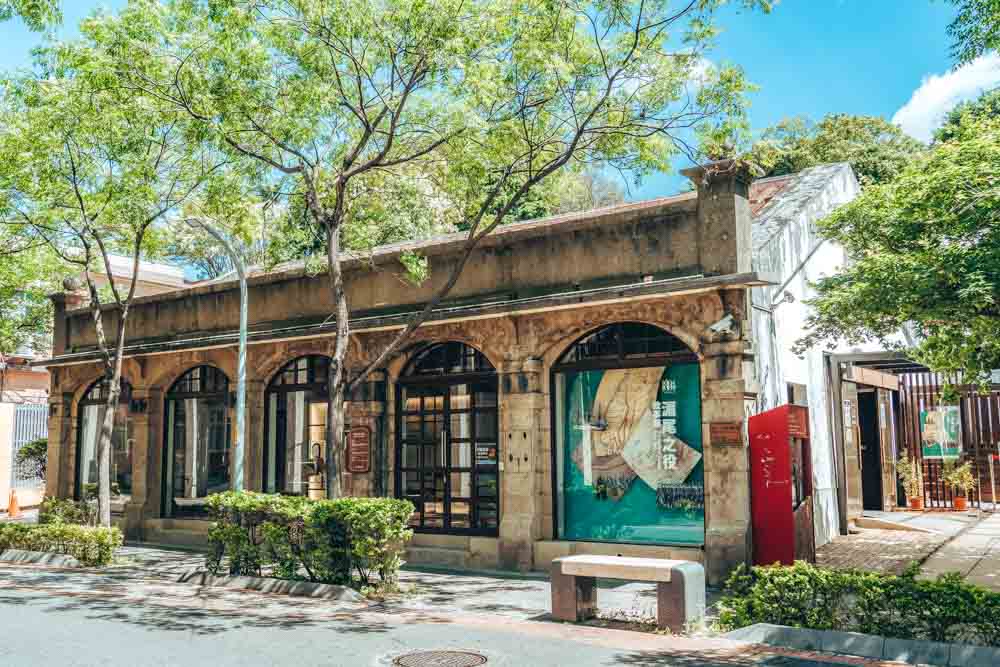
Chi Po-lin Museum | 齊柏林空間
Tel: (02) 2692-1996
Add: No. 316-1, Zhongzheng Rd., Tamsui Dist., New Taipei City
( 新北市淡水區中正路316-1號)
Hours: Wed-Mon 10am-6pm
Website: www.chipolin.org/chipolin-space
Douglas Lapraik & Co. | 得忌利士洋行
Add: No. 316, Zhongzheng Rd., Tamsui Dist., New Taipei City
(新北市淡水區中正路316號)
Tel: (02) 2629-9522
Hours: Mon-Fri 9:30am-5pm, Sat/Sun 9:30am-6pm
Website: www.tshs.ntpc.gov.tw
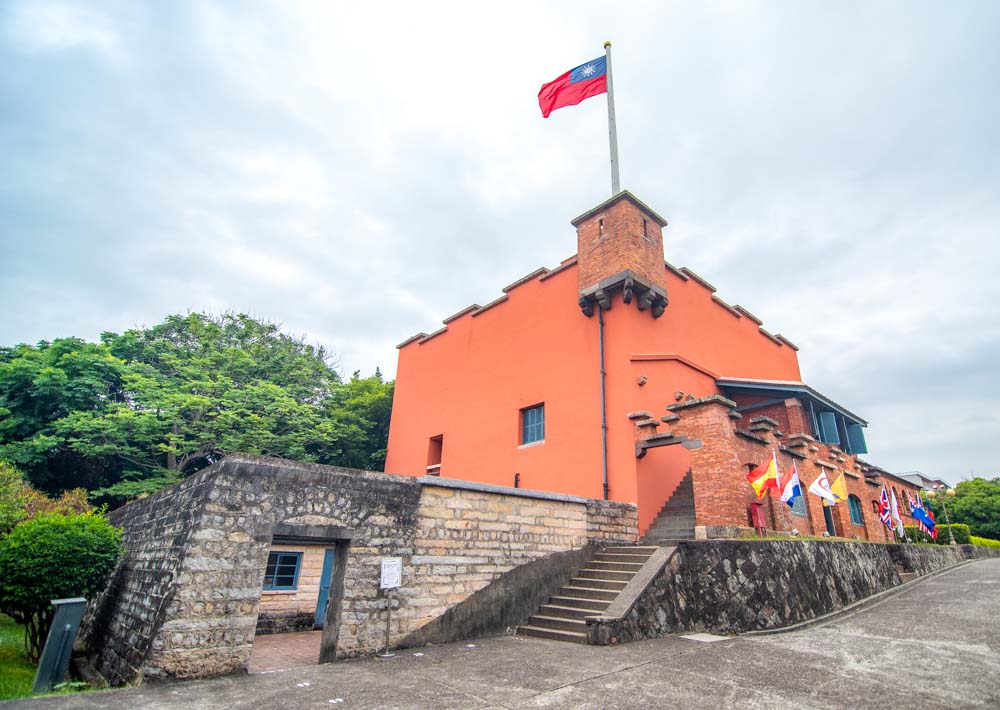
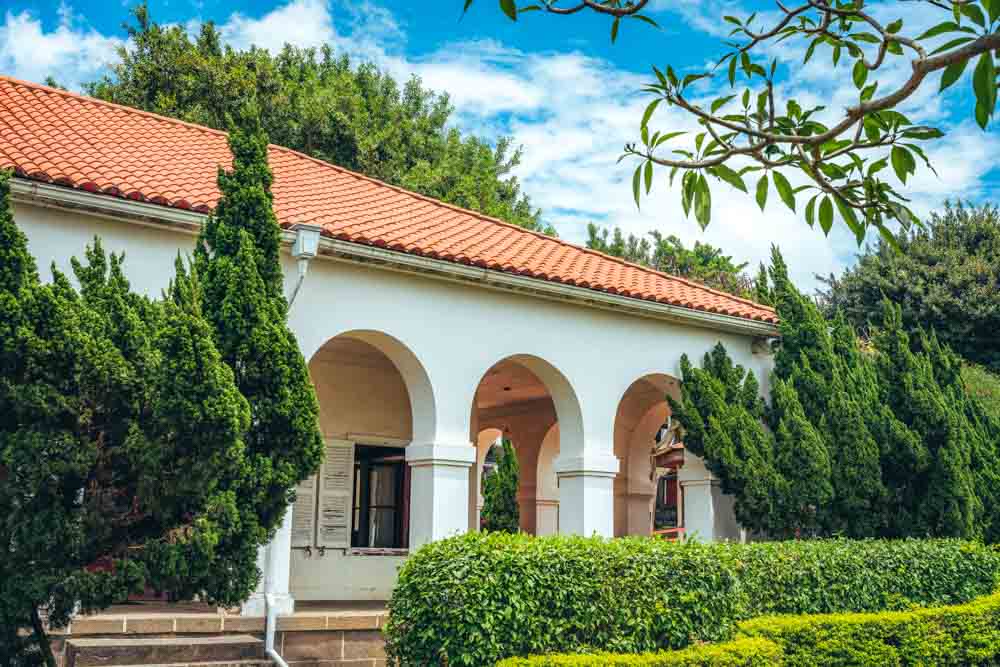
Just northwest of where Zhongzheng Road reconvenes with the promenade, it’s a short walk uphill to Fort San Domingo. Resting on a naturally raised terrace just upriver from the mouth of the Tamsui River, Spanish settlers seized on this as the obvious defensive position when they claimed the Tamsui area in 1628. Wise though this decision may have been, their tenure was short-lived, and after they were ousted in 1642, their Dutch successors built the cubic fort you see today. An astute eye may also pick up a few British-flavor notes in the form of the adjoining neoclassical red-brick residence, added when the Brits leased the land for their consulate in the 1800s. An NT$80 ticket covers access to the museum and gardens, and the nearby attractions of Hobe Fort and the Little White House.
Fort San Domingo | 紅毛城
Add: No. 1, Ln. 28, Zhongzheng Rd., Tamsui Dist., New Taipei City
(新北市淡水區中正路28巷1號)
Tel: (02) 2623-1001
Hours: Mon-Fri 9:30am-5pm, Sat/Sun 9:30am-6pm
Website: www.tshs.ntpc.gov.tw
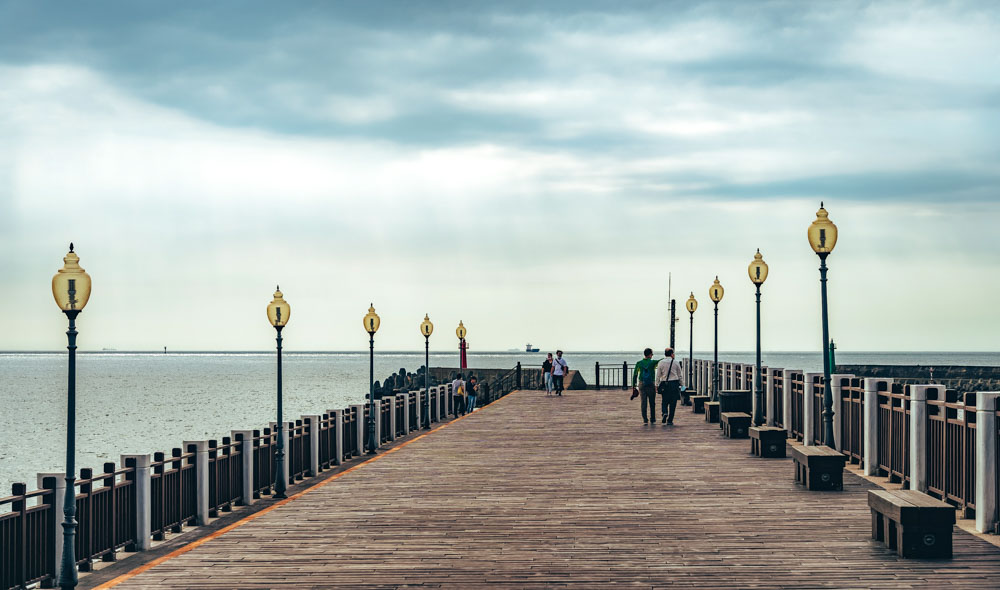
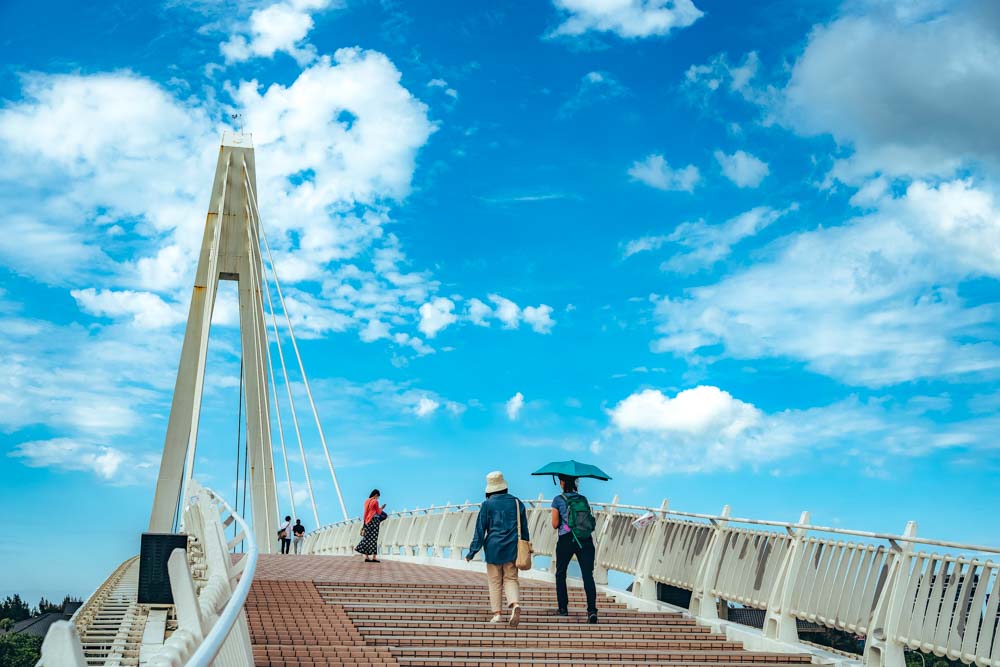
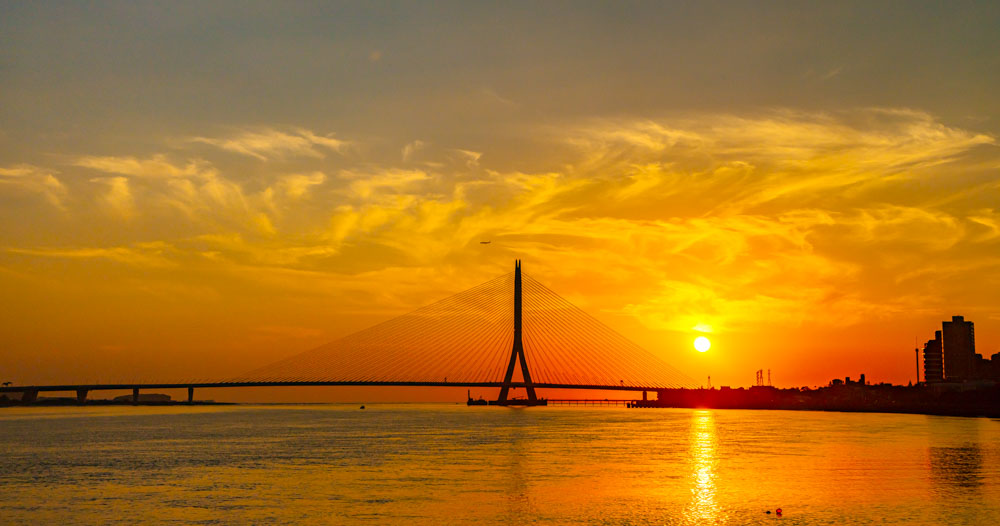
Continue heading northwest, and you’ll eventually find yourself at Fisherman’s Wharf, a small fishing port featuring a row of restaurants, snack shops, and cafés wedged snugly into the space beneath the harbor wall. Until recently, travelers flocked to see the lights of Lovers’ Bridge ripple across the dusk-darkened waters, but as of 2026, its status as Tamsui’s most tourist-popular structure has been usurped by the starkly elegant Danjiang Bridge, which leaps across the river’s mouth. Designed by the late world-renowned architect Zaha Hadid, it embodies the graceful physicality of performers from the celebrated Tamsui-based Cloud Gate modern-dance company, the two feet of its wishbone-shaped single concrete mast resembling a pair of dancers locked together in a mid-air embrace. Even if you’re no passionate pontist, a ramble or ride across the 920-meter-long span is a pleasant end to a Tamsui day.
Sanzhi
Heading eastwards from Tamsui, Provincial Highway No. 2 noses its way into Sanzhi District. Bounded by the open ocean on one side and the (more often than not cloud-covered) peaks of Yangmingshan National Park on the other, the landscape here confers such a sense of calm that even the buildings – released from the city’s sky-chasing urban sprawl – seem to relax, spreading themselves out among scruffy farmland.
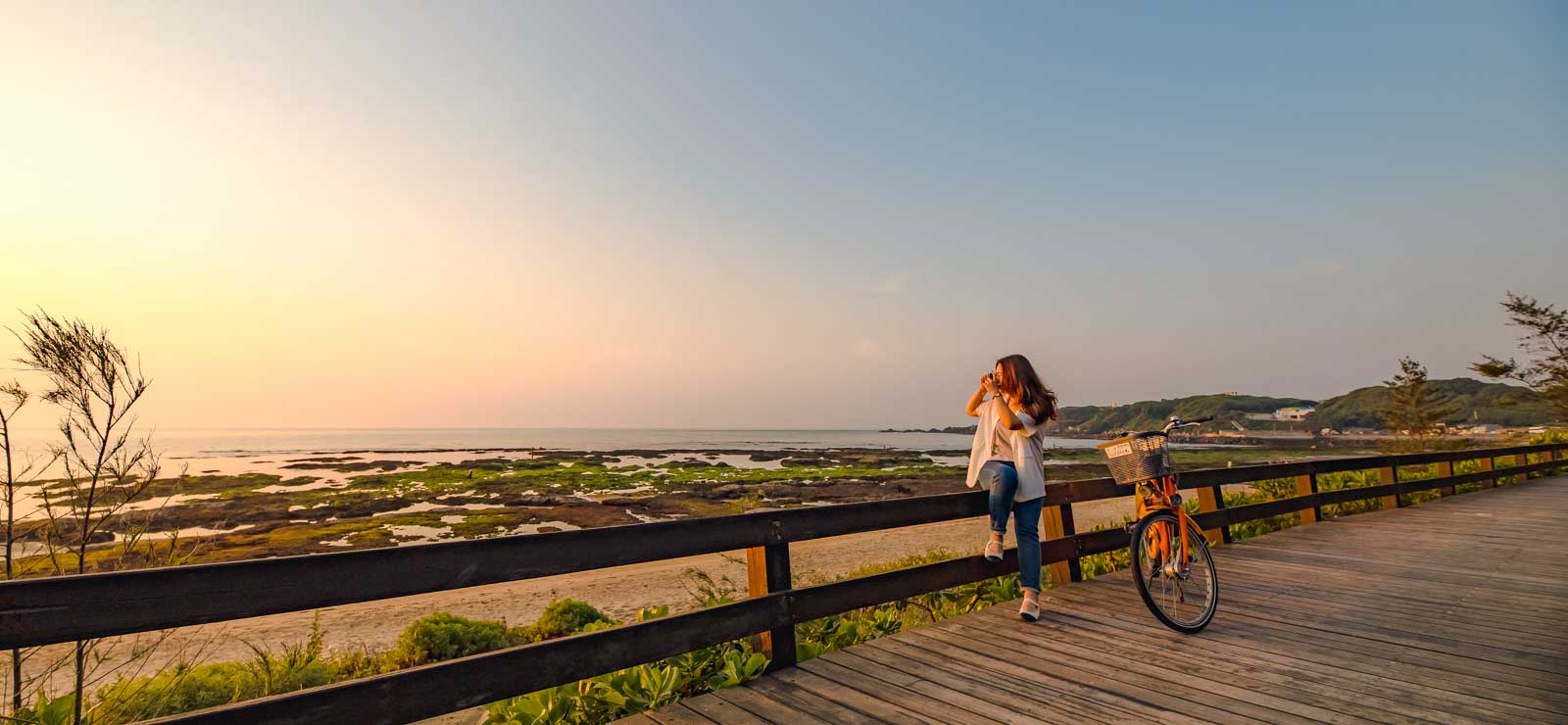
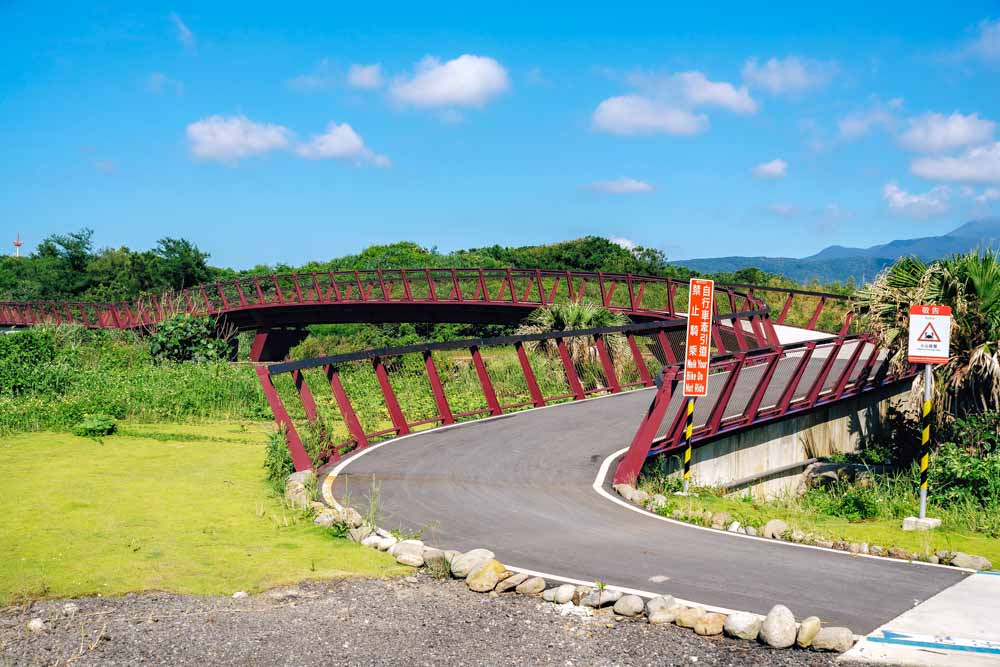
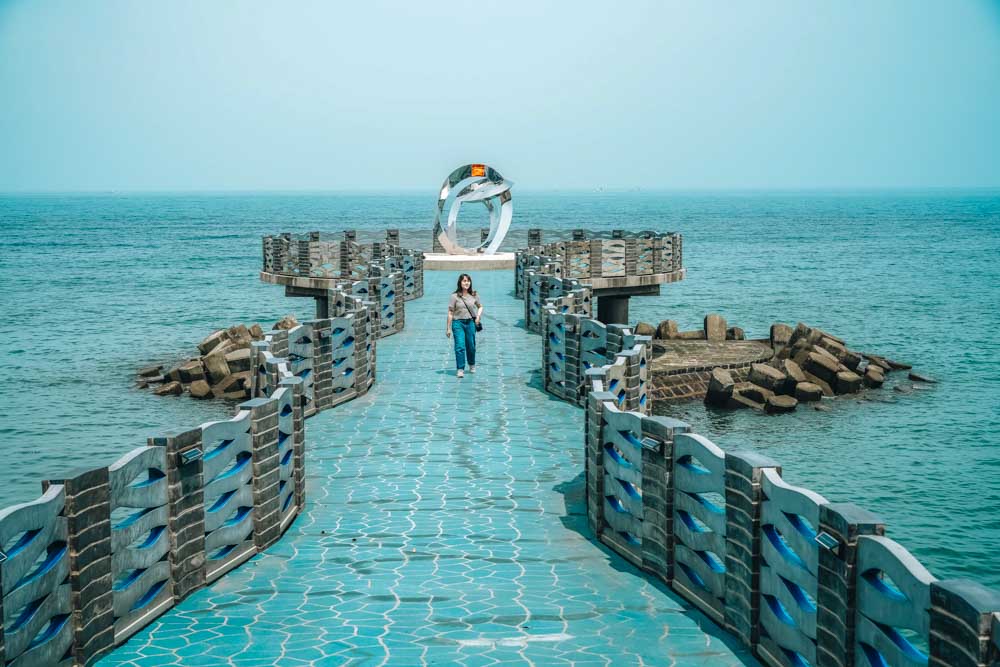
By the beach at Qianshuiwan (“Shallow Water Bay”), a cluster of water-facing cafés marks the starting point of the Shuangwan Bikeway and provides a logical gateway for deeper exploration. After pre-fueling with coffee and purchasing provisions, you can set off along the 8-kilometer cycling (or walking) trail bound for Baishawan (“White Sand Bay”). The scenery en route comes in several shades of seaside, but my favorite sections are the stretches of boardwalk where the water is visible through feathery branches of she-oak and sandy trails track down to the shoreline. (Anyone with beachcombing predilections will enjoy the intriguing wealth of tile fragments and beach glass on offer.)
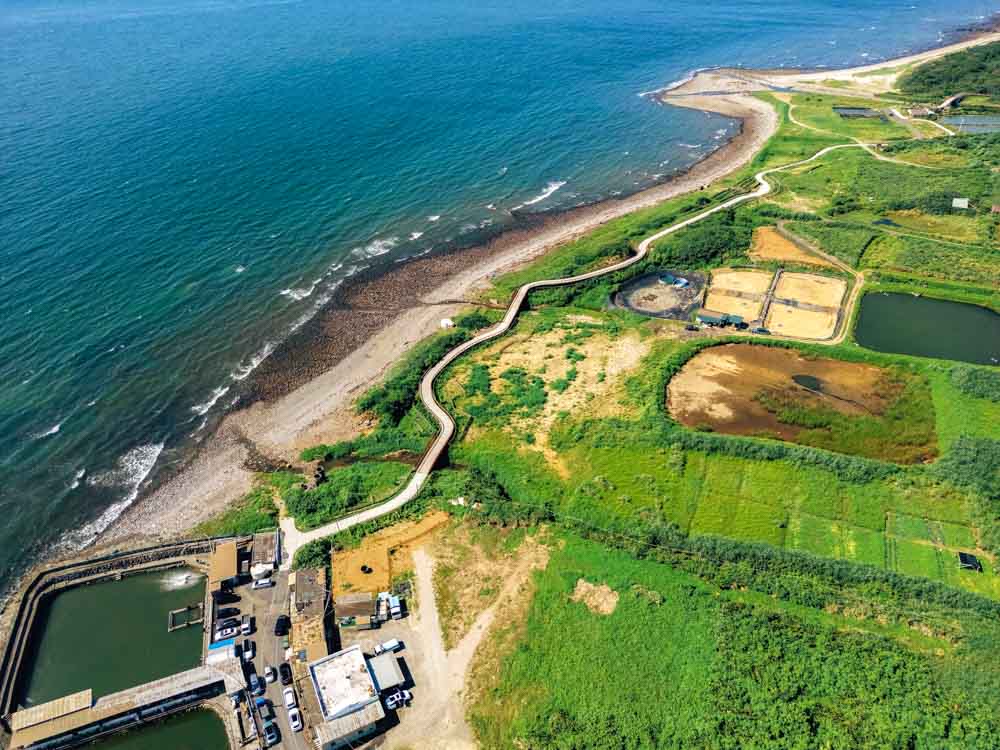
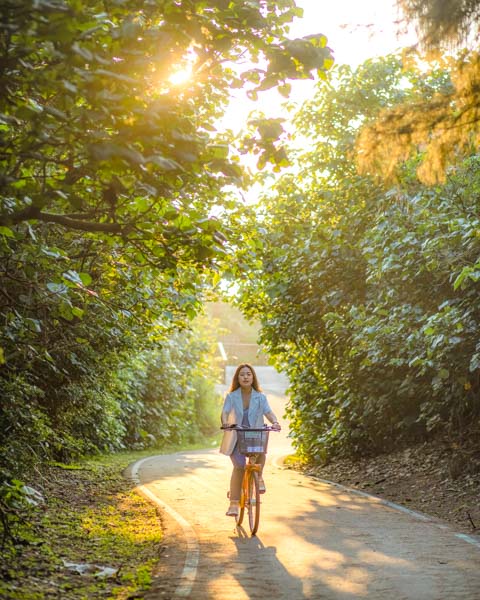
Linshanbi (Linshan Cape) is where hikers separate from bikers (it also marks the point where Sanzhi transitions into Shimen District, but let’s not worry about such particulars). Those on two wheels will need to leave the waterfront path at the fishing harbor here, while walkers can follow a quiet trail around the cape. Passing alongside the harbor on a recent visit, I watched shoals of rabbit fish nibble at mooring ropes, and spied a flock of bigfin reef squid hiding beneath a tangled mass of seaweed – my first wild-squid sighting. On weekends, locals walk their grannies and small dogs around the headland, but on weekdays, its pebble-strewn coves belong mostly to fisherfolk and seabirds; pausing to explore one, I watched a Kentish plover scurrying in a cartoonishly purposeful fashion after a series of camouflaged crabs, none of which it managed to catch.
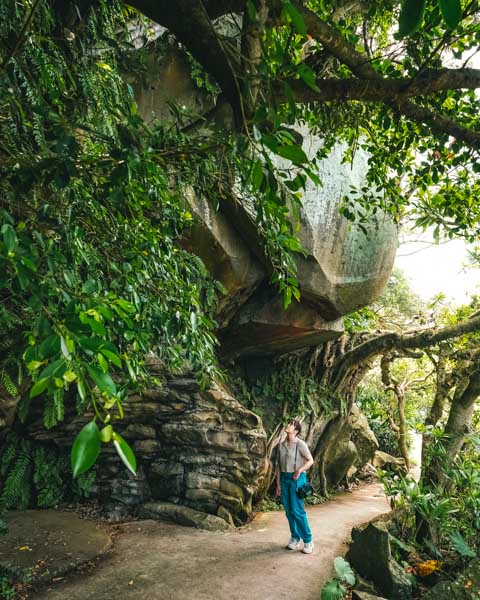
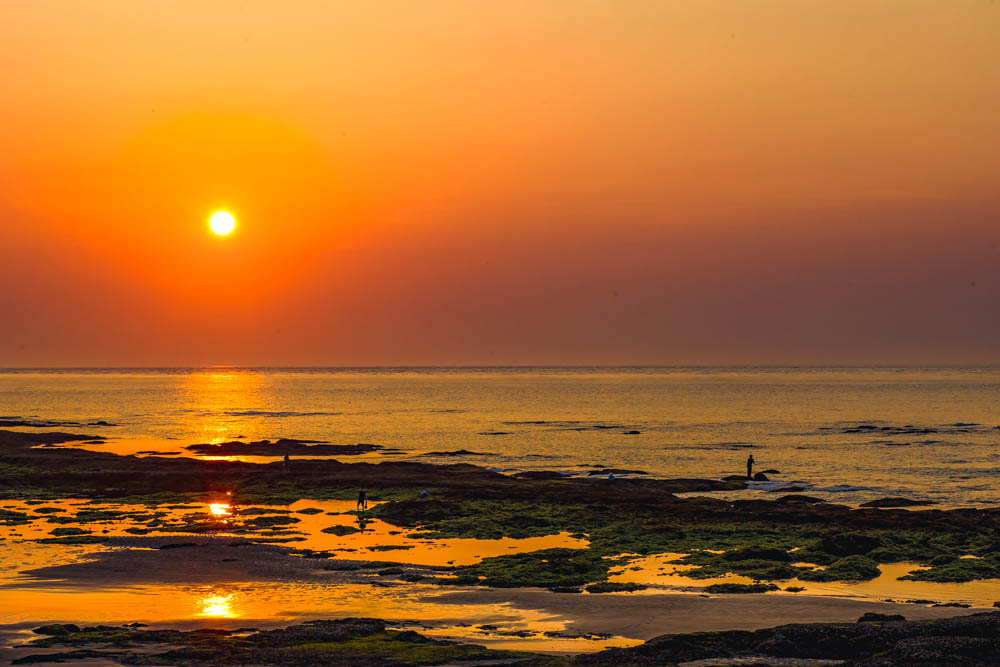
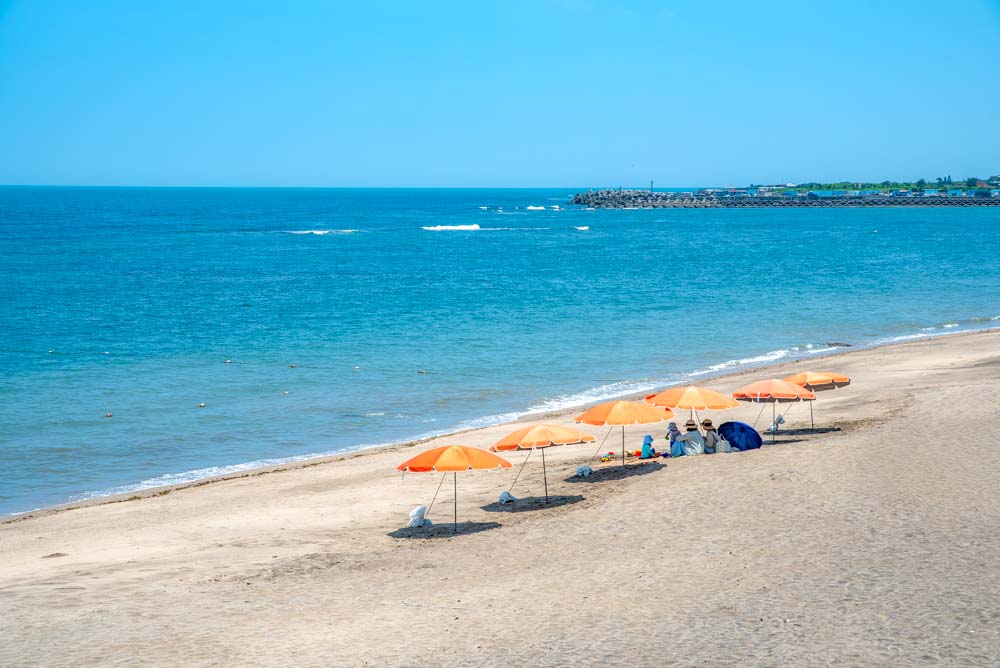
The most memorable section of the trail comes as you round a corner and catch your first glimpse of Baishawan, framed by a border of scraggly screw pine. Extending between two volcanic promontories, this almost 1-kilometer-long stretch of fine coral sand is not quite as white as the name suggests, but it’s not far off. With clear, inviting waters, it should come as no surprise that the designated swimming zones are regularly filled with Taipei folk seeking respite from the humidity of their city-shaped steam room.
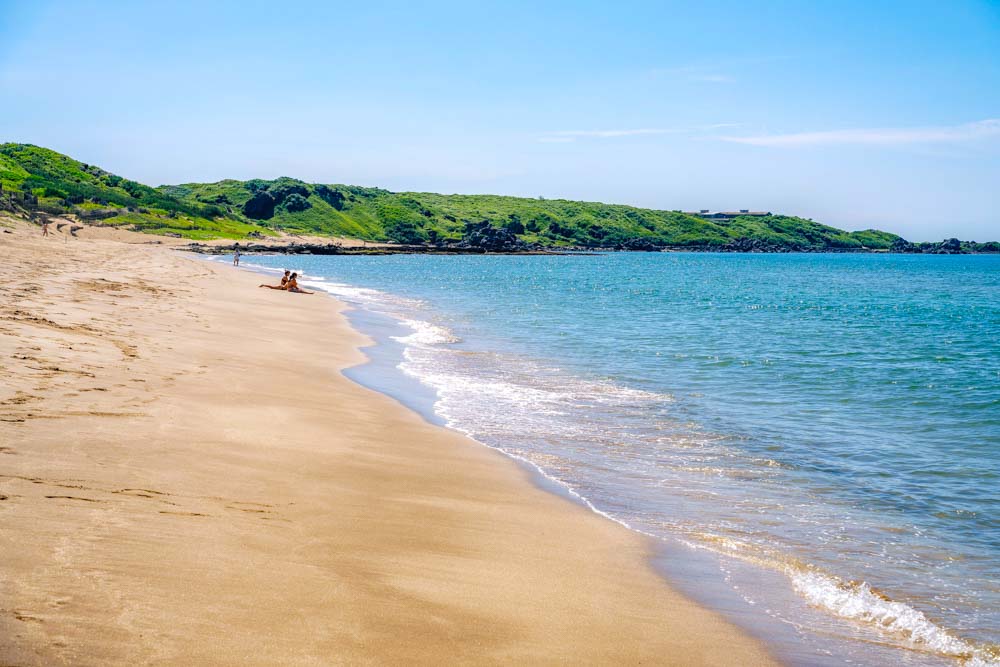
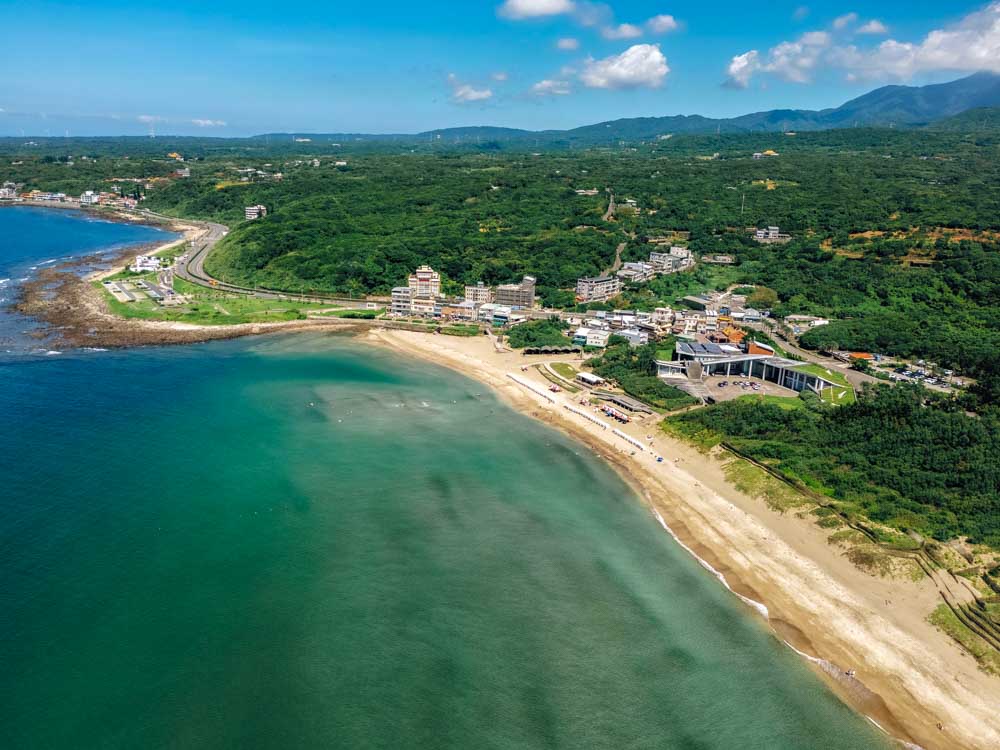
It’s not just swimmers and sunseekers who are drawn to the waters here, either. As summer tips into autumn, the bay is reliably windy, making it popular with surfers, kite flyers, and people who like to combine the two into the sport of kite surfing – there’s even an annual kite flying festival every September or October. And travelers keen to catch a few waves without the hassle of lugging kit around don’t need to feel left out – situated among the collection of businesses clustered near the beach’s east-end shoulder, CU Surf Paradise offers board rentals (surf, body, SUP) and coaching. Note: It’s worth calling ahead or contacting the store through its socials to confirm availability and check the water conditions.
CU Surf Paradise | 西元海上休閒樂園
Add: No. 1-9, 8 Jia, Demao Borough, Shimen Dist., New Taipei City
(新北市石門區德茂里八甲1-9號)
Tel: (02) 2638-2733
Hours: Tue-Sun 9am-6pm, Sun until 5pm
IG: www.instagram.com/cusurfparadise
Post-dip, pay-to-use showers can be found beside the visitor center, and if you want a few pointers on where to head next, the center’s blissfully air-conditioned exhibits cover attractions in Sanzhi, Shimen, and the broader North Coast area … or you could just turn the page in this article and keep reading.
Shimen
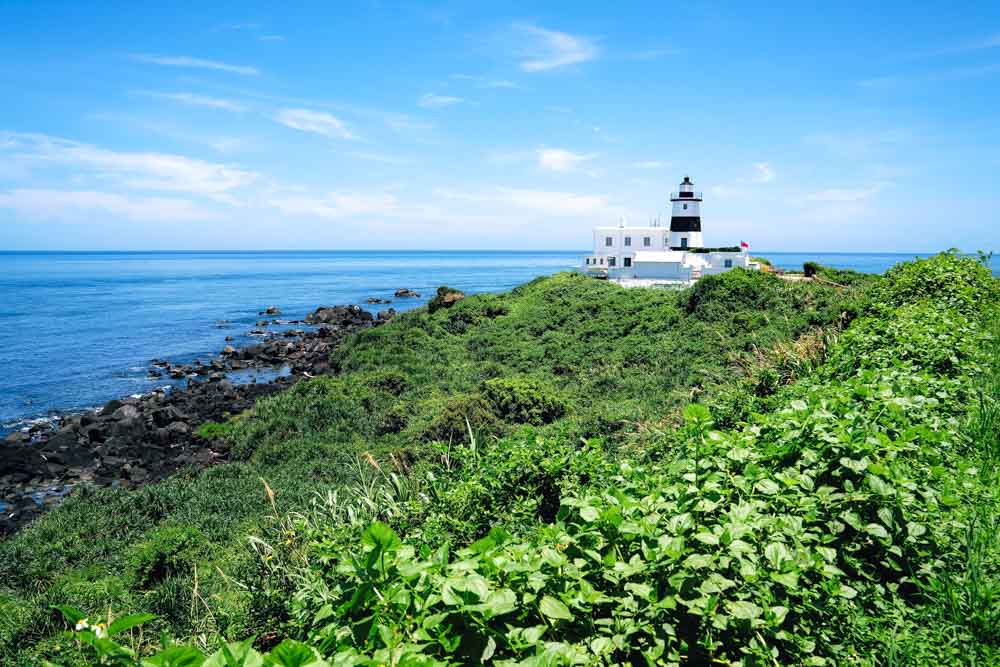
Fugui Cape marks both the eastern boundary of Baishawan and the northernmost point of Taiwan’s mainland. A headland trail leads to the octagonal black-and-white lighthouse, which has become an unofficial check-in point for people hoping to visit all four cardinal extremities – in spring, the path is bordered by the nodding bell-like heads of Formosan lilies, and in early summer, by carpets of descriptively named firewheels.
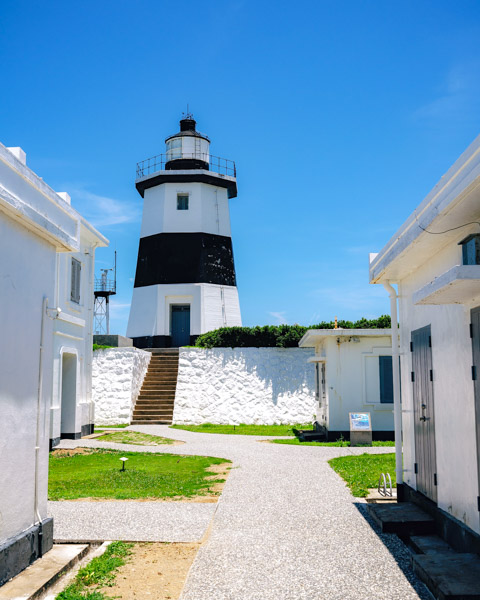
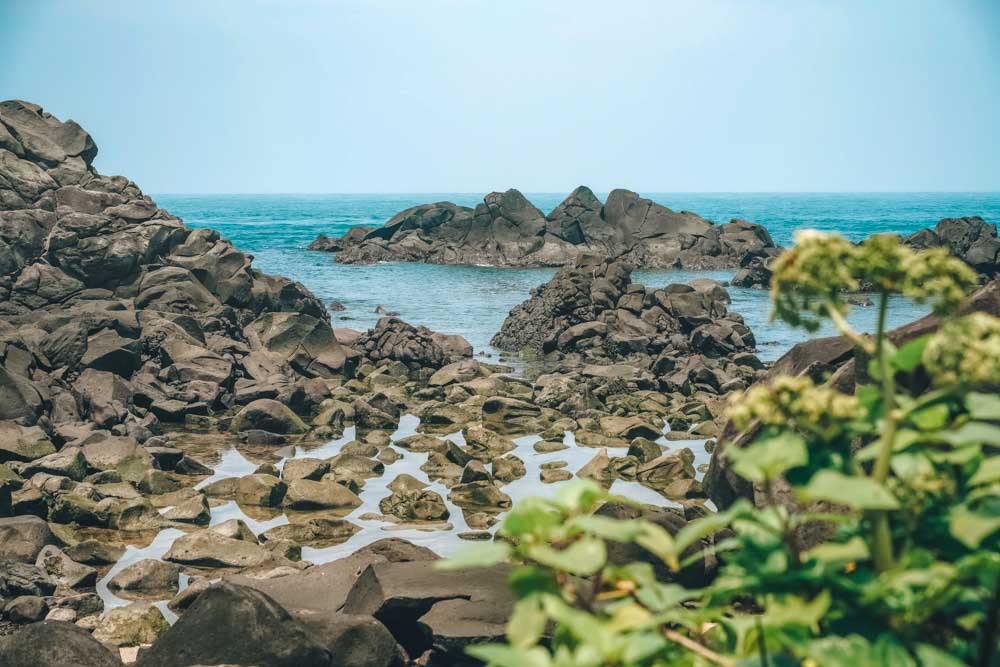
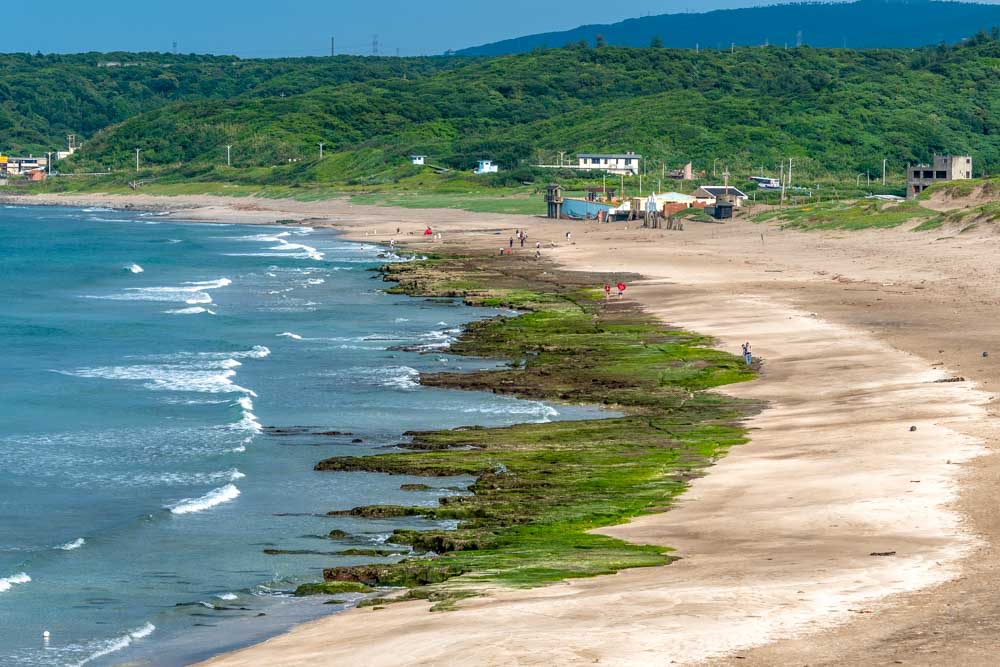
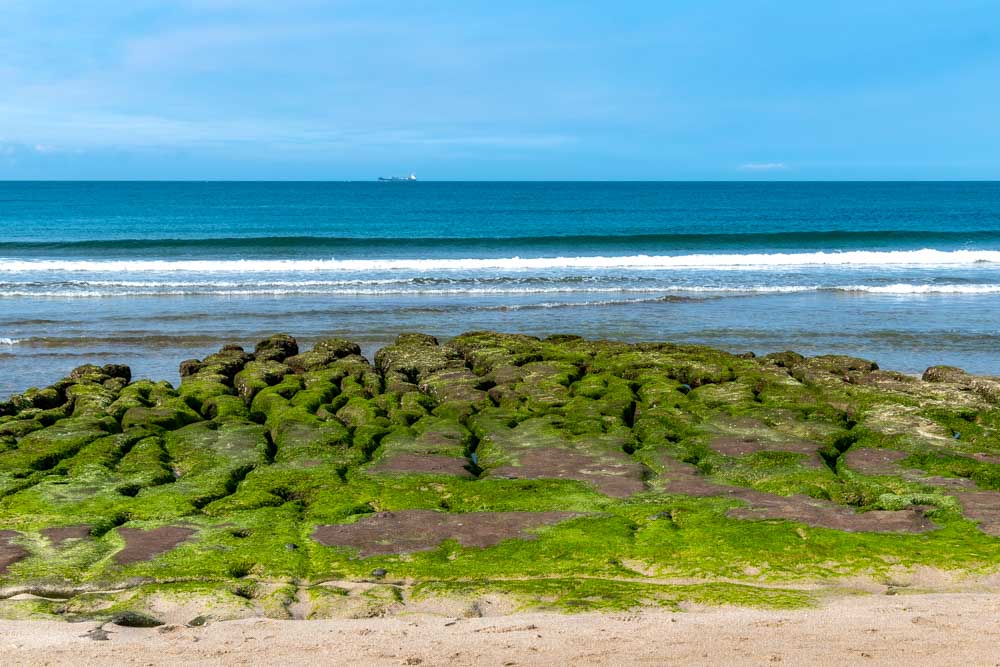
On its east lies Laomei beach, which – though not a swimming beach like its neighbor – has a draw of its own in the form of Laomei Green Reef, which is made of dark-gray andesite smoothed by the passage of time into knobbly phalanges. Every April through May, just as the weather begins yo-yoing over the 30°C threshold, a shaggy, velveteen fuzz of sea lettuce and green hair algae covers the rocks, bright as an astroturf blanket. This transient scenery is a hit with local tripod-toting folks, who flock here at sunrise and sunset to catch long exposures that cast the encroaching tide as an ethereal mist.
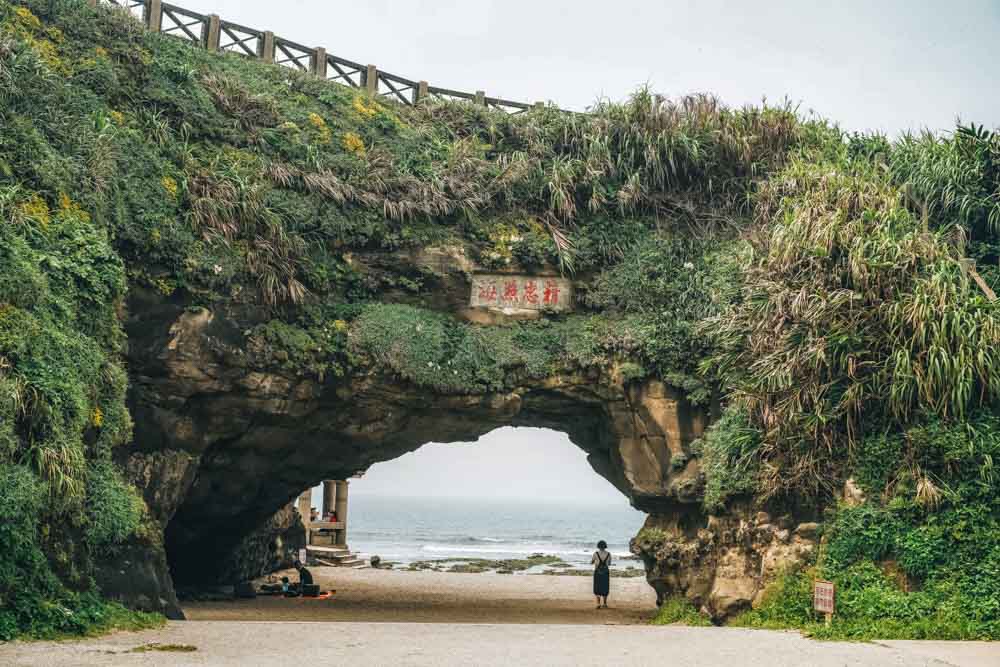
A short bus ride from Laomei sits Shimen Arch, the area’s second biggest photography magnet. This 10-meter-high natural stone gate was formed by waves scouring the rockface before uplift gradually rearranged the scenery to where it sits slightly inland today. The arch frames a slice of shoreline full of the kind of fish-filled tidal pools that are perfect for kids to prod and probe, and at some point, in the past, the structure was augmented with steps and a viewing platform, meaning you have multiple viewpoints from which to shoot your perfect shot.
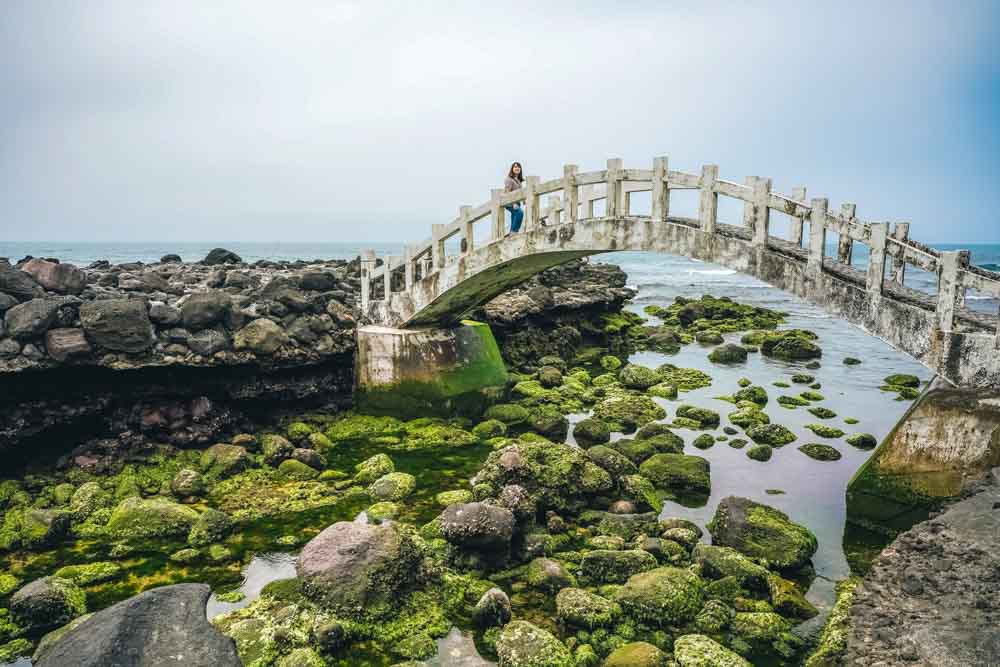
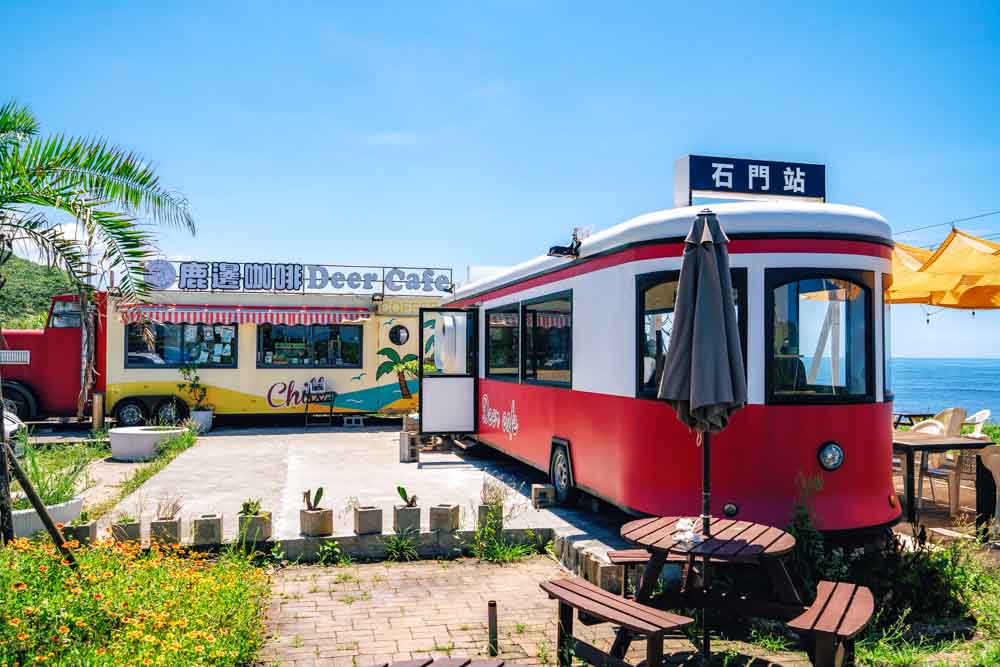
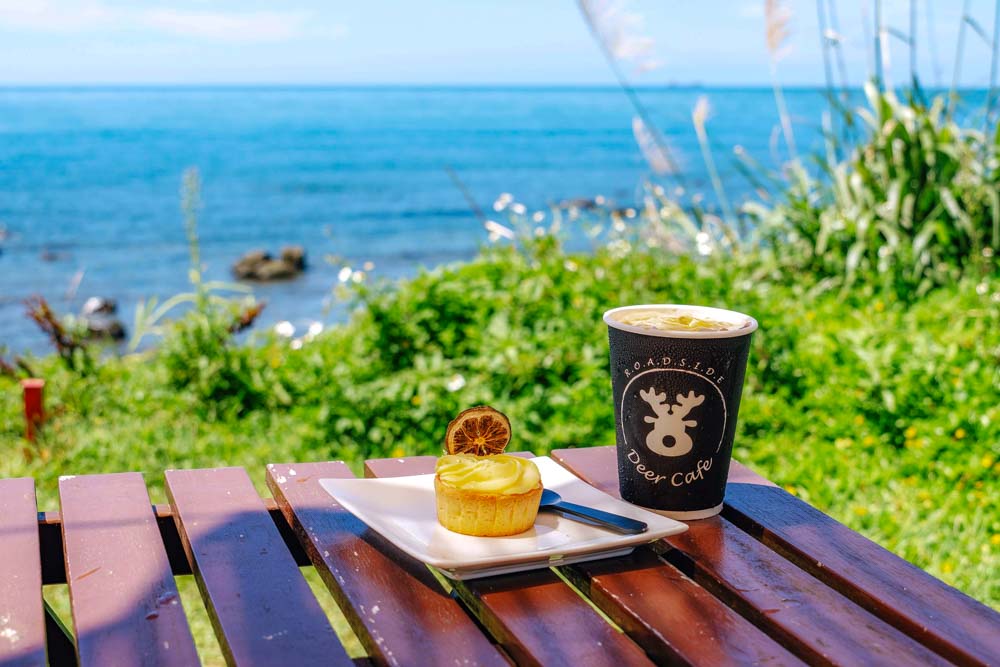
Still, not everyone enjoys sand in their shoes and wind in their hair, and fortunately, for such souls, the coastal road is essentially a 52-kilometer café crawl with air-conditioned summer havens (or cozy winter refuges) to suit almost every aesthetic preference. Deer Ya and Deer Café (no relation, as far as I can tell) are two options within striking distance of Shimen Arch. The former occupies a whitewashed, blue-detailed building, and between its crowd-pleasing menu (pasta, waffles, shaved ice, lattes topped with cute art) and its second-floor kids’ playroom, it’s a hit with families looking for a pit stop to keep everyone happy. Deer Café, meanwhile, is a pit stop in the more literal sense. Located hard up against the road and operating out of what looks like converted trams, this spot has evolved into a biker hangout where road trippers enjoy fried snacks, hot drinks, and thick toast with a backdrop of ocean views until the wee hours. (Rest assured, Taiwanese bikers are merely garrulous, and not even a little menacing.)
Deer Ya | 鹿野咖啡
Add: No. 3-5, Laobengshan, Shimen Dist., New Taipei City
(新北市石門區老崩山3號之5)
IG: www.instagram.com/deer_ya1001
Deer Café | 鹿邊咖啡
Tel: 0963-339-402
Hours: Weekdays 1pm-3pm, weekends 12pm-3pm
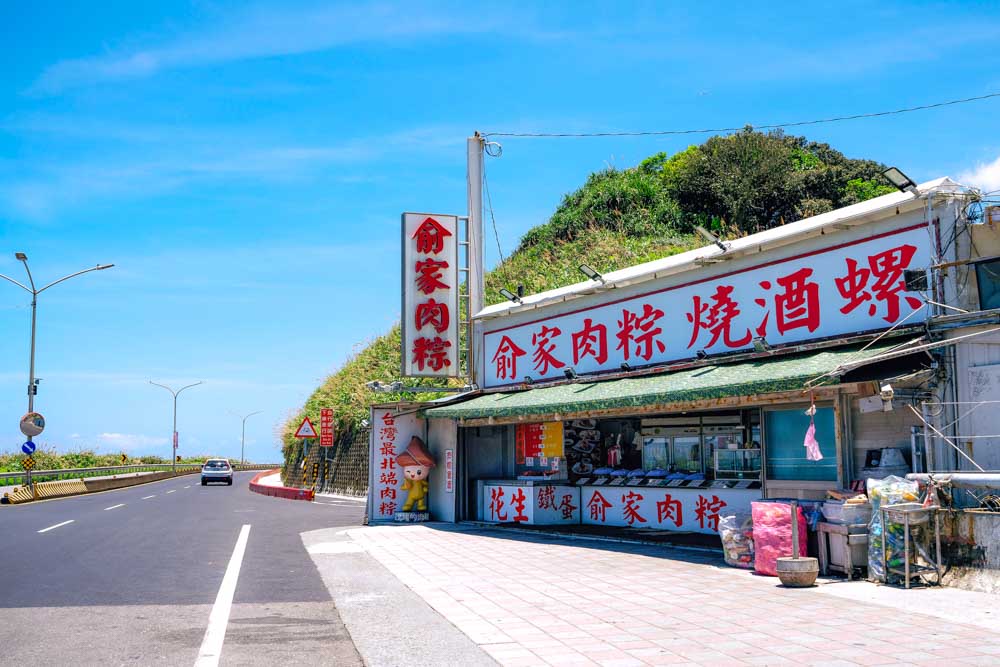
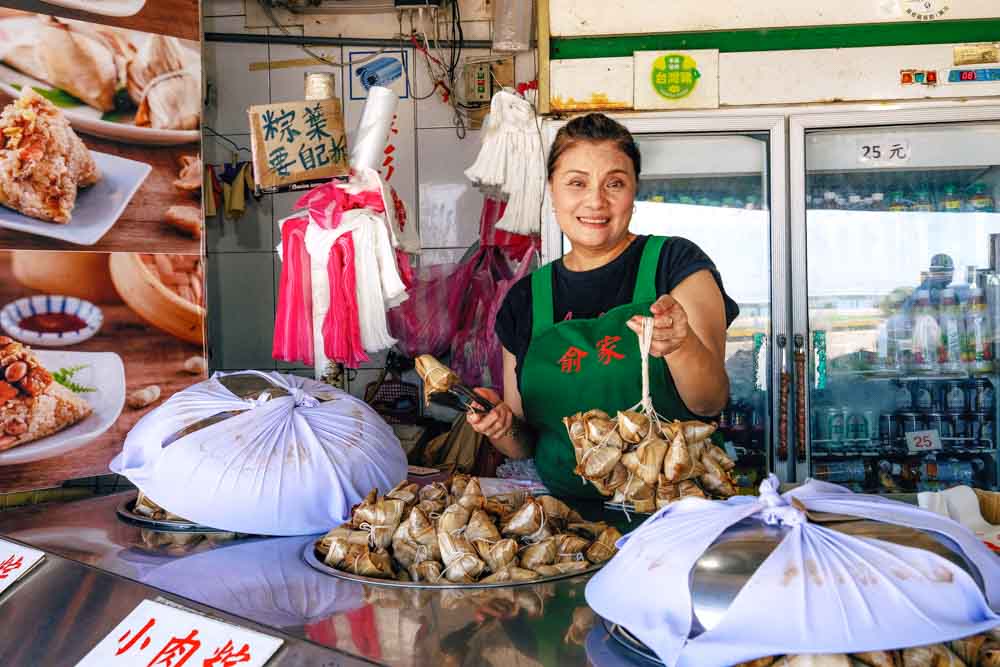
For something more portable, Shimen’s go-to snack is the humble rice dumpling. Thanks to an association with the nearby coastal Temple of the Eighteen Lords (apparently worshippers who offer rice dumplings stand a better chance of getting their prayers heard), stalls offering these savory snacks have proliferated throughout the region, each with its own signature blend. One such shop is Yu Family Rice Dumplings, which makes all its dumplings in-house. The brief menu offers northern-style and southern-style (northerners stir-fry their rice first for a rich, unctuous bite, while southerners opt for steaming it en-leaf), both studded with various combinations of minced pork, preserved radish, and mushroom (vegetarians are catered for, too). The queue for this popular stall is long, but service is fast, and at least you can watch the lightning-fingered staff deftly wrapping dumpling after dumpling as you wait.
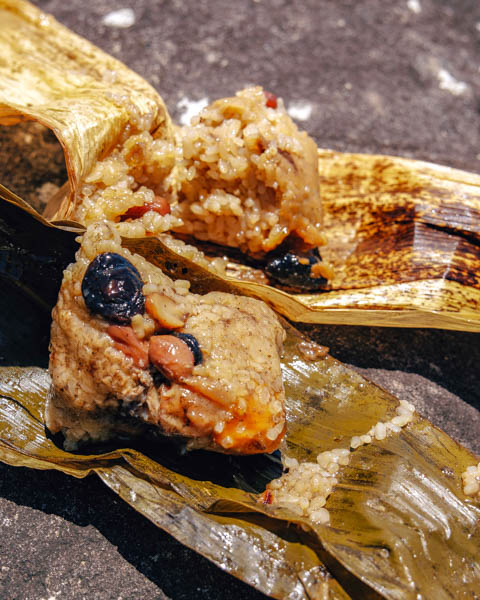
Yu Family Rice Dumplings | 俞家肉粽
Add: No. 104, Jingong Rd., Shimen Dist., New Taipei City
(新北市石門區淡金公路104號)
Tel: (02) 2638-3961
Hours: 24h
Highlights
Google map
About the author