Salt Fields, Mangroves, and Migratory Birds along the Tainan-Chiayi Coast
TEXT | STEVEN CROOK
PHOTOS | VISION
Beyond the buzz of the big cities and the dramatic landscapes that fill the island’s mountainous interior, there’s a side to Taiwan many visitors never get to experience. The southwest coast blends nature, history, and human efforts to carve out a living, offering entirely different glimpses into the island’s soul.
Overlapping yet distinct entities, the Southwest Coast National Scenic Area and Taijiang National Park both deliver unique rewards for the traveler.
The scenic area is a unit of the national-level Tourism Administration, whose management is charged with safeguarding and promoting cultural and industrial heritage in the littoral parts of Tainan City, Chiayi County, and Yunlin County. At the same time, it coordinates the development of sustainable tourism practices that benefit local economies without compromising the region’s delicate ecosystems.
The administration of the national park – seven-eighths of which is ocean, the remainder being parts of Tainan around Qigu Lagoon and the Zengwen and Luerman rivers – prioritizes the preservation of sensitive bird-friendly habitats and the broader coastal environment.
Jingzaijiao Tile-paved Salt Fields
If you’re deep into planning your Taiwan trip, chances are you’ve already come across striking photos of the Jingzaijiao Tile-paved Salt Fields. When conditions are just right, the sunset here is nothing short of spectacular. The shallow water transforms the salt pans into mirrors, reflecting the blues and reds of the sky and the whites and grays of clouds.

There’s much more to this location than pretty pictures, however. Capitalizing on the region’s sunny weather and its long dry season, thousands of hectares of land in Tainan and Chiayi were long used to turn seawater into table salt. Until the dawn of the 21st century, local laborers spent their days raking, shoveling, and piling salt crystals, then portering hefty sacks of the commodity to the nearest road or narrow-gauge railway. Visitors to Jingzaijiao will come away with a keen appreciation of the effort and sweat expended to produce something most people take for granted.


Sicao Green Tunnel
Not far from the historic urban neighborhood where the Dutch East India Company established its Taiwan trade outpost back in the 17th century, Sicao Green Tunnel is a stretch of canal within Taijiang National Park. The mangroves growing on either side form a low verdant canopy, giving those who float down the waterway on a bamboo raft the sense that they’re exploring a tributary of the Amazon.

Thirty-minute boat tours of the Green Tunnel are very popular. Still, hardcore ecotourists might also want to sign up for the considerably longer, wider-ranging Taijiang excursions on larger craft. The latter provide good opportunities to see fiddler crabs, mudskippers, and waterbirds, and learn something about the oyster farming and other human activities that have influenced the environment.

Aogu Wetlands
In the northwestern corner of Chiayi County, human residents are few here. Come at the right time of year, however, and you’ll find waterbirds in the thousands, among them the endangered Black-faced Spoonbill. This wintertime visitor has an endearing way of sweeping its outsized beak through shallow water as it searches for food.

The stubby peninsula that’s now the 1,465-hectare Aogu Wetlands and Forest Park isn’t a pristine wilderness. In the middle of last century, the authorities tried to transform the area’s coastal swamps into farmland. Land subsidence and seawater intrusion soon began to derail this plan, but the resulting brackish lagoons were eventually recognized as a paradise for fish, crustaceans, mollusks, and the creatures that feed on them.
A crucial stopover on the East Asian-Australasian Flyway (along which millions of birds migrate each year), Aogu’s avian population begins to multiply around autumn’s end as the resident Black-crowned Night Herons, Crested Goshawks, and Common Moorhens are joined by Northern Shovelers, Northern Pintails, Tufted Ducks, and others. Many of these feathered treasures arrive from as far away as Siberia. No fewer than 306 bird species have been recorded at Aogu. Some of these have only appeared in the past two decades, after an afforestation program boosted the amount of tree cover.


To explore expansive Aogu, you’ll need a set of wheels. A logical place to begin is the Seaview Pavilion, aka Guanhai Observation Tower, where knowledgeable volunteers happily share details of recent avian sightings. The pavilion is near the peninsula’s northwestern extremity; from there, it makes sense to follow the dike road in a counterclockwise direction before continuing southward.
Chiayi to Tainan
A 25-minute drive from Aogu, the port town of Budai is synonymous with fish. The town’s harbor is home to a sizable fishing fleet, and its seafood market is one of the liveliest in south Taiwan.

Perhaps Budai’s most popular photo op is the translucent High-Heel Church. This memorable 18-meter-high structure isn’t an official house of worship, although it’s sometimes used for weddings and other events.

Another 20 minutes along the road to Tainan’s urban core brings coast-tracking motorists to Nankunshen Daitian Temple. This sprawling religious complex is best visited on weekends, when pilgrims and performance troupes from affiliated temples come to sacrifice incense to the multiple deities honored here. From the temple, it’s about an hour to Tainan’s Anping District.

Yuguang Island
For most of its history, this 2.3-kilometer-long strip of land wasn’t an island. Like Cijin Island in Kaohsiung City, it was severed from Taiwan proper for the sake of economic development. By the 1970s, the old entrance to Tainan’s Anping Harbor was too shallow for modern cargo vessels, so the authorities created a deeper entrance between the ocean-facing communities of Sankunshen and Sikunshen. Accepting the new geographical reality, residents of what had long been known as Yuguang (“Fishing Lights,” a nod to the traditional practice of using bright nighttime lamps to draw catches to the surface) began calling this place Yuguang Island.
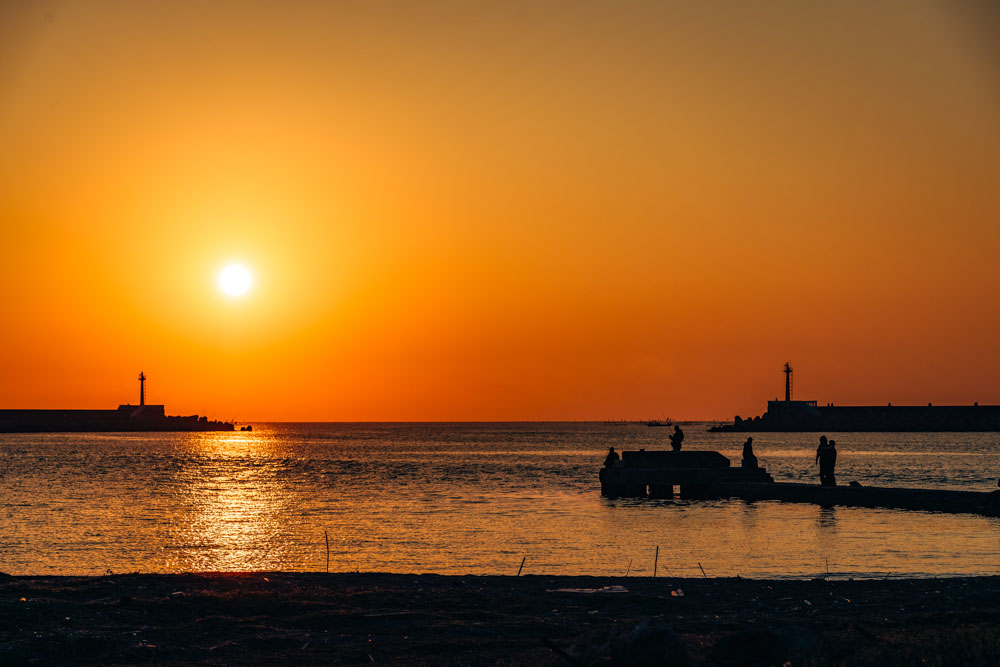
The single bridge that links the island to the rest of Anping District is wide enough for buses, although the only service is the infrequent #102. Much of the island is covered by windbreak forest and fish farms, and except for the sheltered northern part of Moon Bay, there’s nowhere suitable for swimming. Nevertheless, day-trippers come here in large numbers to enjoy what’s often a spectacular sunset.
Boardwalks connect the main island road to the bay – and thanks to the thick tree cover between the two, by the time you reach the silvery-gray sand, you may well forget that you’re not far from the bustle of downtown Tainan.

The calm coastal waters here are dotted with oyster racks, windsurfers, and stand-up paddleboarders (SUP). At dusk, the sea is like a glassy mirror, reflecting various hues of orange, pink, and purple. If at all possible, come when the setting of the sun coincides with a receding tide, as the wetness of the sand enhances the effect.
Note: The website of the Central Weather Administration (www.cwa.gov.tw) has both sunset times (click on “Outreach”) and tidal forecasts (go to “Marine” and find the data for Tainan City-Anping).
Aogu, Sicao, and Yuguang Island prove that no matter how mankind alters the landscape, nature has a way of adapting to these adjustments and giving us places of quiet wonder.
About the author

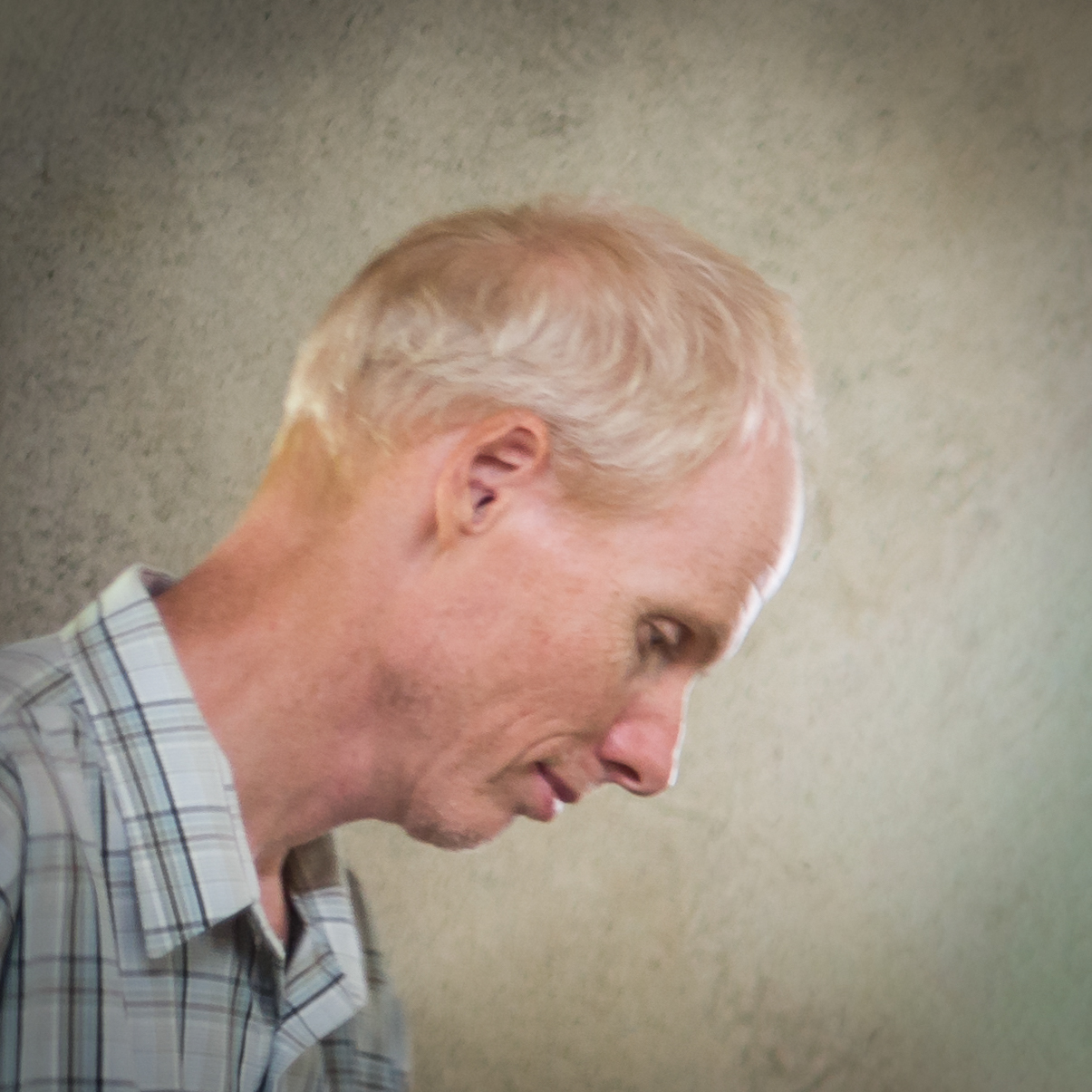
Steven Crook
Steven Crook, who grew up in England, first arrived in Taiwan in 1991. Since 1996, he’s been writing about Taiwan’s natural and cultural attractions for newspapers and magazines, including CNN Traveler Asia-Pacific, Christian Science Monitor, and various inflight magazines. He’s the author of four books about the country: Keeping Up With The War God (2001), Dos And Don’ts In Taiwan (2010), Taiwan: The Bradt Travel Guide (2010), and A Culinary History of Taipei: Beyond Pork and Ponlai (2018)
http://crooksteven.blogspot.com
http://bradttaiwan.blogspot.com