Life, Food, and a Whole Lot of History Can Be Found in Tainan’s Markets
TEXT | STEVEN CROOK
PHOTOS | ALAN WEN
It’s often said that Tainan is the most traditional of Taiwan’s major cities, a trait evident in many residents’ strong preference for local produce markets over chain supermarkets. For outsiders, these hives of activity are an engrossing window into everyday foodways and culinary customs.
West Market
Since Taiwanese people began forming significant settlements, markets have been a cornerstone of daily life. In Tainan’s earliest days, a market likely existed near today’s Ximen Road, Section 2, close to the saltwater shoreline, where a growing number of urban residents could buy what they needed.
West Market was established in 1905 as the city’s first modern municipal public market (ignoring the official name, older Tainan folks continue to call it Dacaishi, the “big vegetable market”). The authorities replaced the tangle of ramshackle stalls with a robust and hygienic reinforced-concrete facility in 1912. This was a wholesale-food trade hub of regional importance for much of the 20th century.
Those who’ve been to Building 1 of the Tainan Art Museum will recognize certain similarities between the museum and the market. Both are two-story structures dating from the 1895-1945 period of Japanese colonial rule, and at both the main entrance is chamfered (set diagonally to an intersection, rather than facing a single street).
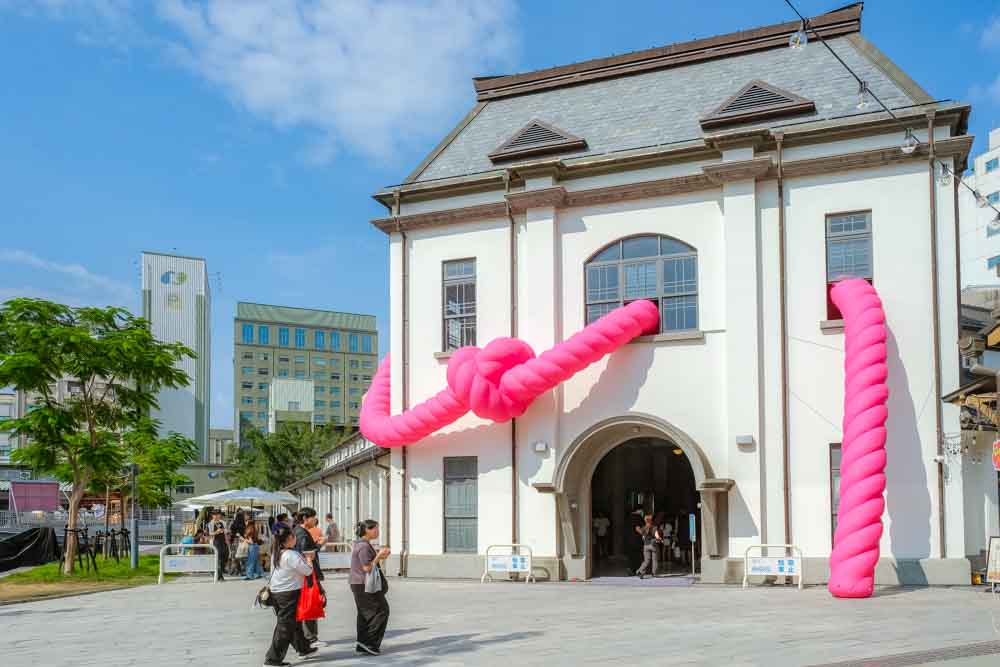
By the early years of the 21st century, the market complex was showing its age. Following a thorough renovation of the building facing Ximen Road, the North and East wings, and a pair of subsidiary structures, West Market was relaunched last year as an architectural, food, and shopping attraction.
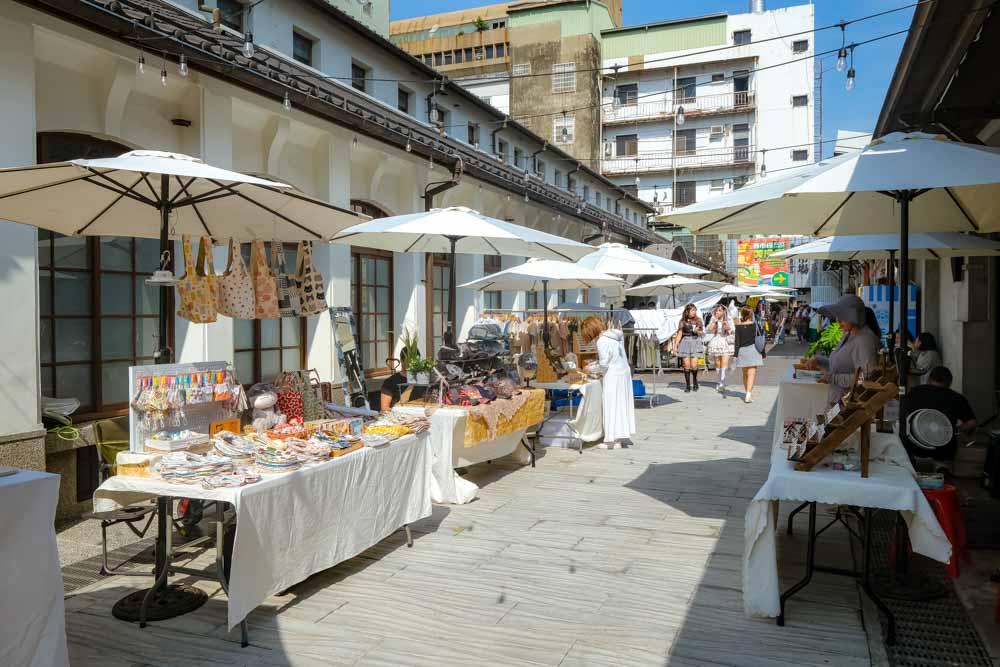
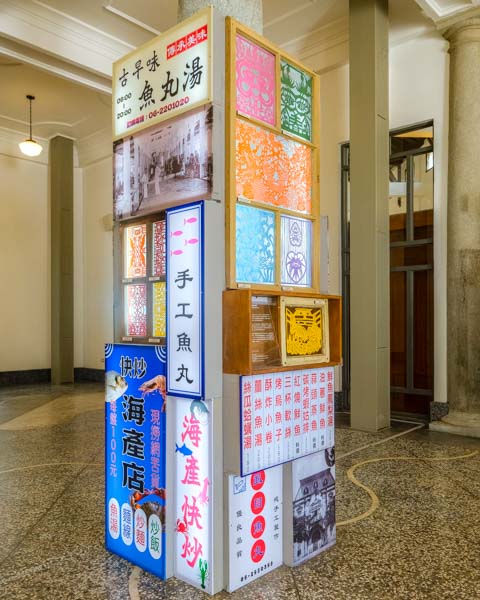
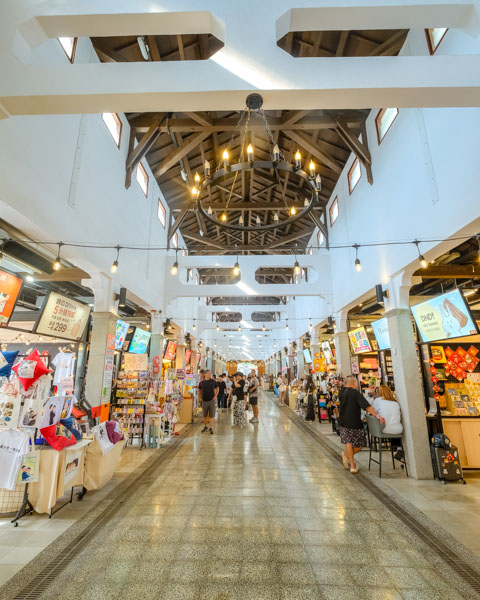
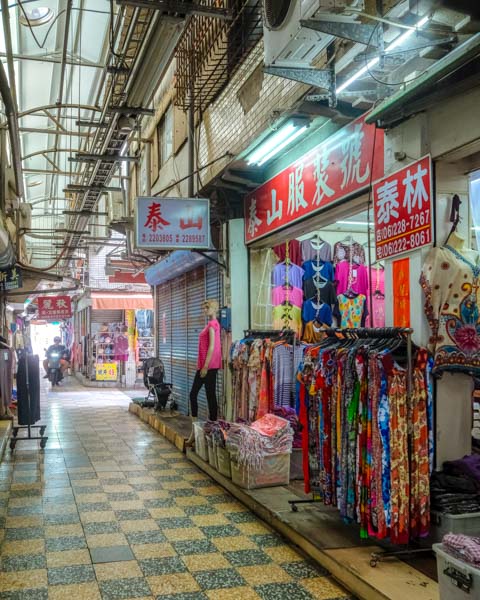
Not everything has changed, however. At the heart of the complex, Ximen Fabric Market is very much as it was a few decades ago. Among the 40-odd businesses jammed in here are tailors, sellers of bedding and ready-made clothes, and little shops stacked full of bolts of colorful cloth.
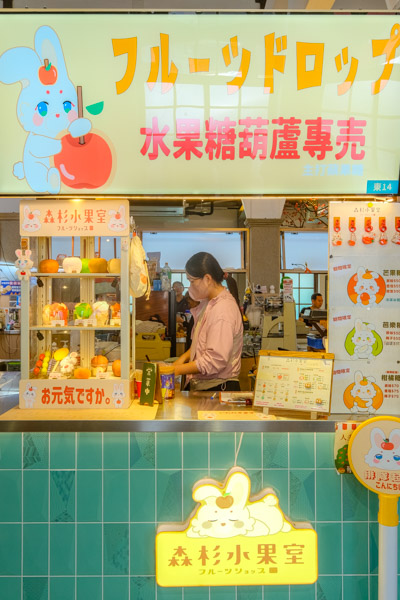
The North and East wings now house around 60 shops and, if the adjacent Asakusa Shopping Center is included in the count, this city block contains well over 100 businesses. Visitors can explore a dazzling array of souvenirs, handcrafted objets d’art, and distinctive fashion items. If you assume Taiwan excels only at utilitarian exports like semiconductors, think again – this venue showcases hundreds of quaint, colorful creations.
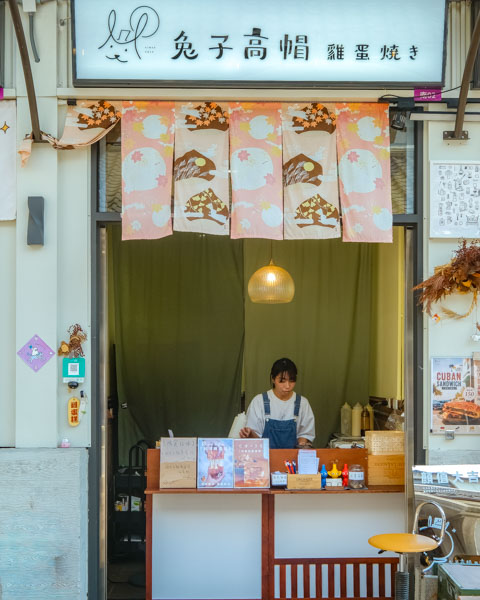
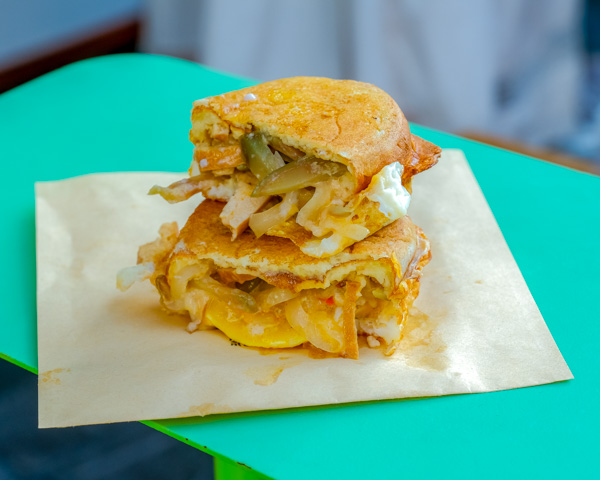
At least two dozen places sell food or drinks. Among them, Bunny Hat Egg Cake (instagram.com/bunnyhat.egg) has won plaudits for its low-sugar stuffed cakes and inventive flavor combinations. Bunny Hat’s treats are much more substantial than the spongy egg cake sold by vendors elsewhere across the island. Each one is somewhat thicker than a pack of cards and built around a whole fresh egg. The bill of fare lists a mouthwatering range of sweet and savory flavors, from brown sugar mochi to pickled mustard and dried bean curd. Individual cakes are priced at NT$30-40, but they quickly sell out. If your heart is set on a particular filling – such as strawberries, if they’re in season, or Thai milk tea – it’s best to order ahead online or by telephone.
Sakariba Market
Here’s another example of Tainan folks’ conservative instincts: After World War II, when the authorities announced that the retail cluster fringed by Hai’an Road, Zhongzheng Road, and You’ai Street would henceforth be known as Kangle Market, they ignored the decree.
The toponym most Tainan natives prefer is Sakariba. Dating from the Japanese colonial period, it’s an approximation of the original Japanese name, which meant “amusement district.”
Approaching Sakariba, you may spot a cartoonish duck mascot with a yellow beak and doe eyes. Called Cai-qi-ya, it was created to draw attention to Tainan’s various markets, its name being a pun on the Taiwanese pronunciation of “vegetable market,” tshai-tshi-a. Its younger brother, Ye-qi-ya, or “night market duck,” serves as a brand ambassador for the city’s night markets.
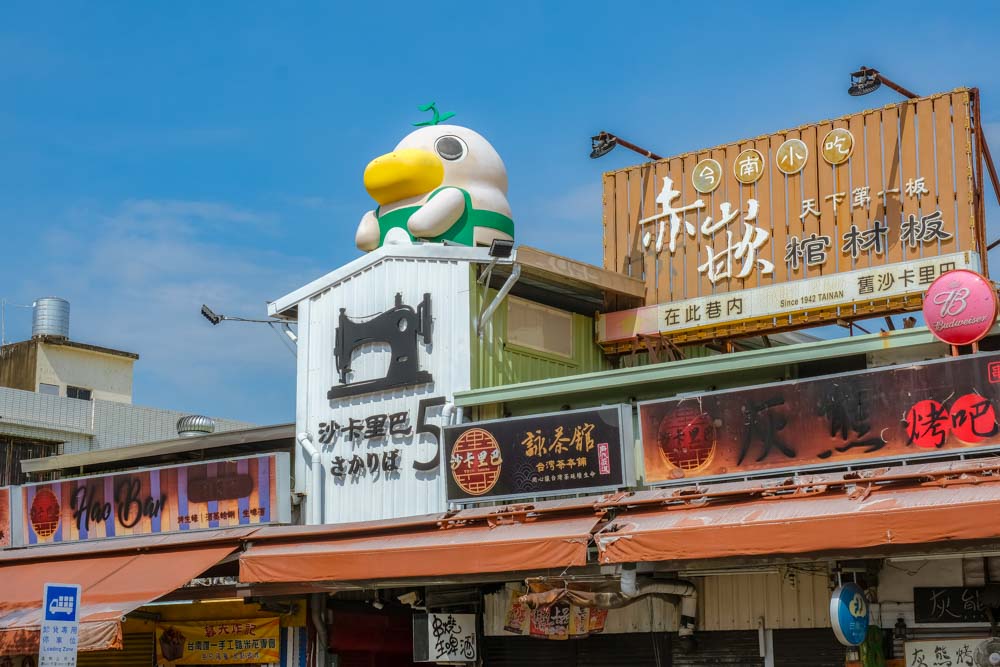
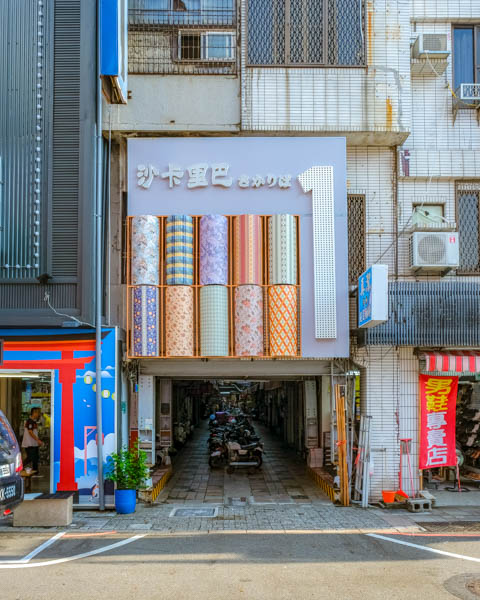
By the 1930s, Sakariba was a thriving agglomeration of vendors, with around 300 stalls and shops. These days it’s not quite so busy, but at least two humble-yet-long-running food businesses here deserve your attention.
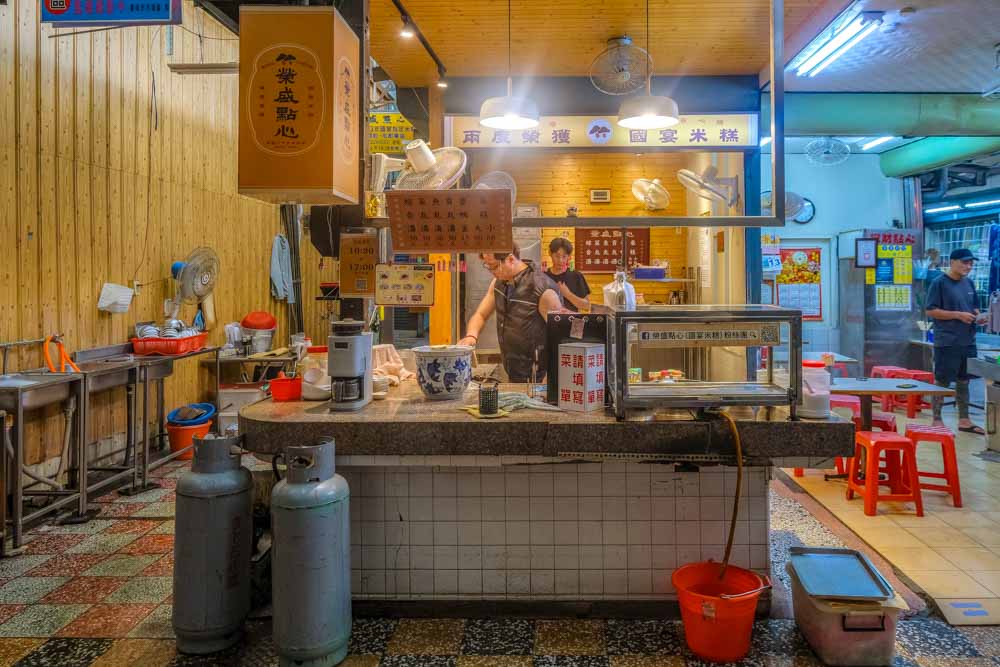
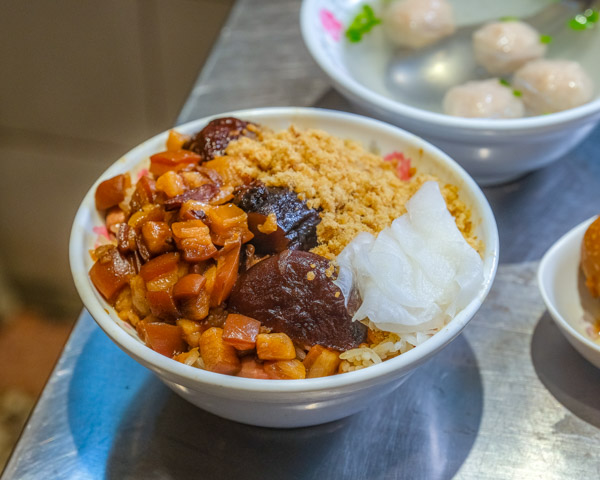
The signature comestible at Rong Sheng Snacks is migao. At first glance, you might confuse this savory delight with Taiwan’s ubiquitous rouzaofan, braised minced pork served on white rice, but as soon as you dig in, a few differences become apparent.
First, rather than conventional grain, the rice is sticky. Second, the cubes of braised pork belly are topped with a generous amount of fish floss (fish simmered until it breaks into strands, then dried in a wok). Rong Sheng’s version isn’t especially cheap for the amount you get, but the flavor is – food enthusiasts swear – authentically local.
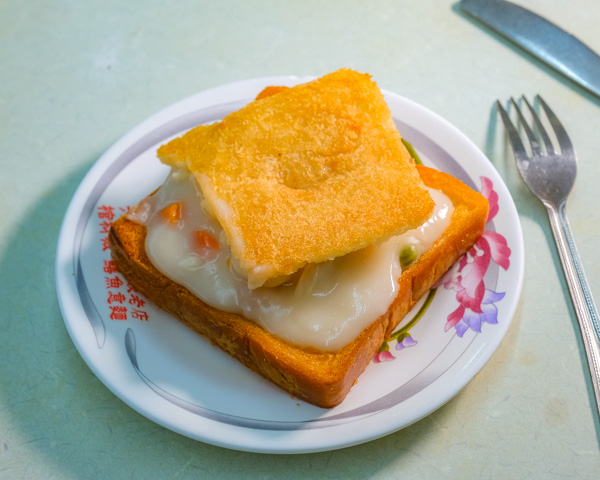
Coffin toast is an iconic local snack, thanks in part to a name that defies Taiwanese taboos surrounding death and funerals. Some describe it as a savory version of French toast, but rather than dipping intact slices before frying, the creator – and founder of Sakariba’s Chikan Coffin Toast – was inspired to hollow out deep-fried slabs of bread, making space for a filling, and saving the lids so he could close each “coffin.”
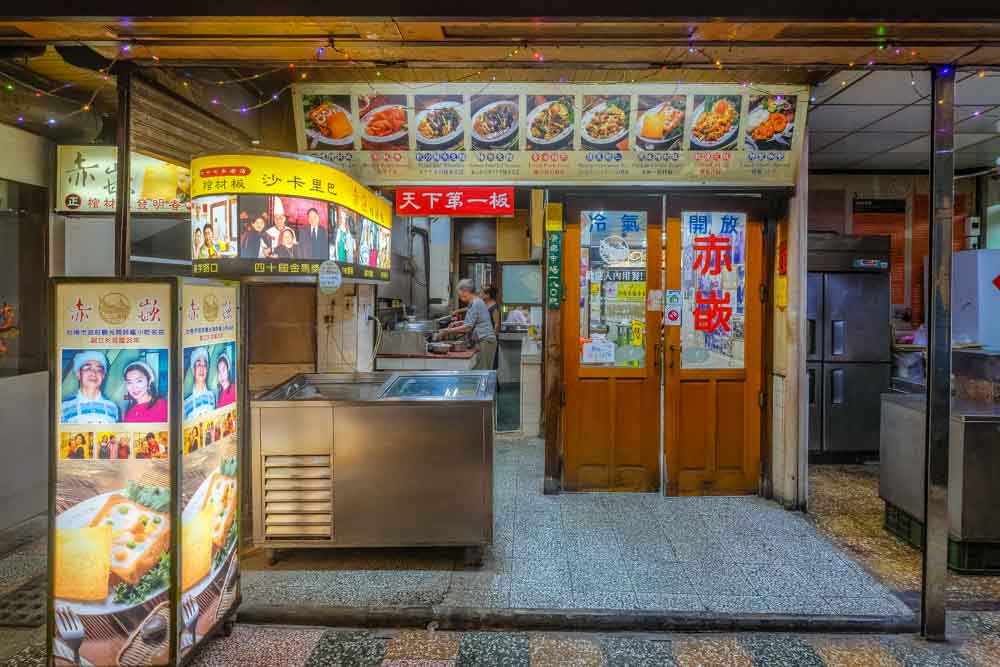
Chikan Coffin Toast sells two versions of the nosh that made it famous: original (filled with a chowder containing diced chicken, squid, and mixed vegetables) and curry. The protein in the latter is pork, and the sauce is very mild. Culinary purists dismiss coffin toast as a gimmick. But for the typical traveler, it’s a tasty, hearty bite – and something they can post on social media.
Shuixian Temple Market
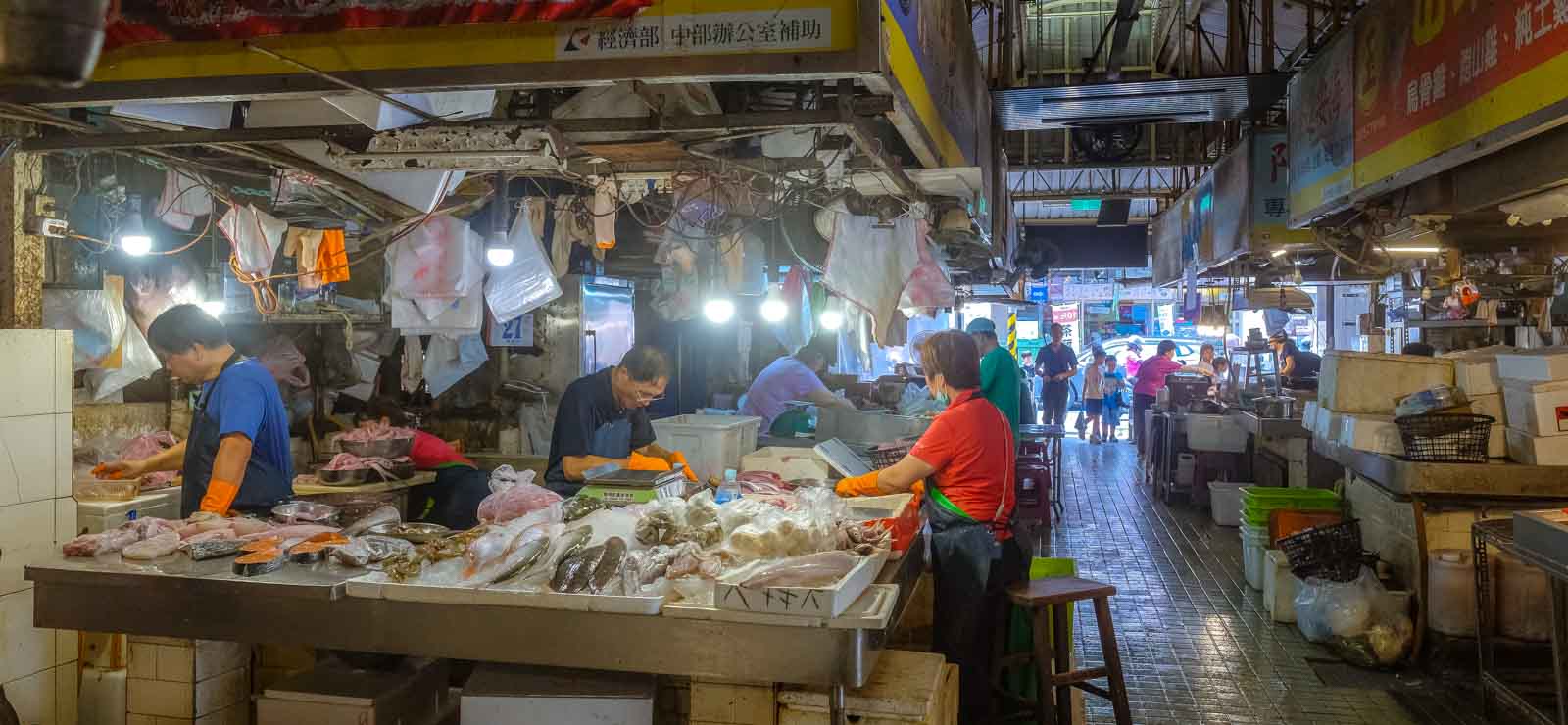
Sakariba shows few signs of life before 10am, and West Market doesn’t open until 11am. So, what’s the early-bird sightseer going to do until then? Fortunately, less than 500m north of West Market, a thoroughly traditional daily market is in full swing by breakfast time.
The corner of Hai’an Road and Minquan Road, Section 3 has for generations hosted a “wet” market, where floors stay sodden as a result of vendors washing produce and using ice to keep meat and seafood fresh. (Squeamish visitors might be glad to know that, since 2013, all slaughtering has been done elsewhere; that said, the thud of butchers’ cleavers is very much part of the market’s soundtrack.)
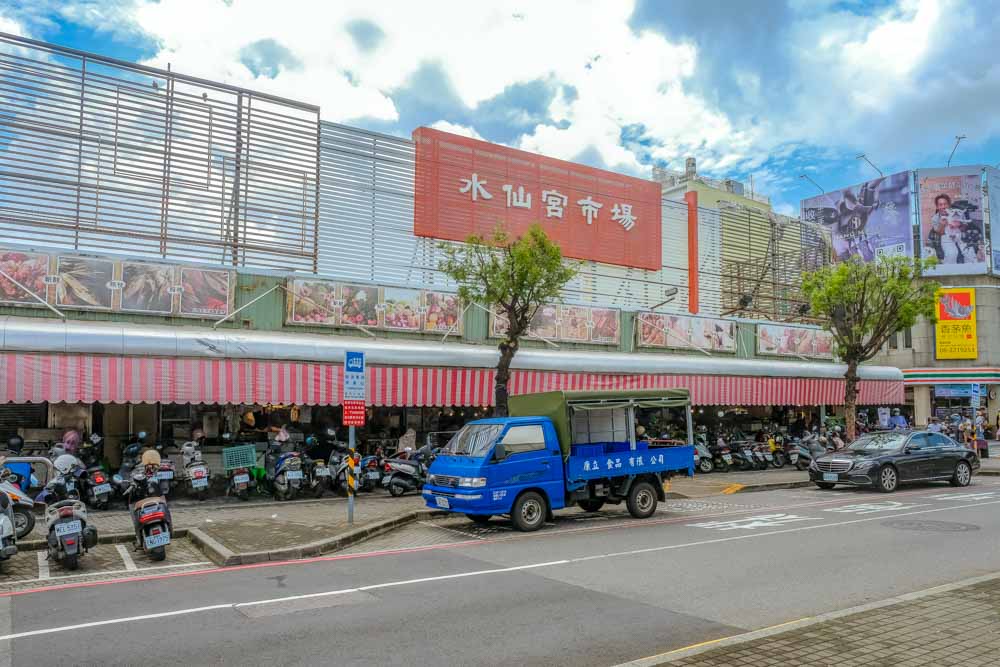
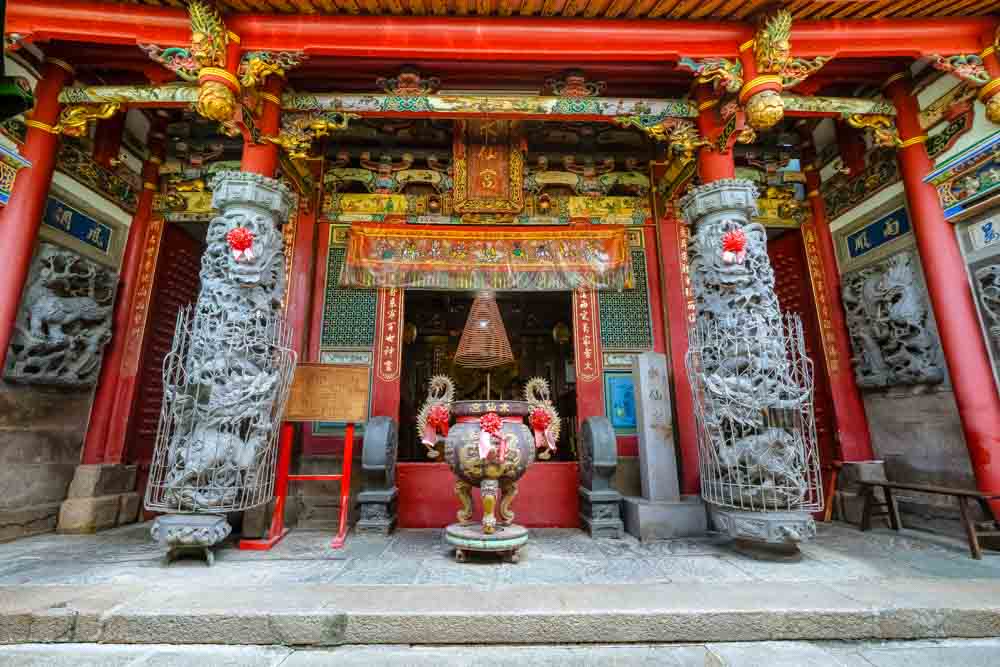
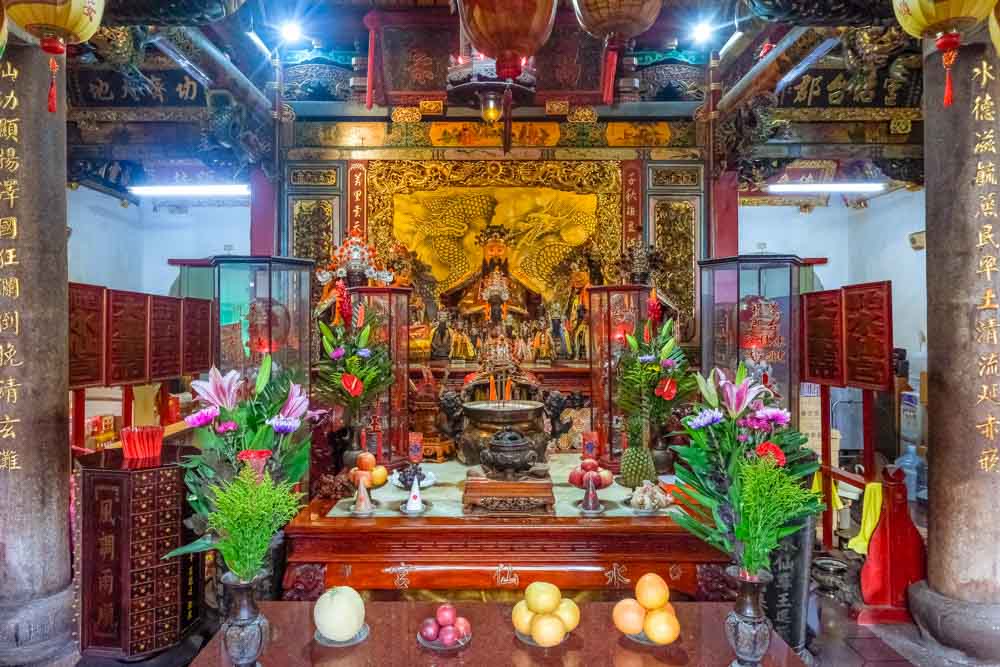
Religion has long played a key role in Taiwanese community life, so it’s hardly surprising that this market developed around one of Tainan’s older places of worship. The shrine that gives Shuixian Temple Market its name was established no later than 1715 and is dedicated to the Kings of the Sea, a quintet of deities venerated by traders, sailors, and fishermen. That maritime focus makes perfect sense given that, in the early 18th century, the ocean – now over 5 kilometers away – was practically at the temple’s doorstep.
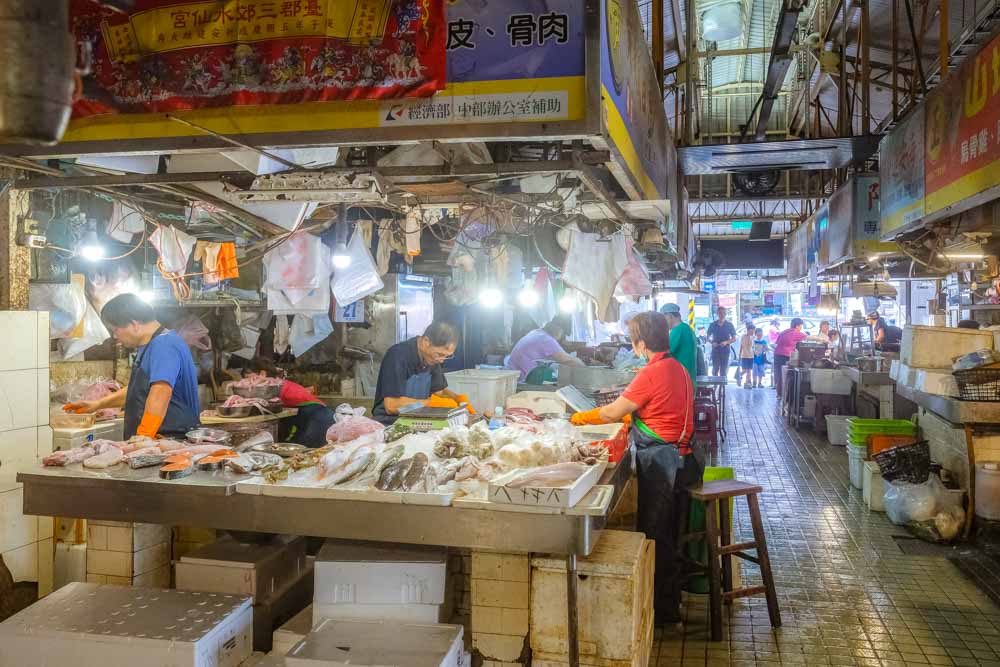
Working your way northeast through the maze-like alleyways behind the temple brings you to Yongle Market (not to be confused with Kangle Market), and one of the city’s densest concentrations of budget-friendly snack vendors. Even if you’ve no plans to eat here, the scenes of food preparation are fascinating.
At least two eateries hereabouts specialize in beef soup, a Tainan staple. Others offer dumplings, baozi (steamed buns with various fillings), herbal tea, and duck potage – but one of the most popular is the Shuixian Temple Three Brothers Fish Soup Shop.
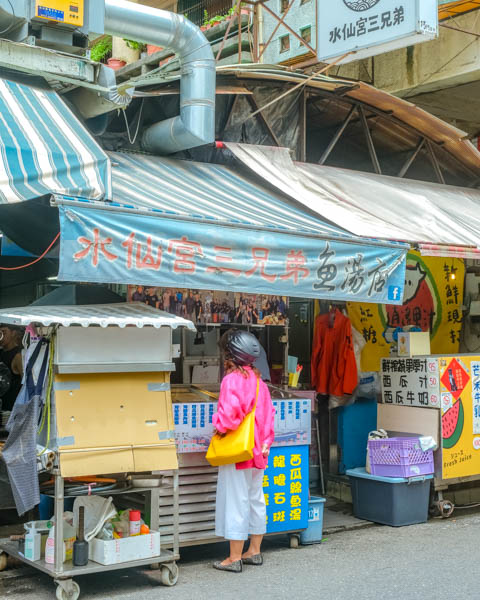
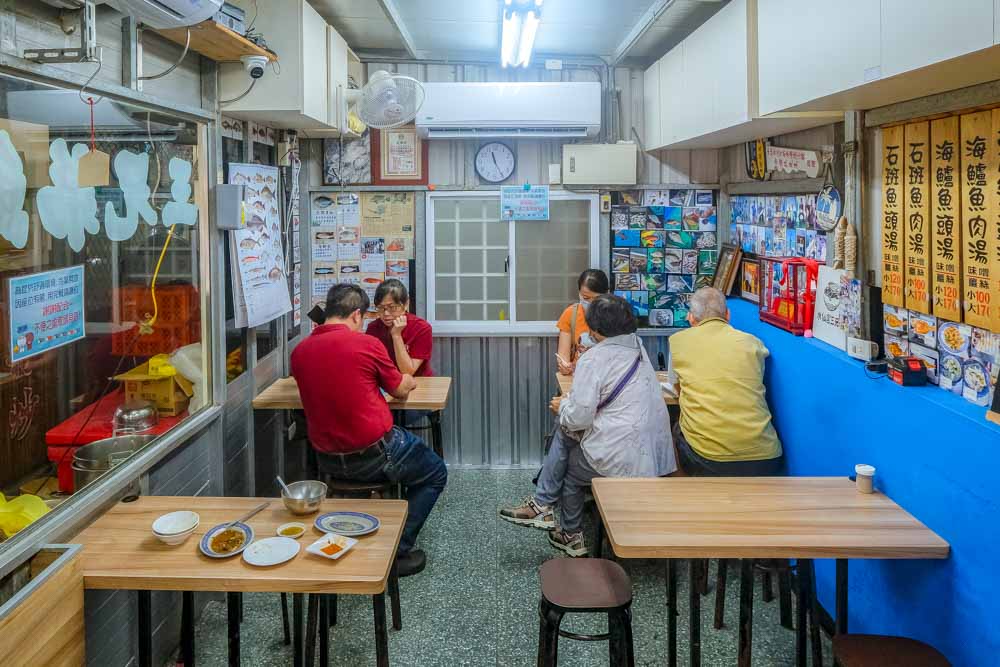
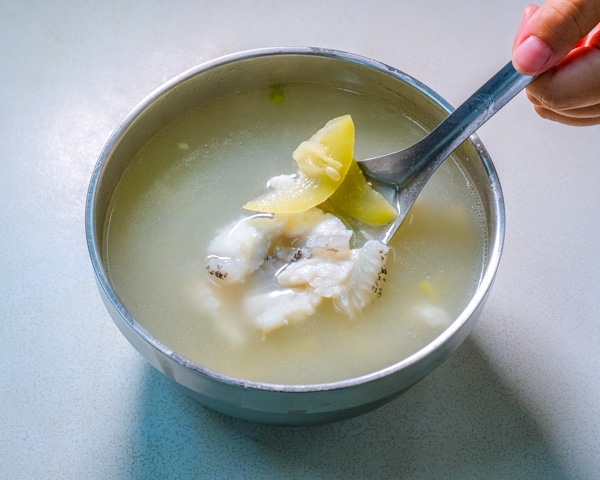
The most renowned dish at Three Brothers is grouper soup, and foodies recommend the version with pickled watermelon. The combination of thick-cut pieces of fresh fish, delicious light broth, and crisp pickled watermelon makes for an immensely satisfying breakfast or light lunch (the shop is open 6am to 1:30pm, but some menu items sell out before noon). If you can, bring companions and try other dishes, such as the bass soup, steamed squid, fried shrimp, and fish bones (which come with a decent amount of meat still attached).
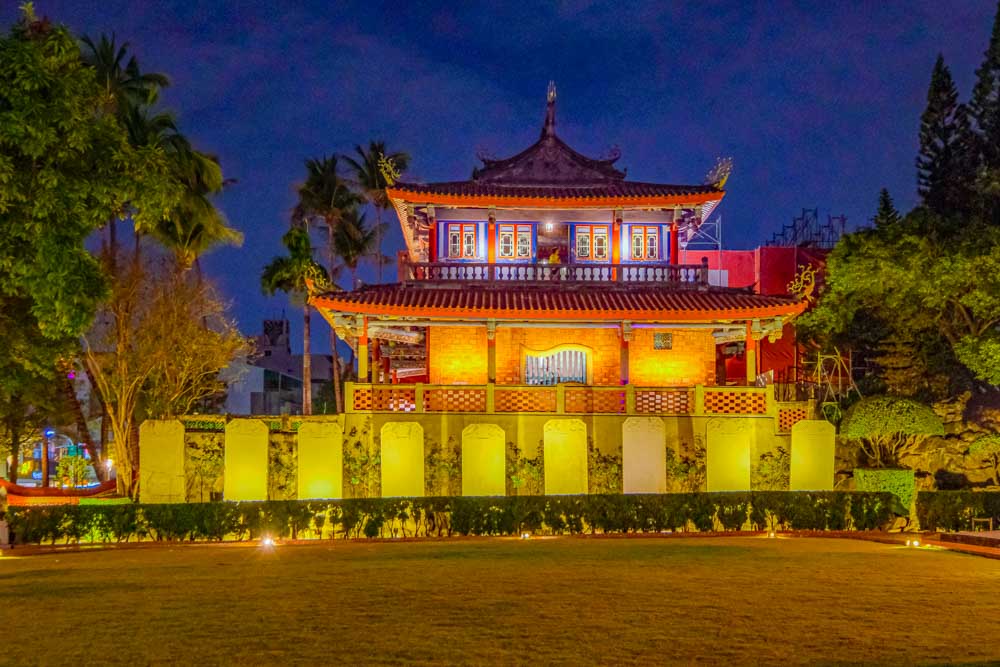
After all this eating, your body may well urge you to burn some calories. Kick off a downtown walking tour at nearby Chikan Tower, then proceed to Tainan’s other relics. Trust me, you’ll run out of energy long before you run out of sights to see!
About the author

Steven Crook
Steven Crook, who grew up in England, first arrived in Taiwan in 1991. Since 1996, he’s been writing about Taiwan’s natural and cultural attractions for newspapers and magazines, including CNN Traveler Asia-Pacific, Christian Science Monitor, and various inflight magazines. He’s the author of four books about the country: Keeping Up With The War God (2001), Dos And Don’ts In Taiwan (2010), Taiwan: The Bradt Travel Guide (2010), and A Culinary History of Taipei: Beyond Pork and Ponlai (2018)
http://crooksteven.blogspot.com
http://bradttaiwan.blogspot.com