A Local’s Guide to Chenggong, a Quiet Gem on Taiwan’s East Coast
TEXT | SIMON FOSTER
PHOTOS | ALAN WEN
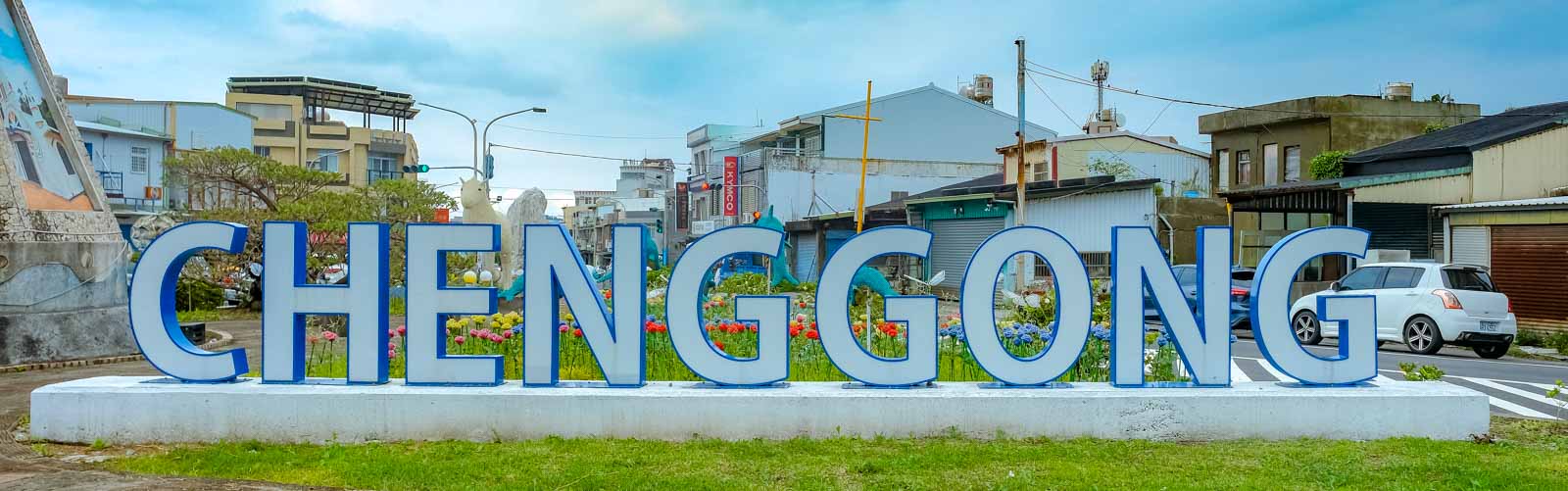
One of Taiwan’s best-known fishing harbors, Chenggong lies just south of Taitung County’s famous tourist spot Sanxiantai. A bustling town of 25,000 in the 1970s, today its population of indigenous Amis people and Taiwanese is roughly half of that. Recently improved transport links and tourism have driven a minor renaissance, with people from around the island (and indeed the world, including this writer and his family) seeking the quiet life in this remote slice of paradise tucked between mountains and ocean. There are now YouBike rental-bike stations, a PX Mart supermarket, and numerous good restaurants, making Chenggong a worthwhile destination in its own right, as well as a great base from which to explore.
Chenggong Fishing Harbor
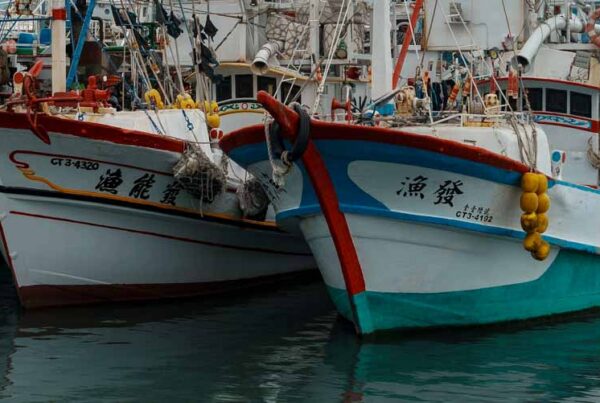
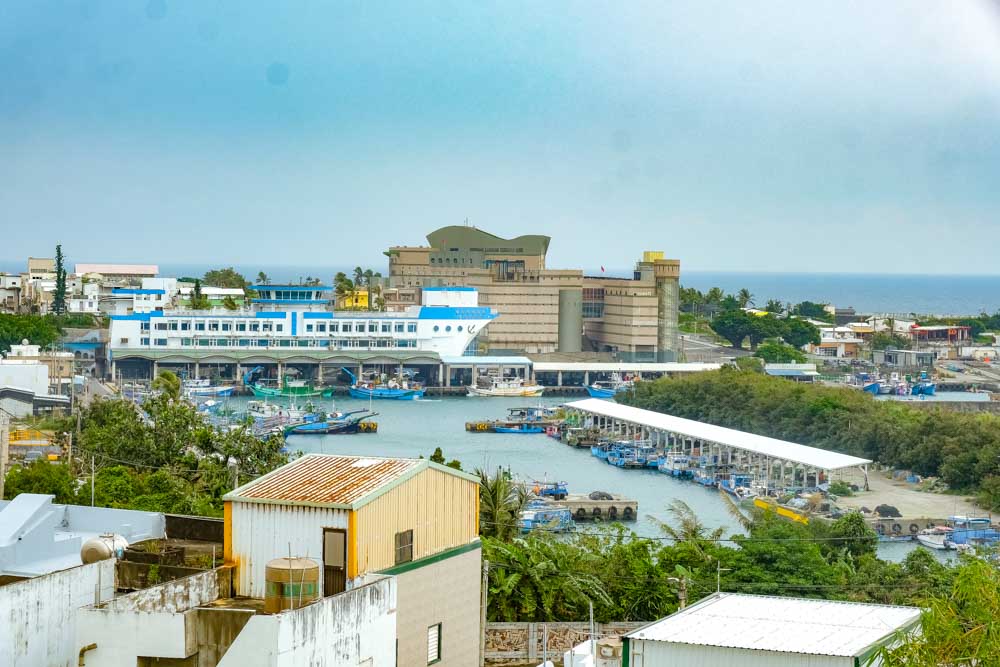
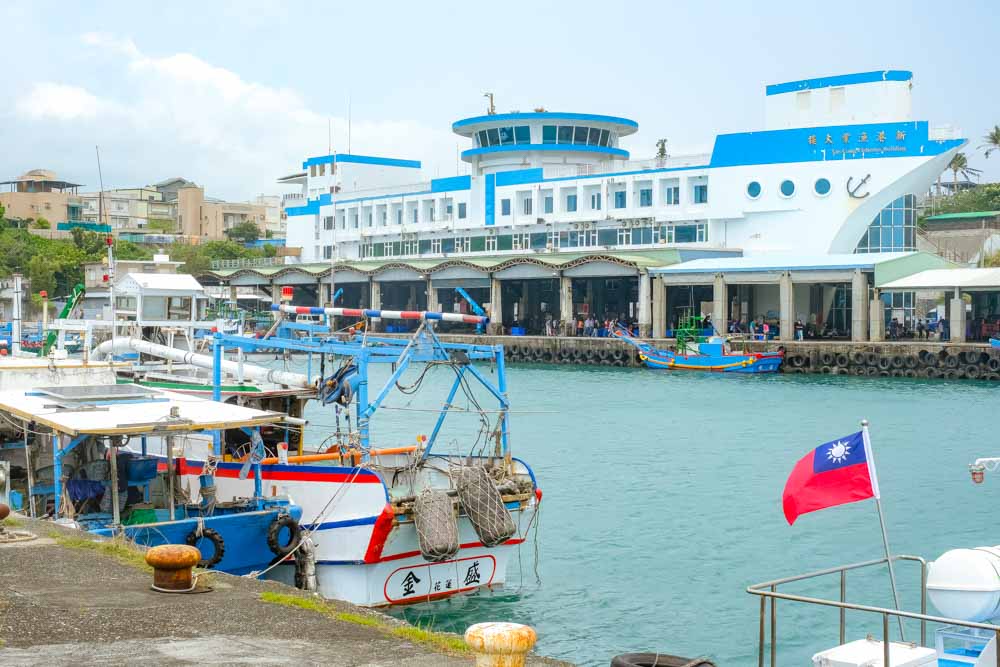
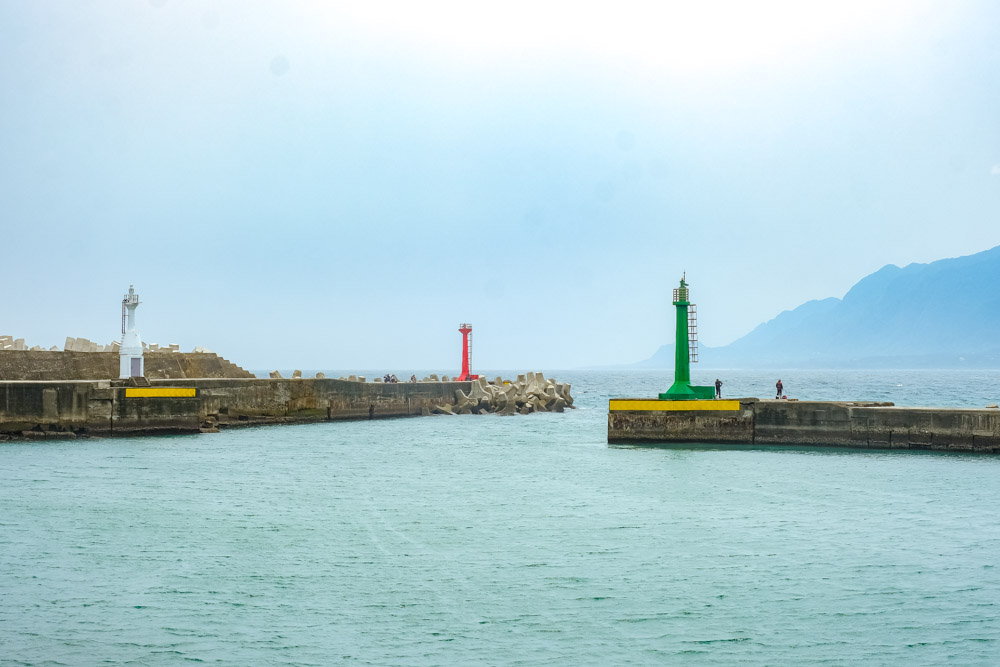
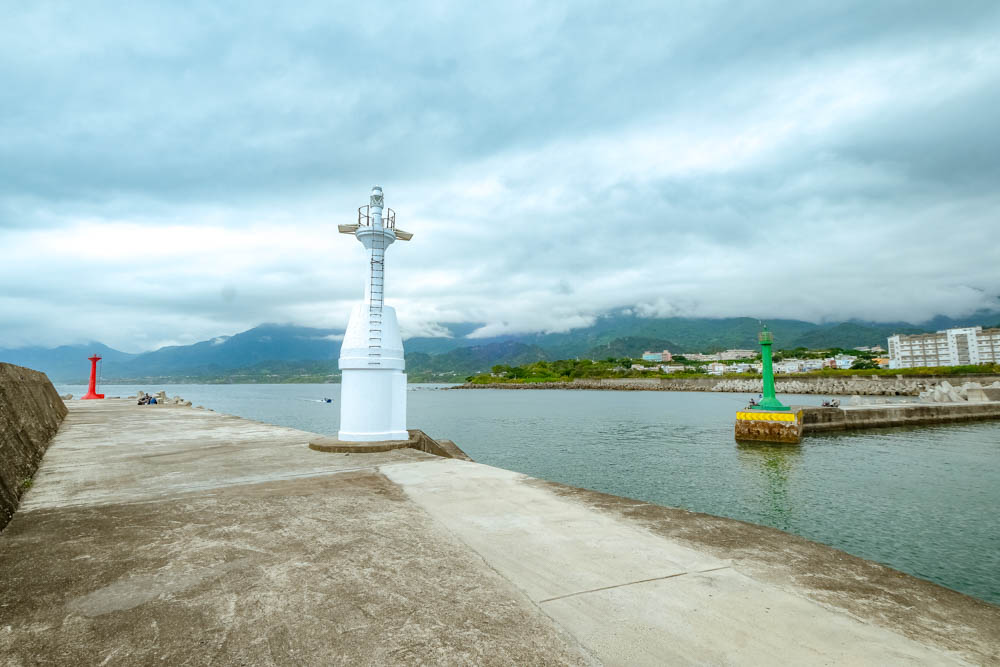
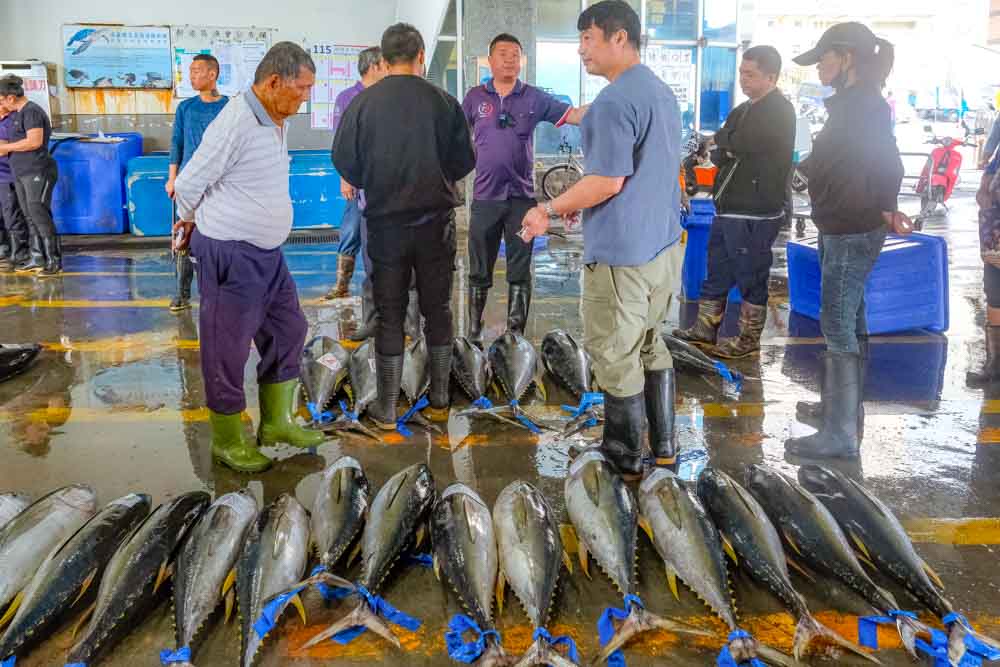
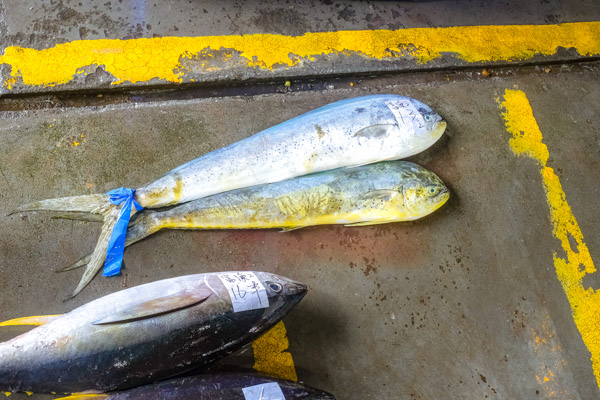
The town’s pretty harbor offers insight into a seldom-seen world that exists between land and sea. Catches are auctioned off daily (except Sunday) from 1pm, just as they have always been, whilst crew from across Southeast Asia do boat repairs, eat, chat, and enjoy their time away from the high seas. Small canteens, some smarter restaurants, and stores (and even a tiny mosque) are dotted around the harbor, and on the streets above, there are a couple of cafés, from where you can enjoy great views over the whole scene. I often come to the harbor with my family to eat, to wander, and to buy ice for summer ice baths, and we have even taken the ferry to Green Island from here! Walking along the harbor wall to the Xingang Lighthouse, you can see fishing boats coming and going, container ships in the far distance, and even our house!
Kuroshio
Opposite the well-known Meet Marlin Restaurant at the harbor, Kuroshio is a seafood product shop that only opened in 2025. Its eclectic selections sell well. The shop name pertains to the ocean current that runs from the Philippines to Japan, bringing bountiful fishing opportunities off Taiwan’s East Coast. As you might expect, the shelves are stacked with marine products (wish to try frozen fish balls, or maybe mahi mahi popcorn?), but there are also such other Taitung specialty items as organic rice from the East Rift Valley, touristy knick-knacks, imported Indonesian snacks, and delicious local fruit-ice pops!
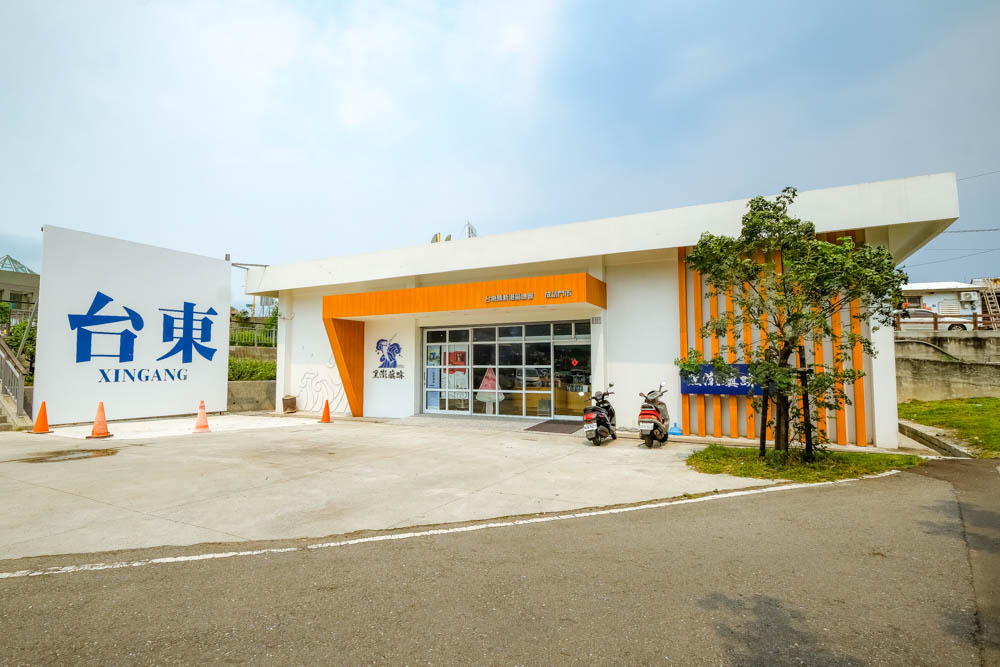
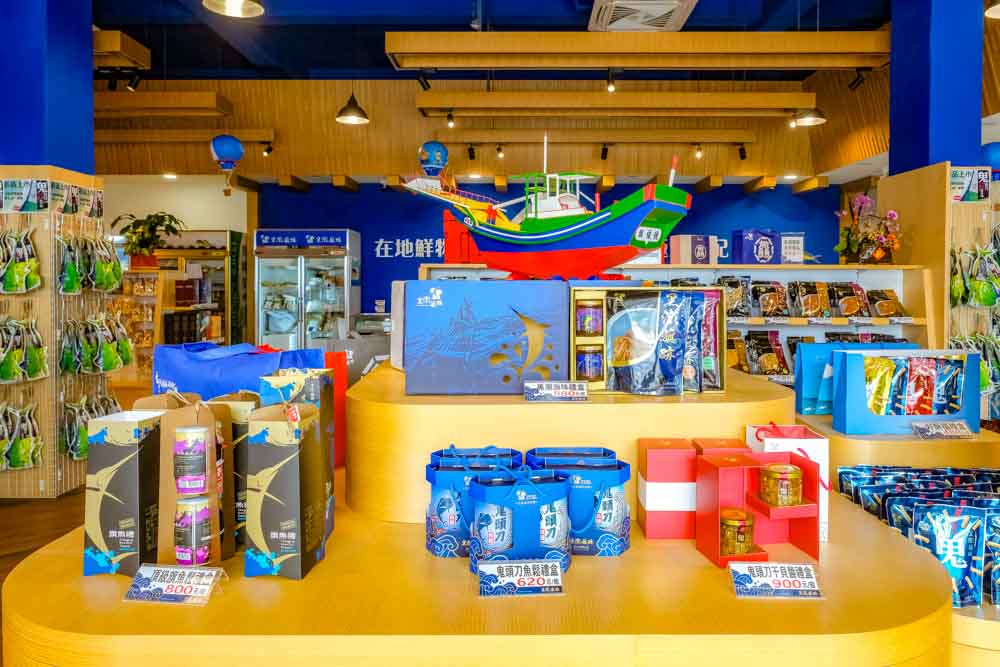
Kuroshio | 黑潮旗跡
Add: No. 23-5, Gangbian Rd., Chenggong Township, Taitung County
(台東縣成功鎮港邊路23之5號)
Tel: (08) 985-1152
Hours: 9am-5pm
Website: kuroshiofish.org.tw
Whale Watching
Whale Watching Outings from Chenggong Dolphins and whales are active in the waters around Chenggong, and May to October is the best time to experience these majestic creatures in their element. Jin-Ling Whale Watching (www.dolphin-wan.com.tw) is an environmentally responsible operator offering 2~3-hour guided boat trips with an 80% success rate. Note that most information is provided in Chinese only.
The Food in Chenggong
Dining in Chenggong has always been about seafood, mahi mahi in particular, and the town’s restaurant scene has been bolstered by some exciting newcomers in the past few years. As well as the listings below, if you’re here on a Monday, Chenggong’s night market is worth checking out – dumplings, fried snacks, steaks, sushi, drinks, fresh fruit, and desserts are all on offer, and can be enjoyed on the seafront.
Chenggong Culture Bank
Housed in a historic building that once served as the town’s Land Bank location, this pleasing addition to Chenggong’s restaurant scene opened in 2022, offering excellent seafood set meals in an attractive diner-style setting, with an English menu to boot! The menu allows the ingredients to shine, with choices of flying-fish noodles (Amis Ina Set), tomato fish soup noodles (Captain’s Set), and even a veggie meal (Shell Ginger Rice Set). Meals are well-priced (NT$380, or NT$480 with a drink), beautifully presented, and accompanied by a selection of seaweed salad, sashimi, sea snails, and tofu. There’s also an interesting range of cocktails, soft drinks, and desserts such as Bonito Basque Burnt Cheesecake.
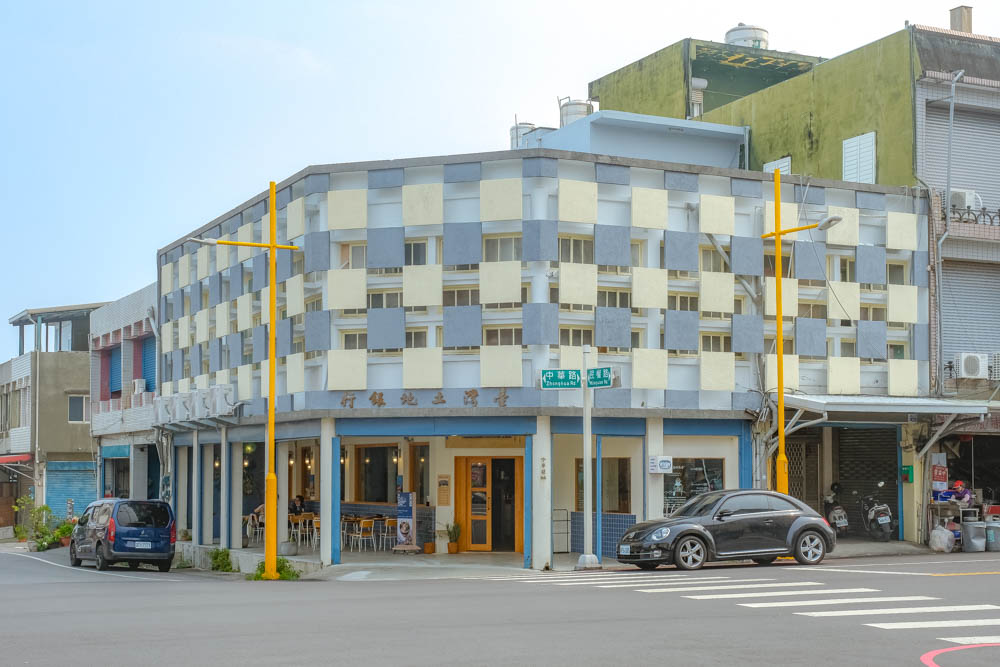
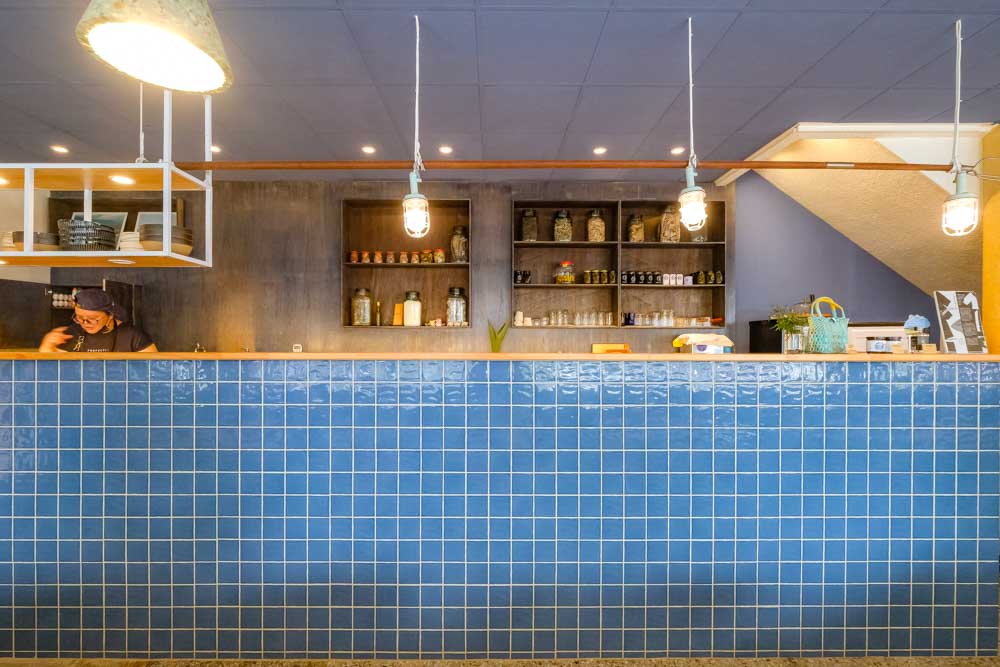
Decorated in simple blue, white, and light wood tones with an open kitchen and maritime accents such as bar lighting suspended from an old fishing spear, the restaurant is also something of an information hub, featuring magazines and books. There’s traditional fishing equipment on display, and the team that runs the restaurant can also arrange fishing and foraging excursions with local indigenous fisherwomen.
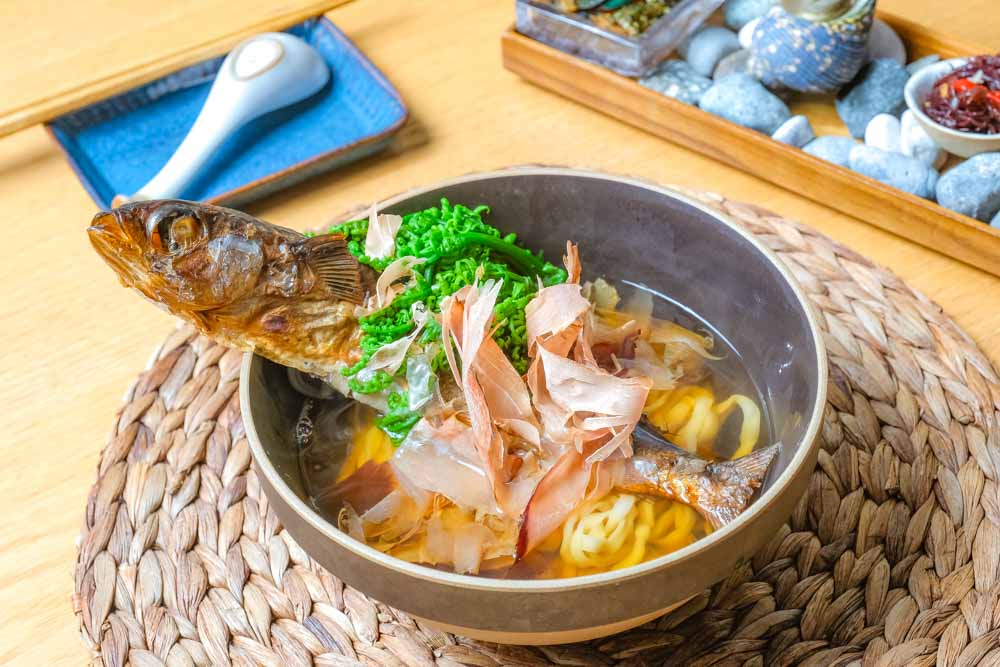
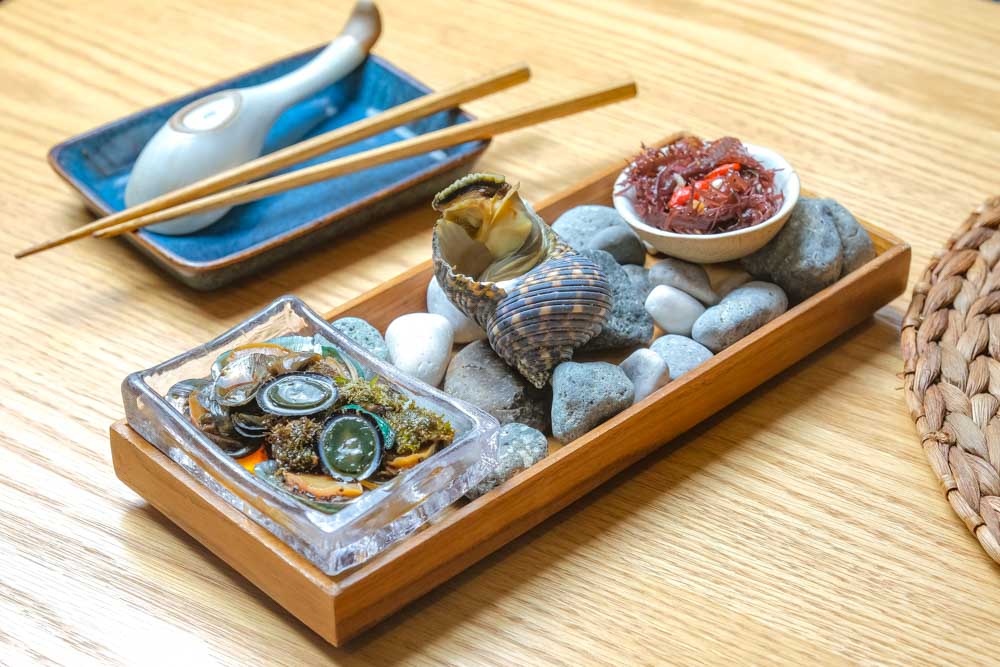
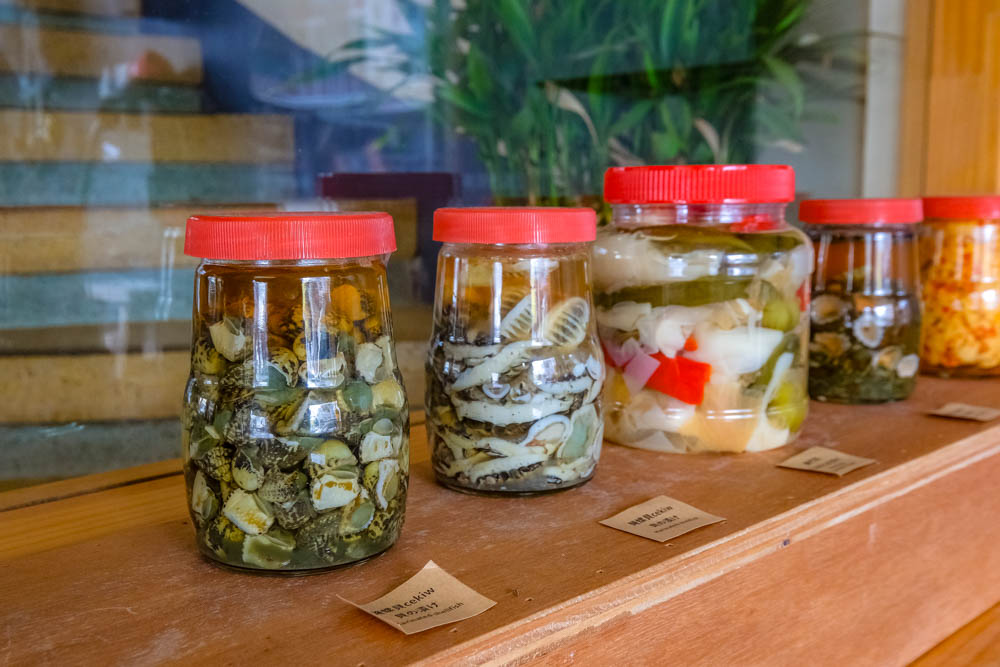
Chenggong Culture Bank | 成功海銀行
Add: No. 66, Zhonghua Rd., Chenggong Township, Taitung County
(台東縣成功鎮中華路66號)
Tel: (08) 985-1552
Hours: Thu-Mon 11:30am-7:30 pm
Website: chenggongculturebank.com
Chenggong Tofu Pudding
In business for over two decades, this shop in a traditional wooden-fronted bungalow serves up tasty tofu treats that can be enjoyed in its attractive courtyard, complete with a traditional millstone. The classic douhua (silken tofu pudding; NT$50) is made from non-GMO soybeans and comes with a choice of grass jelly, adzuki beans, mung beans, or peanuts (for an additional NT$10, you can choose two). It also serves doujiang (soy milk) and refreshing shaved ice, the latter of which can be topped with the additions for douhua just named above, douhua, or milk. Days off vary, so it’s worth calling in advance to check if it’s open.
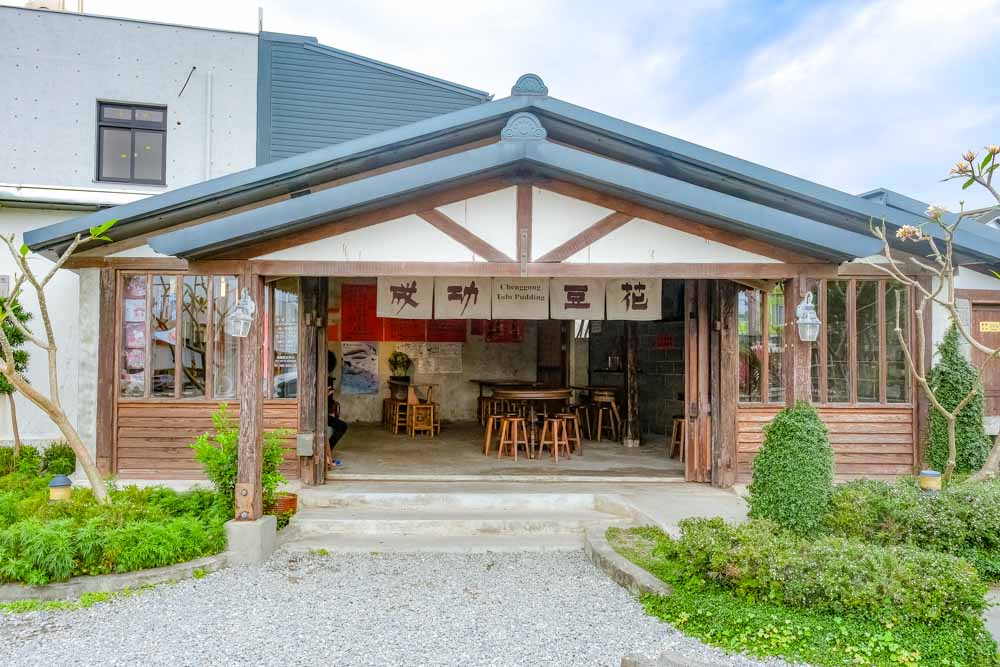
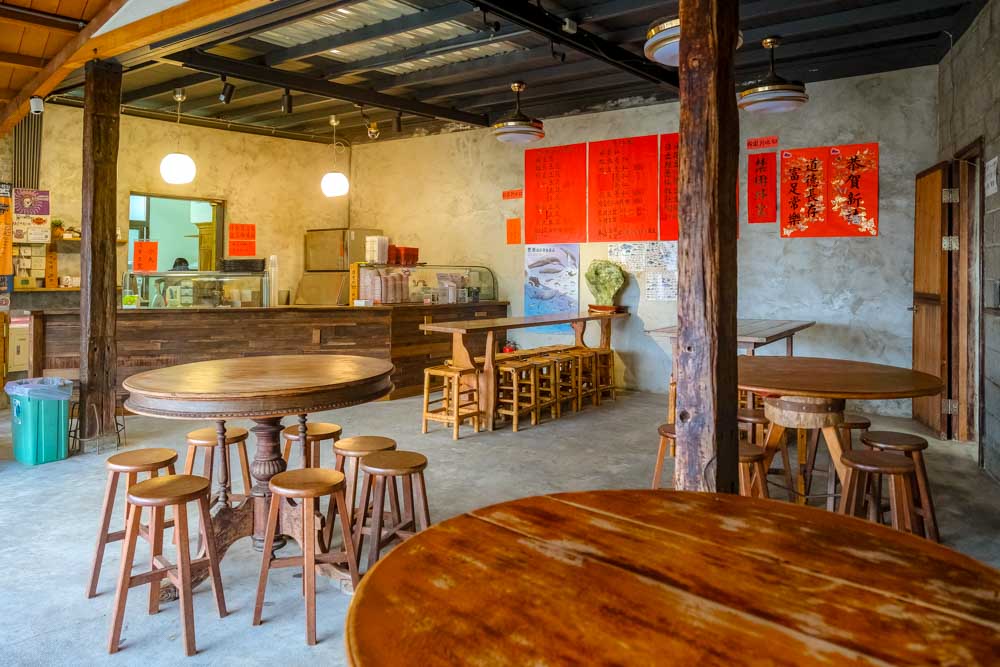
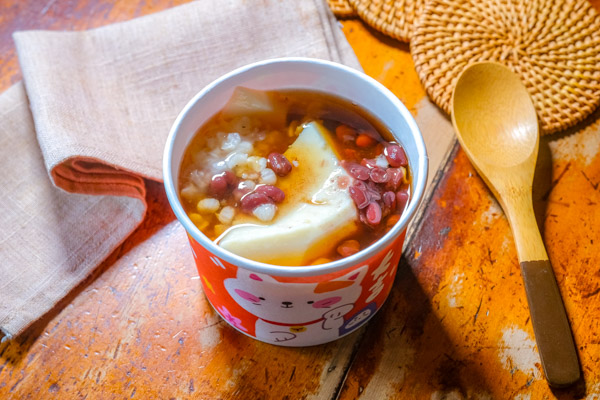
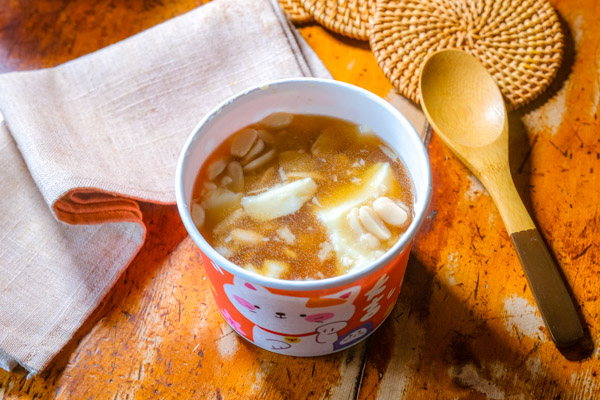
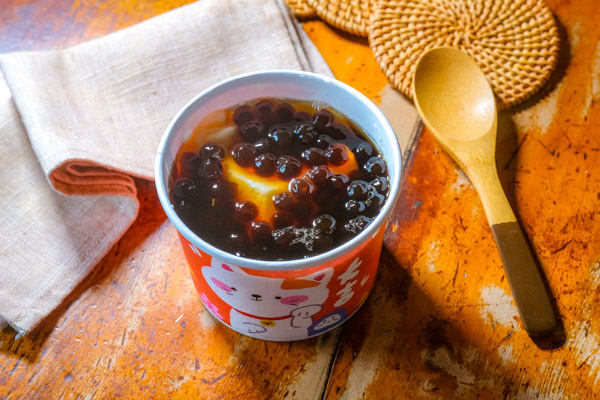
Chenggong Tofu Pudding | 成功豆花
Add: No. 63, Zhongshan Rd., Chenggong Township, Taitung County
(台東縣成功鎮中山路63號)
Tel: (08) 985-4128
Hours: 9am-6pm
Mahi Mahi
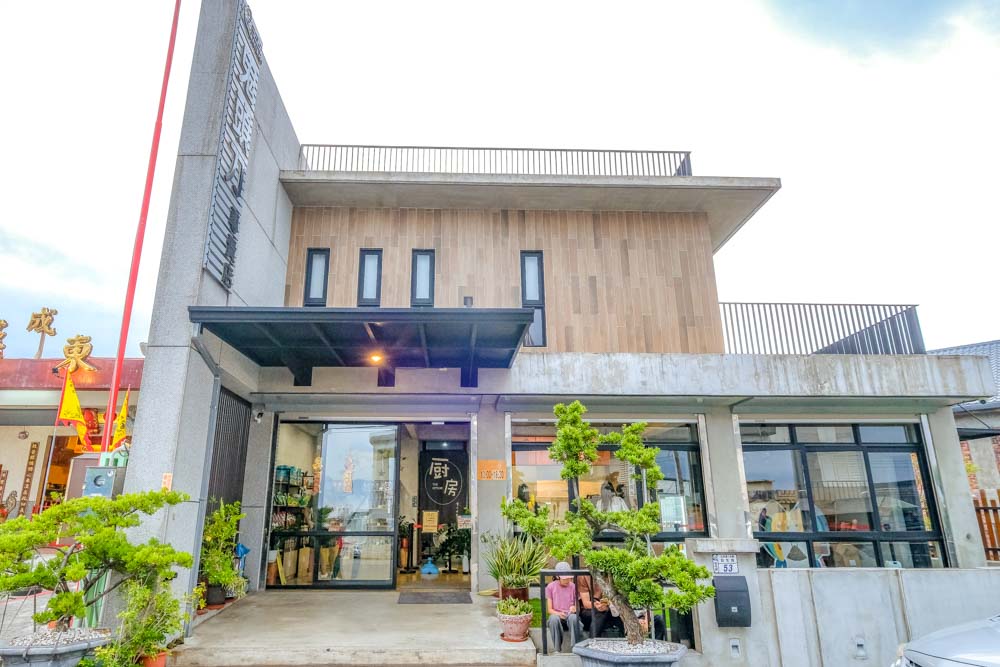
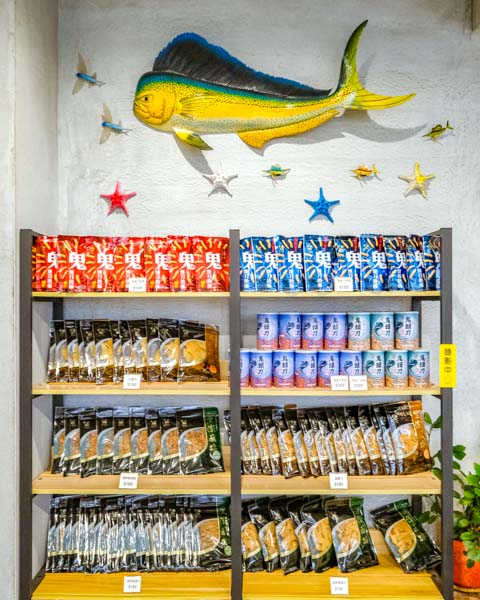
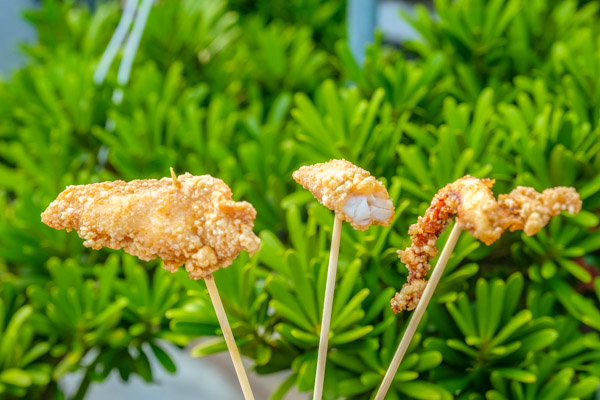
Close to the Farmers’ Association Supermarket, this clean, modern take-out canteen opened during the Covid period and has become deservedly popular for its deliciously succulent deep-fried mahi mahi strips and squid rings (NT$100, or you can choose a mixed bag for the same price). Simply served in paper bags, it also prepares other deep-fried snacks, including fish balls and satisfyingly chewy brown-sugar rice cakes (niangao), and stocks a selection of dried fish products. You might have to queue for a while, but it’s definitely worth the wait!
Mahi Mahi | 王記鬼頭刀專賣店
Add: No. 53, Xinsheng Rd., Chenggong Township, Taitung County
(台東縣成功鎮新生路53號)
Tel: (08) 985-1870
Hours: 10am-6:30pm
Website: www.mahimahi.com.tw
Meet Marlin
A family favorite, this smart, modern harborside restaurant offers excellent seafood and great views. The sashimi, breaded mahi mahi nuggets, fresh greens, and orange salad are all delicious. There’s plenty of on-site parking, and you can follow your meal with a stroll around the harbor.
Meet Marlin | 旗遇海味
Add: No. 19-8, Gangbian Rd., Chenggong Township, Taitung County
(台東縣成功鎮港邊路19之8號)
Tel: 0988-852-889
Hours: 11am-3pm & 5-8pm
Website: www.meetmarlin.com
Around Chenggong
The town’s hinterland presents ocean vistas, cycling, and hiking opportunities. You can pick up a YouBike public-bike rental in Chenggong (or at the seaside park), and then ride out to Sanxiantai along the main road, returning on the bike path via the seaside park.
Chenggong Seaside Park
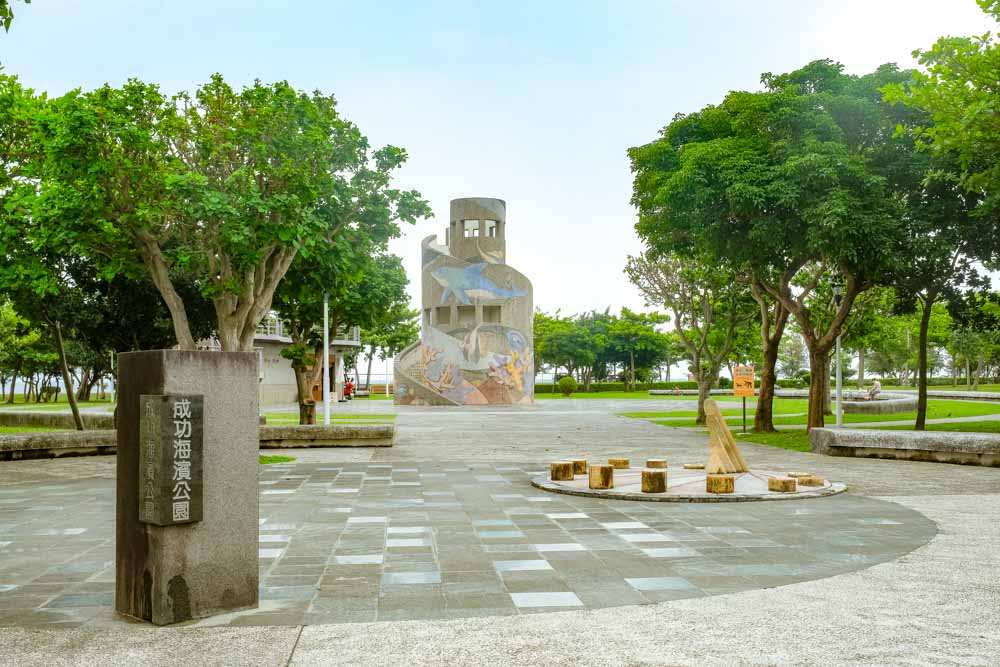
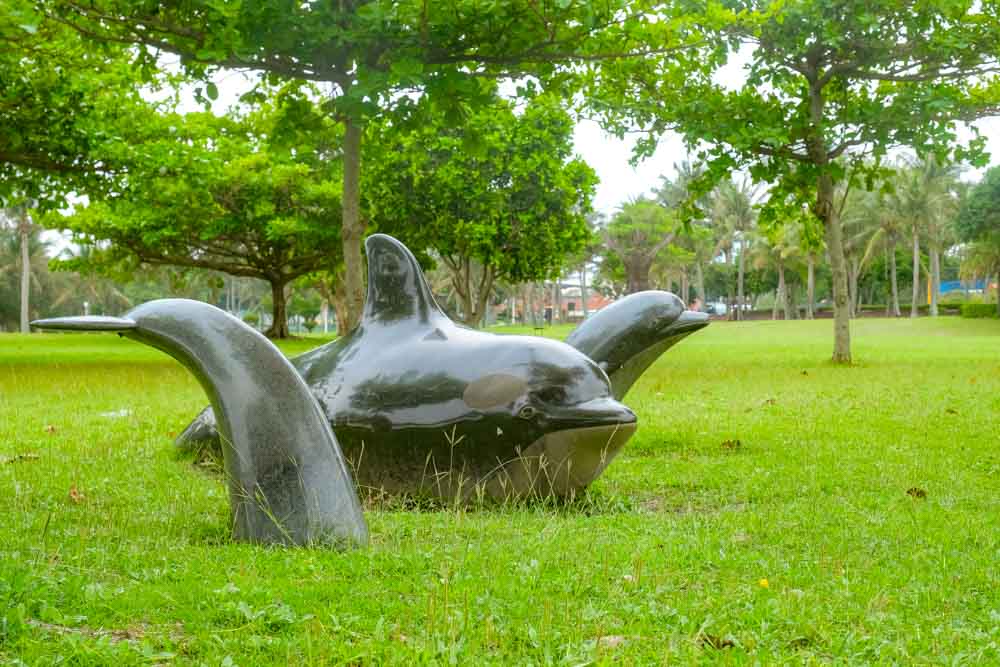
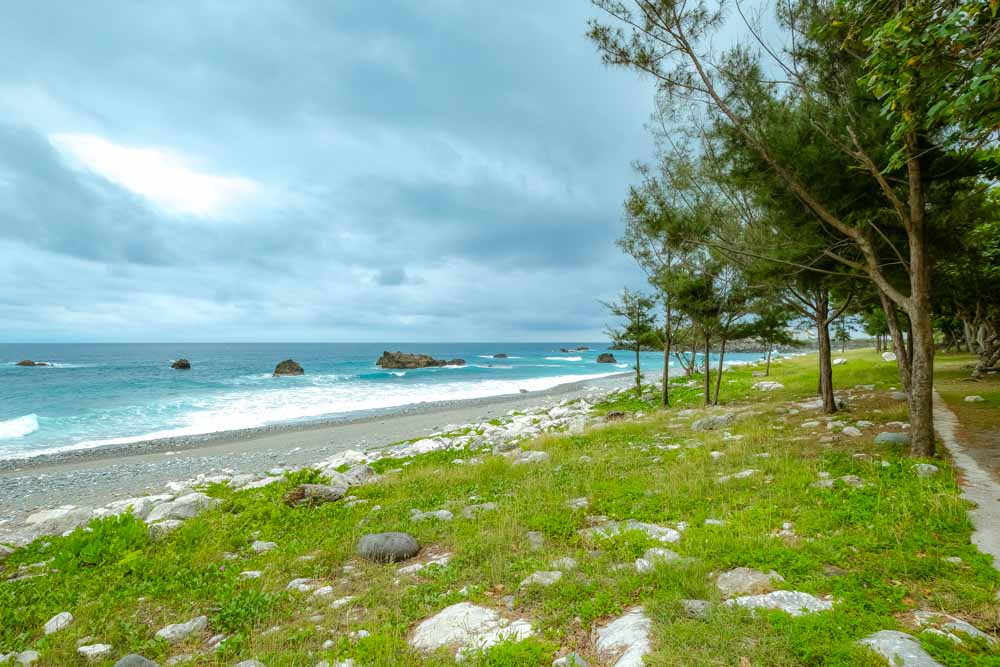
Marking the northeastern boundary of the town proper, Chenggong Seaside Park is a lovely open space popular with families, walkers, and joggers. As well as a few trails, there are pavilions, a lookout tower, sculptures, tennis courts, and a tiny café (Fri-Tue 9am-2pm). Chenggong’s Monday night market also sets up on the road alongside the park. During the summer, there are occasional concerts.
Sanxiantai
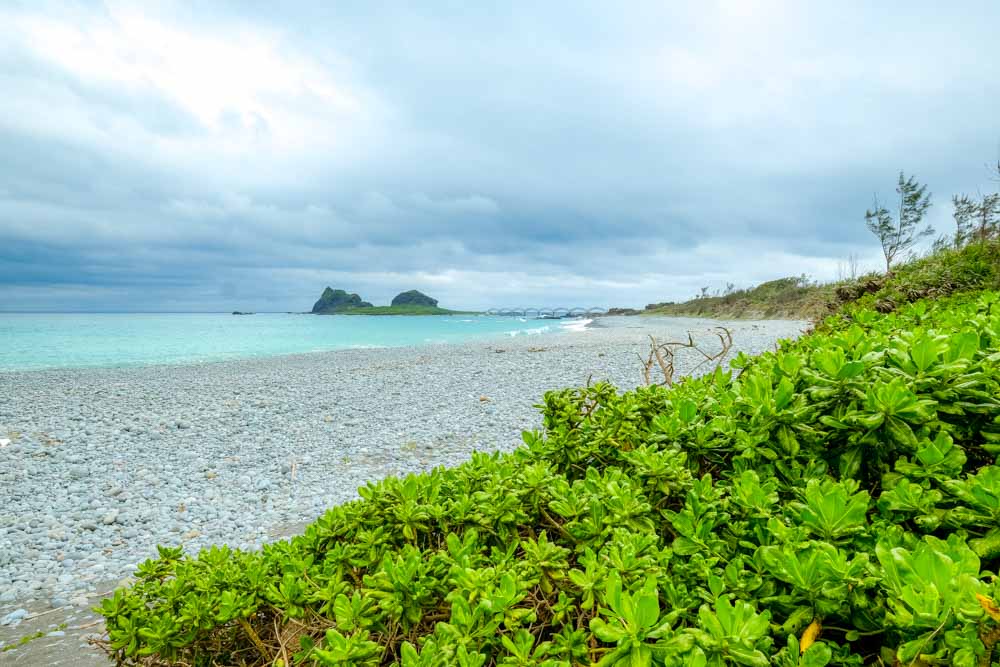
One of the brightest jewels in the East Coast’s crown, the rugged volcanic outcrop of Sanxiantai beckons you from afar to cross its mighty 8-arched bridge. Its name (“Three Immortals Platform”) is derived from the island’s shape, representing three of Daoism’s Eight Immortals – hence the number of arches on the bridge. In times gone by, Nuwalian (“Eastern Lands” in the language of the region’s Amis tribe) was a prime fishing and sea snail foraging spot, accessible only by boat or wading through the shallows at low tide, and believed to be protected by a dragon who punished those who took more than they needed from its bounty of resources.
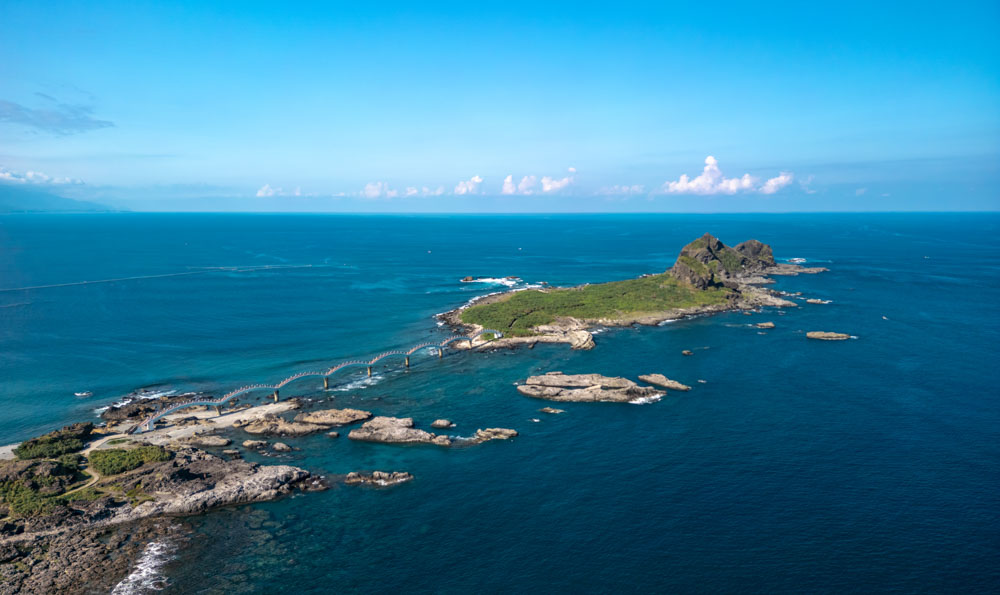
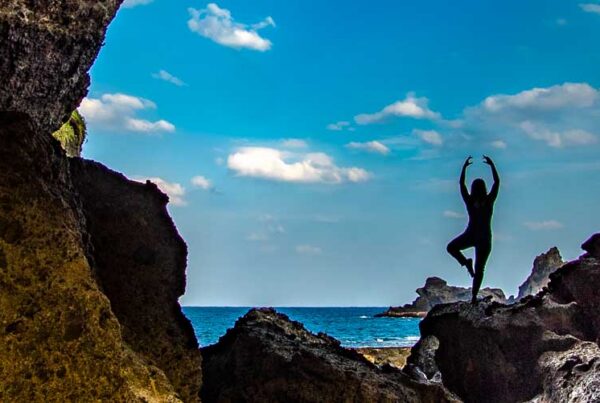
Arriving by car, you’ll need to pay for parking, and immediately adjacent to the car park, there’s a visitor center, toilets, and snack and souvenir shops. As a destination, Sanxiantai has something for everyone, whether that’s just a wander to the bridge for the classic view across to the island or a more strenuous hike to the lighthouse, which caps Sanxiantai’s easternmost high point. Trails from the car park run along the rocky pandanus-covered coastline, and once across the bridge, there’s an easy-to-follow loop around a part of the island. The route to the lighthouse offers more adventure and involves picking your way across the craggy shoreline and ascending steep steps, rewarded by magnificent views. En route, you’ll pass an eerie cave that cuts through the island. There’s a path through the cave which emerges onto the opposite coastline, a popular spot with fishermen.

Back on the mainland, Sanxiantai is also the starting point of a short but delightful bike path which follows the coastline south towards Jihui Fishing Pier. After a couple of kilometers, the path rejoins the backroad to Chenggong, which passes meadows of grazing water buffalo and the bright and breezy Monday Coffee & Food before reaching town via the seaside park.
Monday Coffee & Food | 海邊咖啡屋
Add: No. 185-6, Zhitian Rd., Chenggong Township, Taitung County
(台東縣成功鎮芝田路185之6號)
Hours: Fri-Wed 12pm-6pm
Note: The arched bridge is scheduled to be closed until sometime in 2027, meaning that the island will also be inaccessible until then.
Pisirian
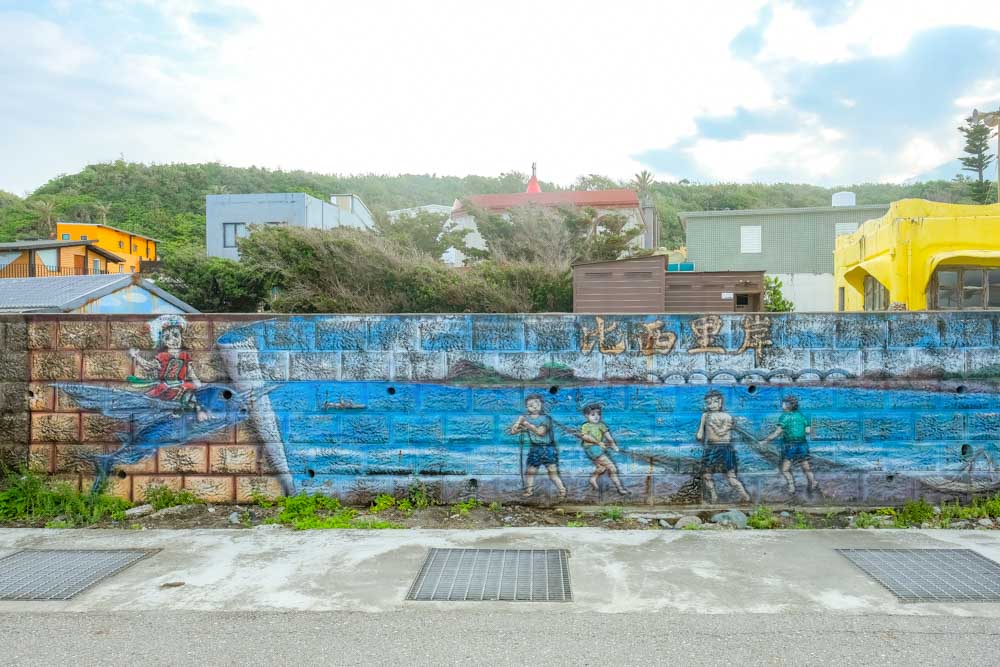
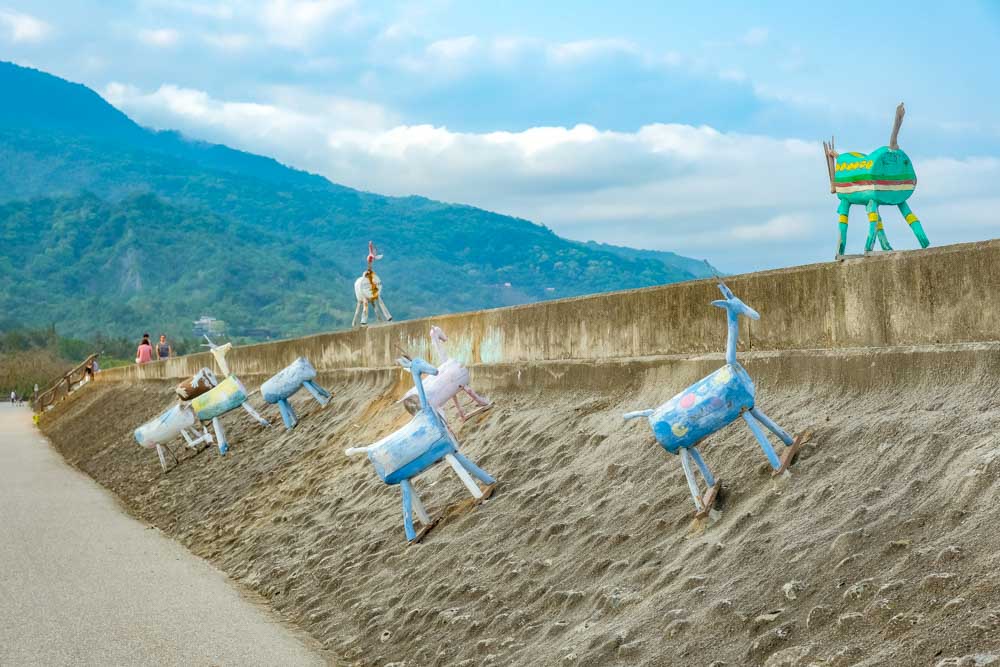
Just north of Sanxiantai, Pisirian (“Place for Keeping Goats”) is a small, somewhat ramshackle Amis village, worth a wander for a slice of local life with a backdrop of coastal vistas, driftwood goat sculptures, and, if you’re lucky, the beat of drums! Many of the village’s adult residents work elsewhere on the island, and the acclaimed Paw Paw Drum Troupe was created to give the local youth a focal point and connection with their heritage. The drums are made from repurposed fishing buoys (“paw paw” in the Amis language), and performances (as well as meals) can be arranged by contacting the Faluhay Restaurant in the village. Alternatively, you could just visit on a weekend and try your luck – my family’s most recent visit was on a Sunday, and there was a performance in progress. There are also a few other restaurants (mainly open on weekends), a couple of homestays, and a campsite in the village.
Faluhay Restaurant | 比西里岸風味餐廳
Add: No. 261, Bailian Rd., Chenggong Township, Taitung County
(台東縣成功鎮白蓮路261號)
Tel: 0915 777-124
Hours: Meals for groups on request only
About the author

Simon Foster
Simon Foster was born in London and grew up in rural Yorkshire. Family holidays first ignited his wanderlust, and he started work as a tour leader in the Middle East in 1997. Subsequently he was posted to India and then China, and he now lives in Chenggong, Taitung County with his wife, Tot, and their two daughters, two dogs and cat. He has combined his love of travel with his passion for writing, and has contributed to nearly 20 guidebooks and countless magazines and online publications, including the Rough Guides (www.roughguides.com) to Australia, China, Egypt, Europe, India, Philippines, Spain, Taiwan, Tunisia, Turkey, Frommer’s China, Frommer’s Taipei (www.frommers.com) and the Adventure Guide to China which Simon authored solo. Simon also continues to operate bike rides for Grasshopper Adventures around Asia, and is currently the Managing Editor of Hello Taitung magazine (https://issuu.com/369702/docs/_).